The MDF plates I had routed are now at their final stages and ready to be painted. It's been great to see how my work has evolved throughout the project, especially with the introduction of colour. The majority of my work has been monochrome, however, as my making has gained momentum the concept of colour featured more heavily in my work. The inclusion of colour has been driven in much the same fashion as how the other elements of the work came about, in which it has been introduced as a result of something that is happeing when I transition the imagery through a printer or digital program. The colour has not been chosen for aesthetic purposes or to make the work look a certain way, it has had to be included. The process / concept has informed the choice. Thus, the colours used to paint the plates come from the printer CMYK colour palette(cyan, magenta and yellow).
        There was a dilemma initially when I first received the finished plates as the material itself looked and felt nice and I almost did not want to do anything else to the surface and risk spoiling the work. I had to take this thought out of the equation and paint the plates as intended and use cyan, magenta and yellow to cover the work. This would relate them to other works that were to be displayed in conjunction, such as the CMYK 10m prints.
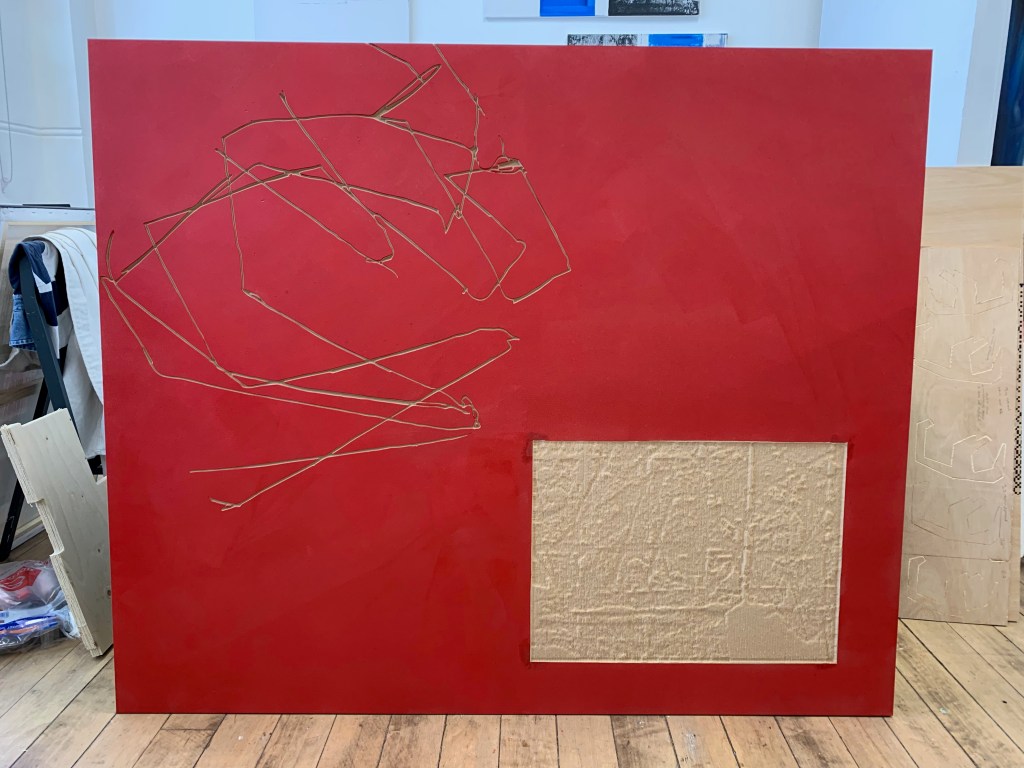
Painting the magenta plate
I had to use these colours as the process demanded this of me, I like this way of working as restricts your movements as an artist and forces you to work in a particular way. Observing the results after is always a rewarding experience as I can see how this interaction played out and contemplate how this may be taken forward.
Finished magenta plate in acrylic paint
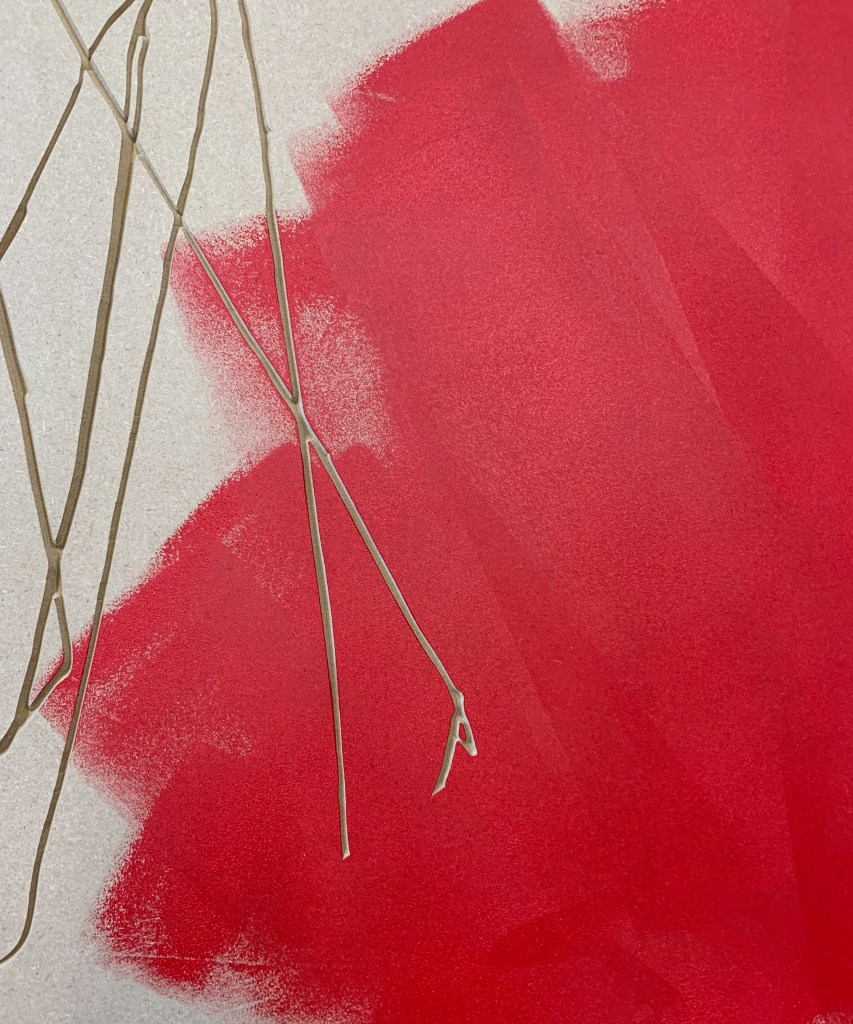
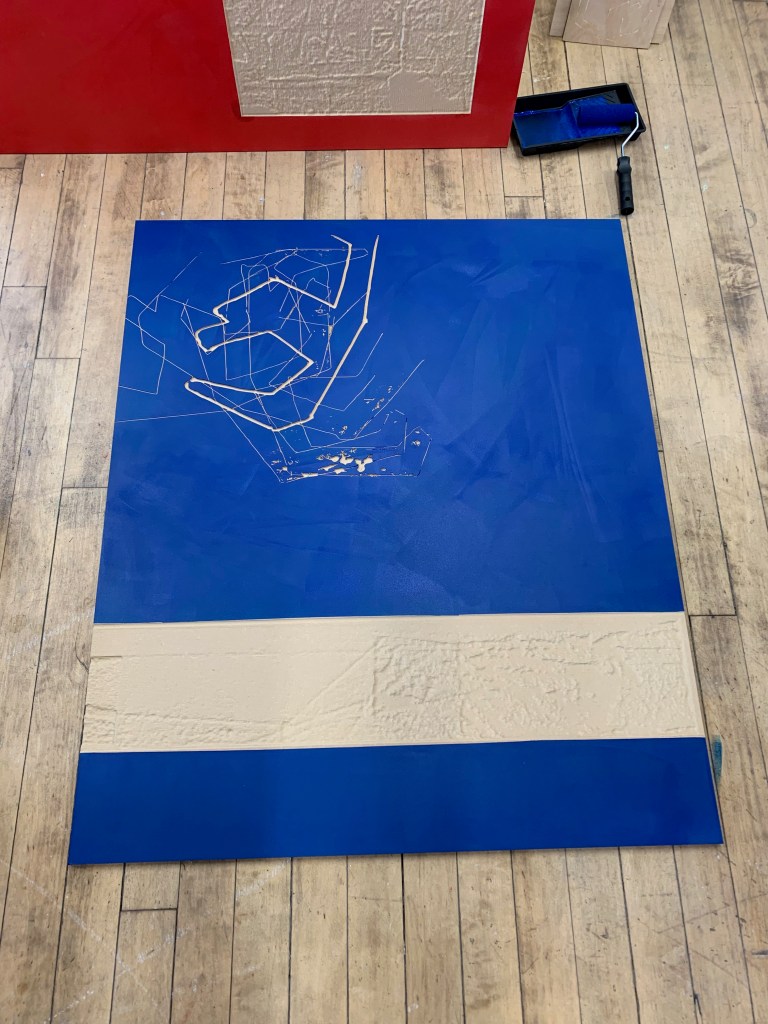
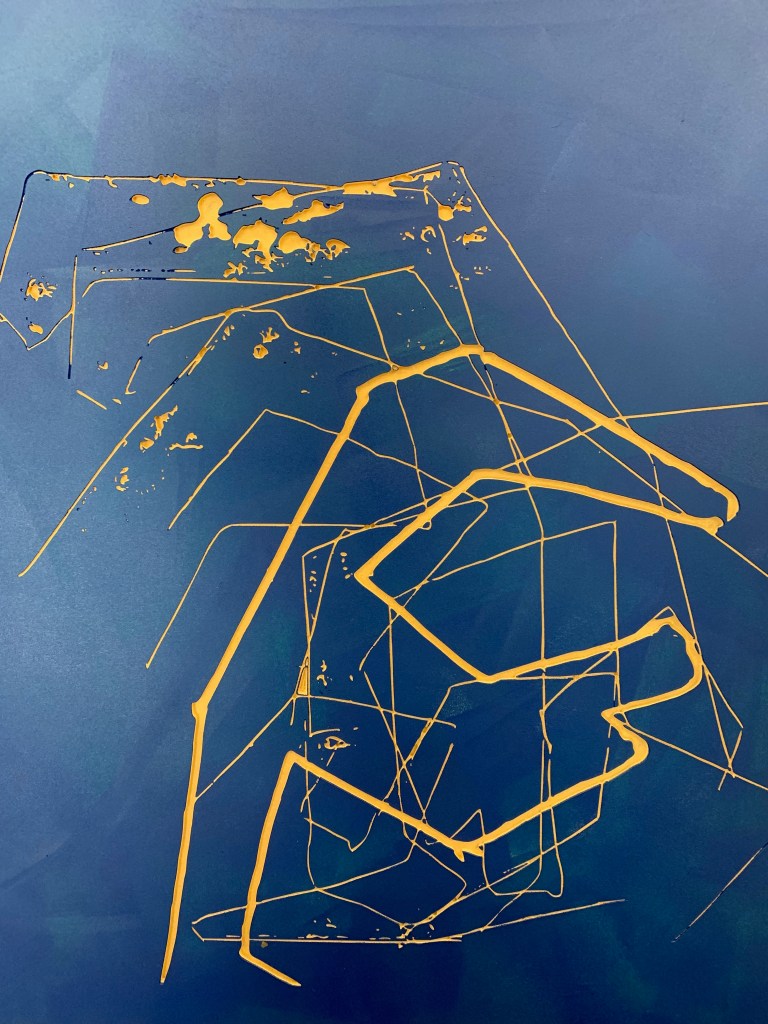
Painting the plates was a vital part of the work, not just in terms of finishing the plate to look complete but to engage my body. This is a recurring theme in my output, where items from my repository go through various physical, digital and mechanical processes. Therefore, the painting of the panel was just another stage in this process and related back to the use of my body as an agent in the work. The painting of the MDF brought out the un-treated sections of the panel and intensifies the routed marks and textural qualities of the material. The same painting again highlights my involvement with the piece, where the marks left from using the roller can be observed.
Cyan painted panel in acrylic paint Plate detail of routed marks Detail angle of the routed textured surface
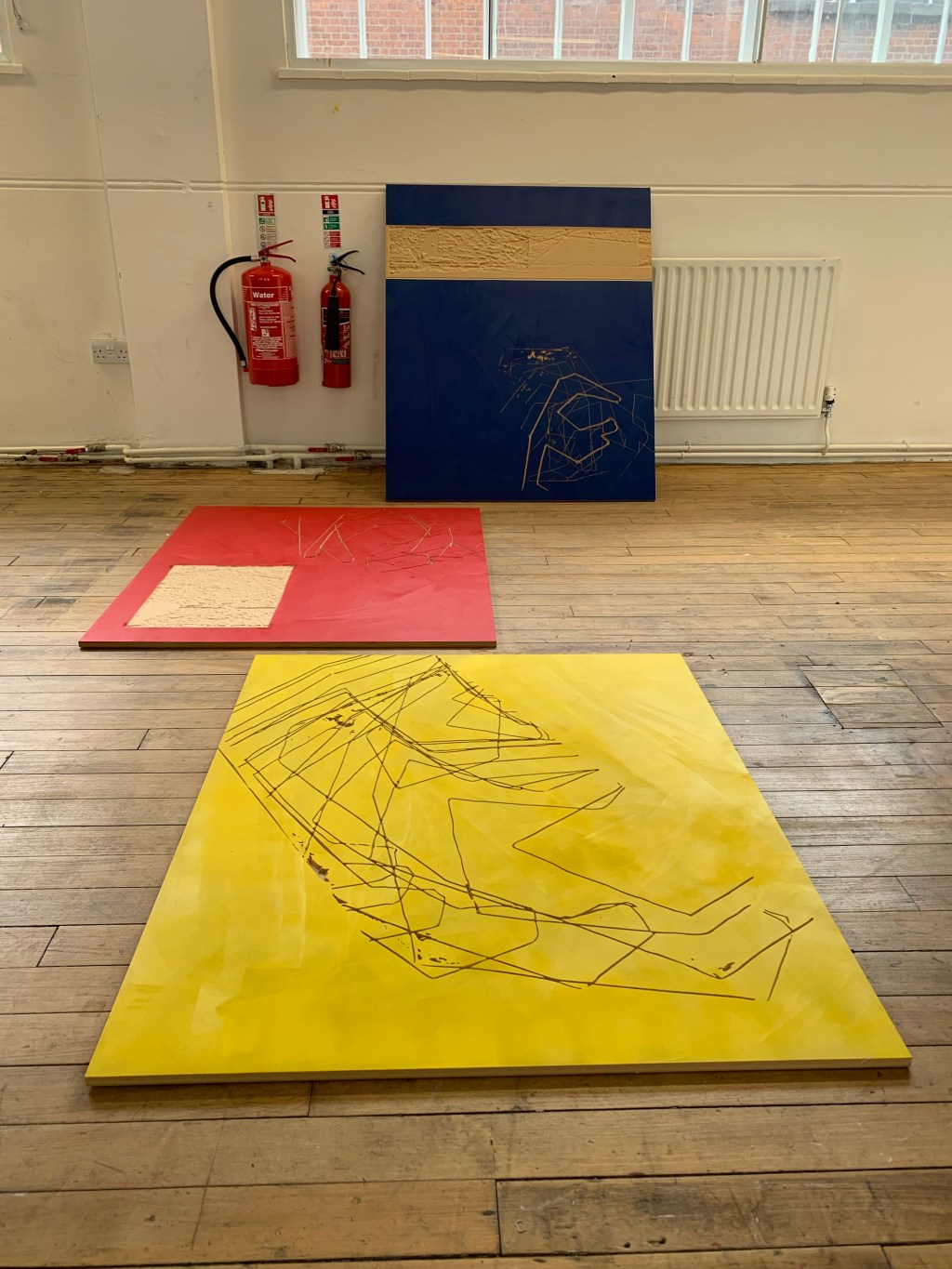
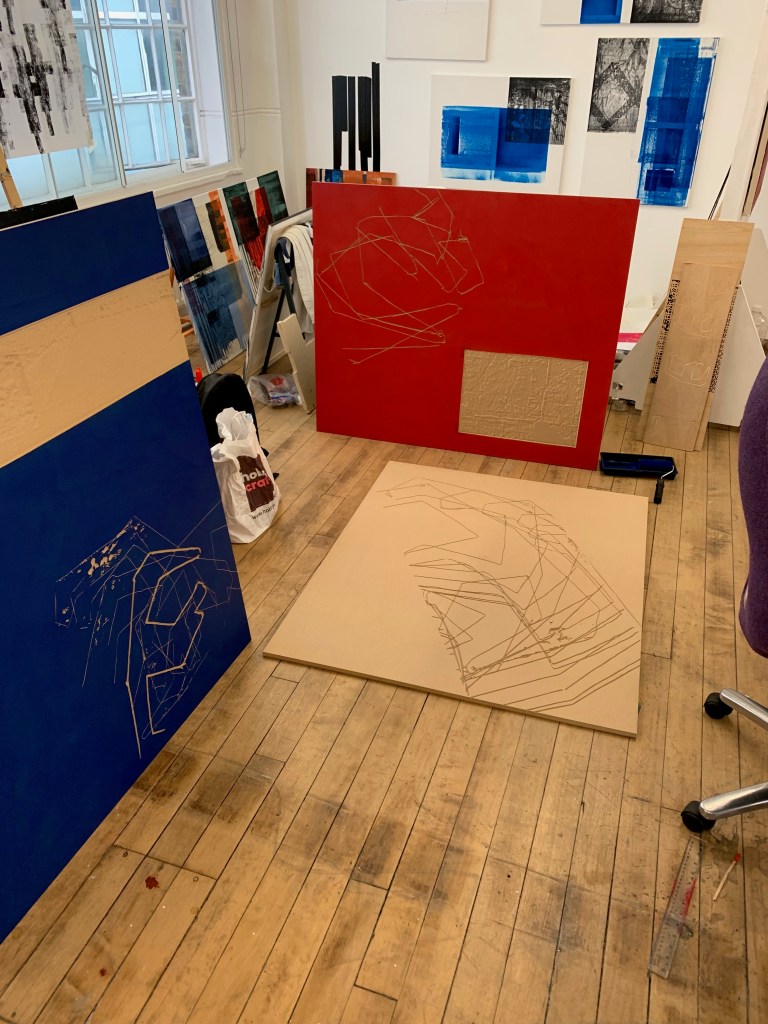
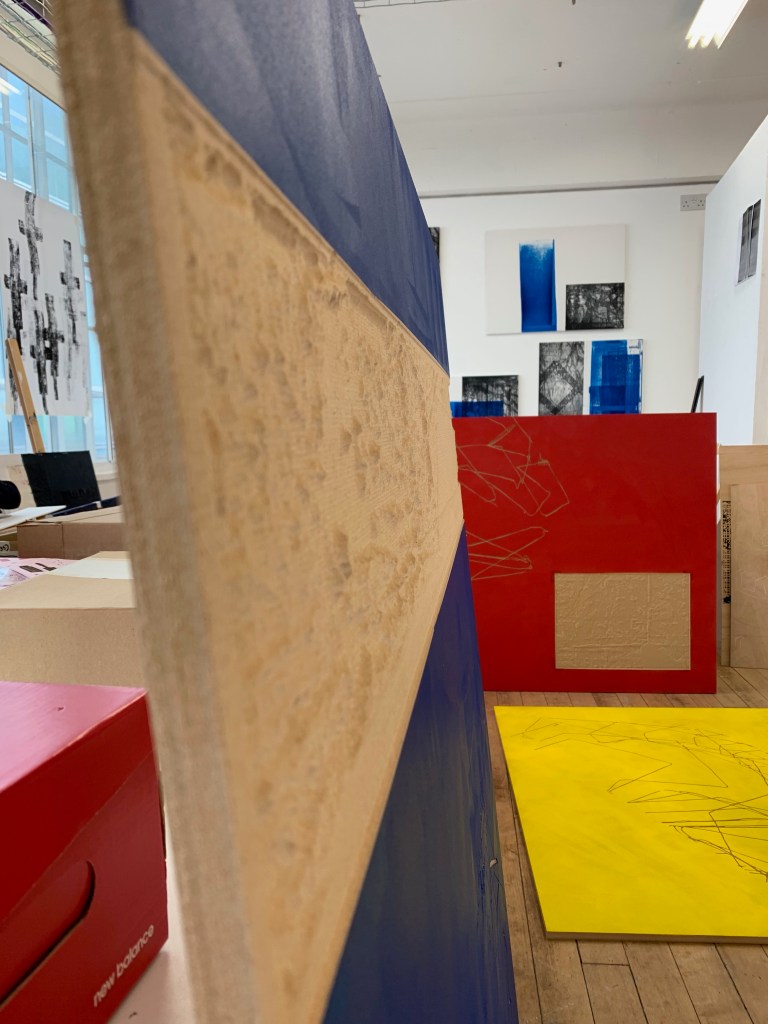
Having the painted work in the studio and placed together allows me to consider their arrangement. The above photo directs attention to the value of viewing the work from alternate angles. This allows for elements of the making process to be seen, whilst still having the accompanying plates in the viewers field of vision. Having the work installed on the floor and leaning against the wall allow this interaction to take place once installed for the end of year show. I am brought back to the work of Carl Andre where he placed his geometric slabs on the floor connected to each other. I will disrupt this mode by having space between the work and utilising the exhibition space to lean and configure the work.
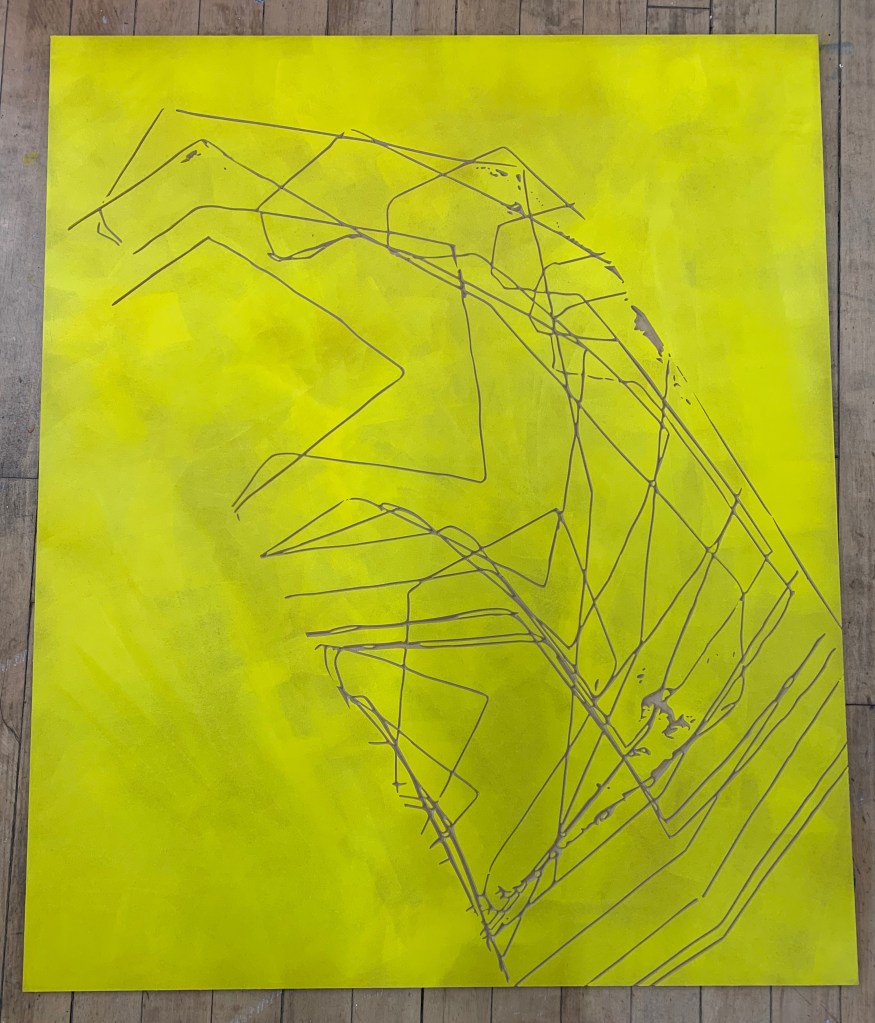
Yellow painted plate in acrylic paint
I really like how the yellow plate came out, this MDF required more coats as the material soaks up vast amounts of the pigment. I could of treated the plate prior to painting with a treatment to aid better coverage, however, this would not work with my concept where I want to see the interactions between the materials. The porous nature of the MDF changed the colour on all three panels slightly due to the surface and how it ate the pigment. What I think worked well with the yellow paint are the inconsistencies in the surface and the visual appearance of the applied paint; the roller marks are far more visible on this work.



Leave a Reply