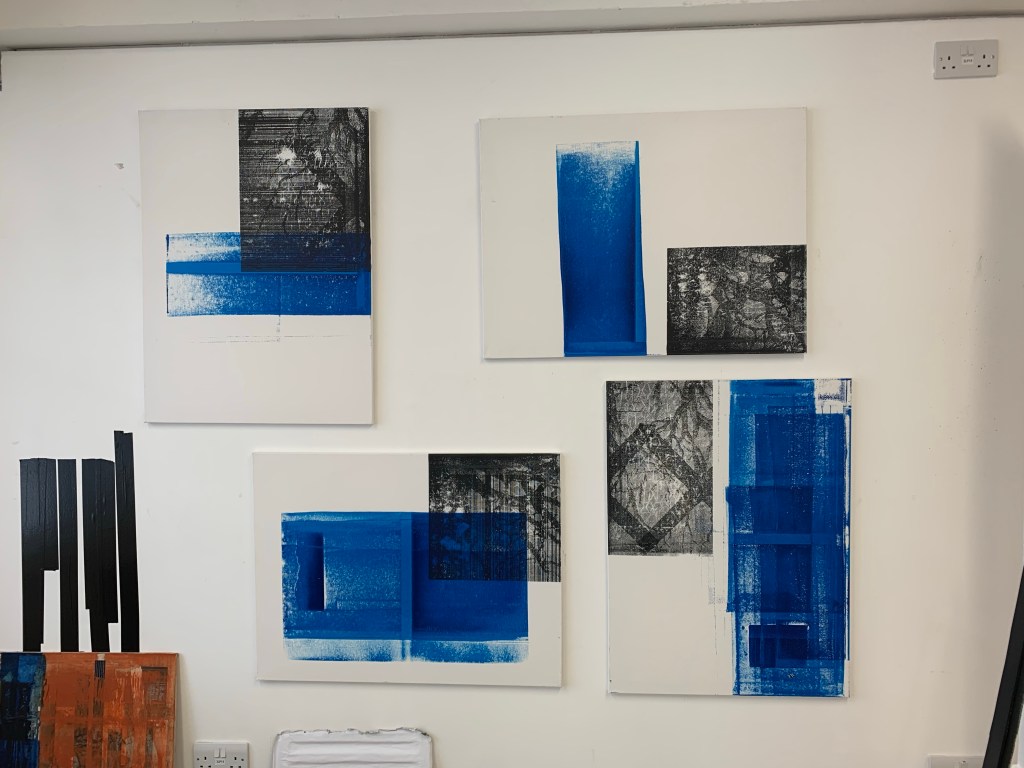
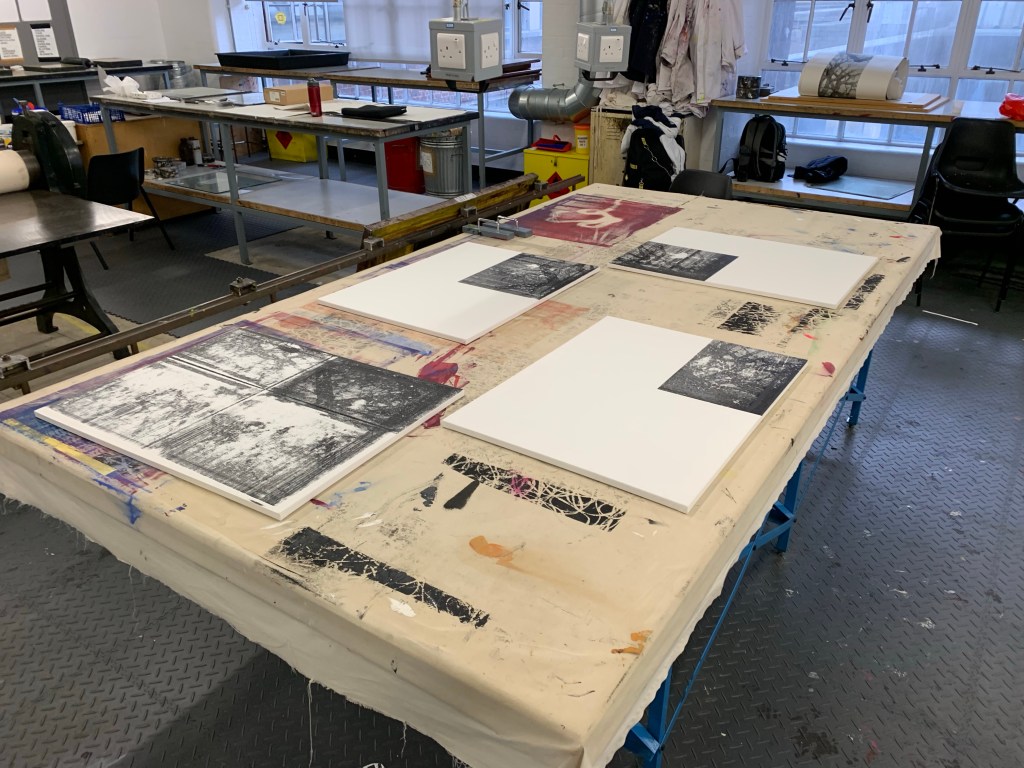
This set of prints on canvas were inspired by my test works across four sheets of paper printed at the same time. The print begins as one whole but when the canvases are moved apart the work starts to take shape. Central to the work was the theme of engaging my body and how this interacts with the printmaking activity. A dialogue takes place on the surface of the work where the digitally made screen interacts with the spontaneous application of colour using an untreated screen, driven by the energy of my body. This process tracks the movement of my body across successive pulls using the squeegee over the canvas.
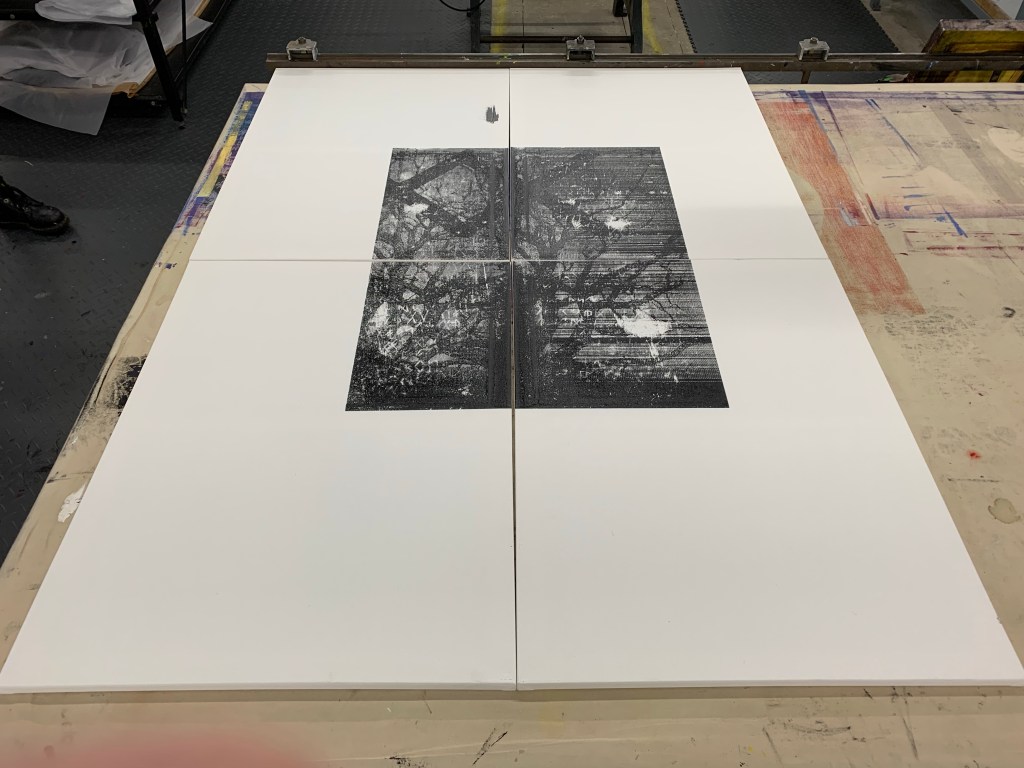
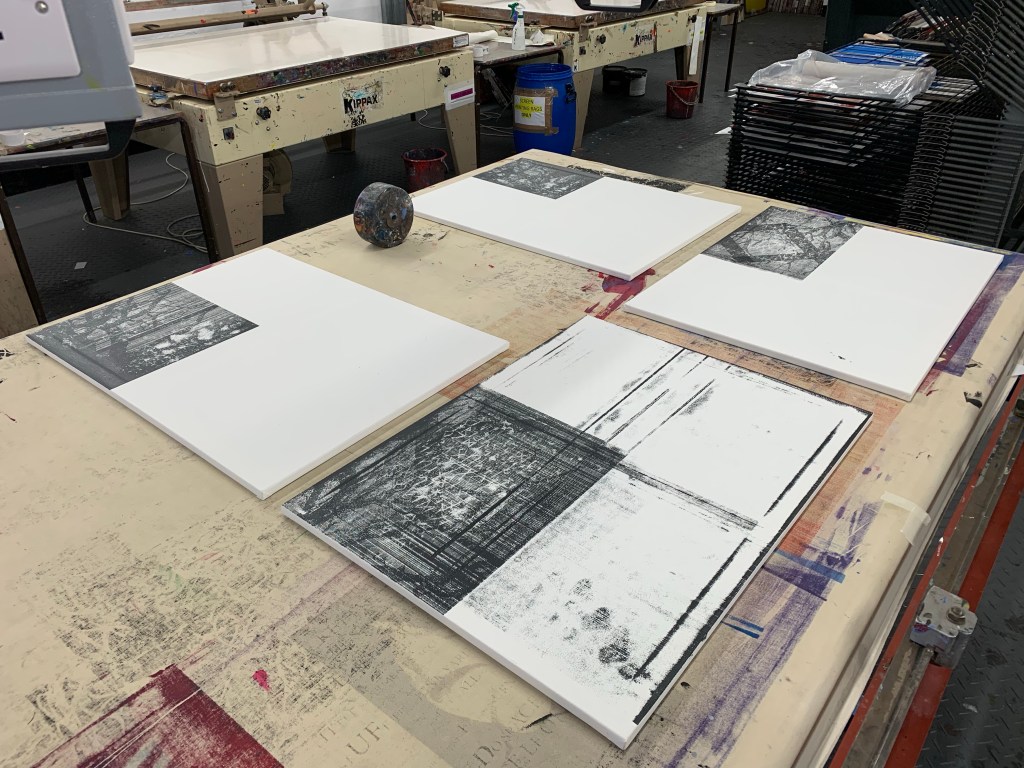
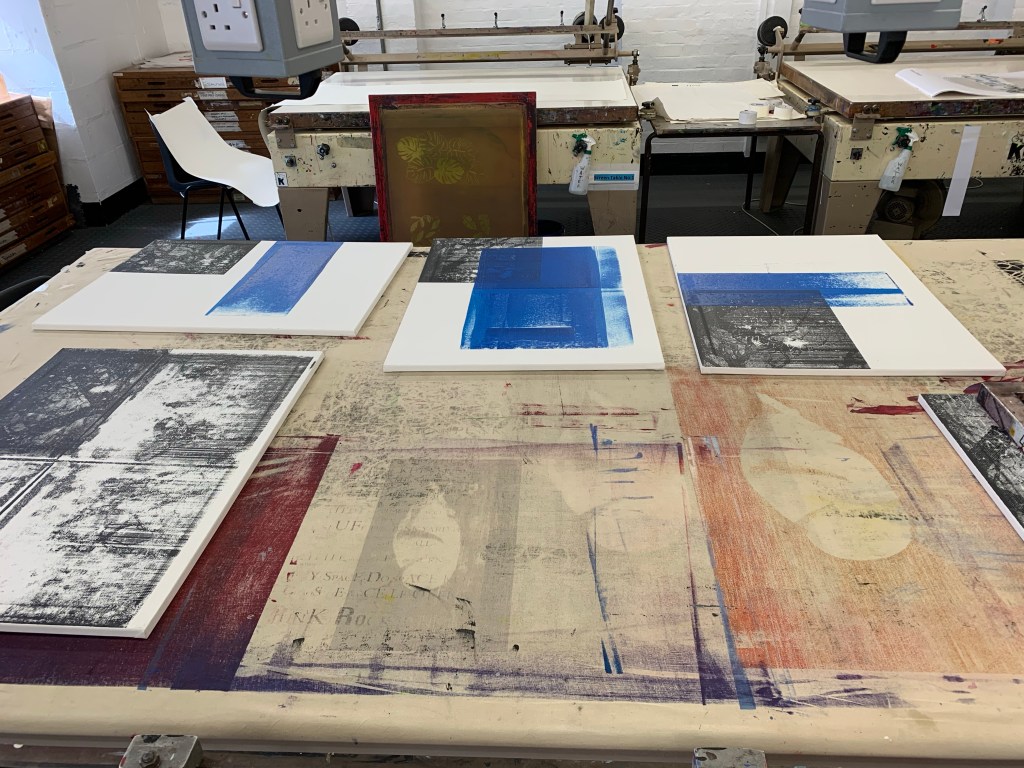
Masked screen over four canvases Screen print pulled over the four canvases
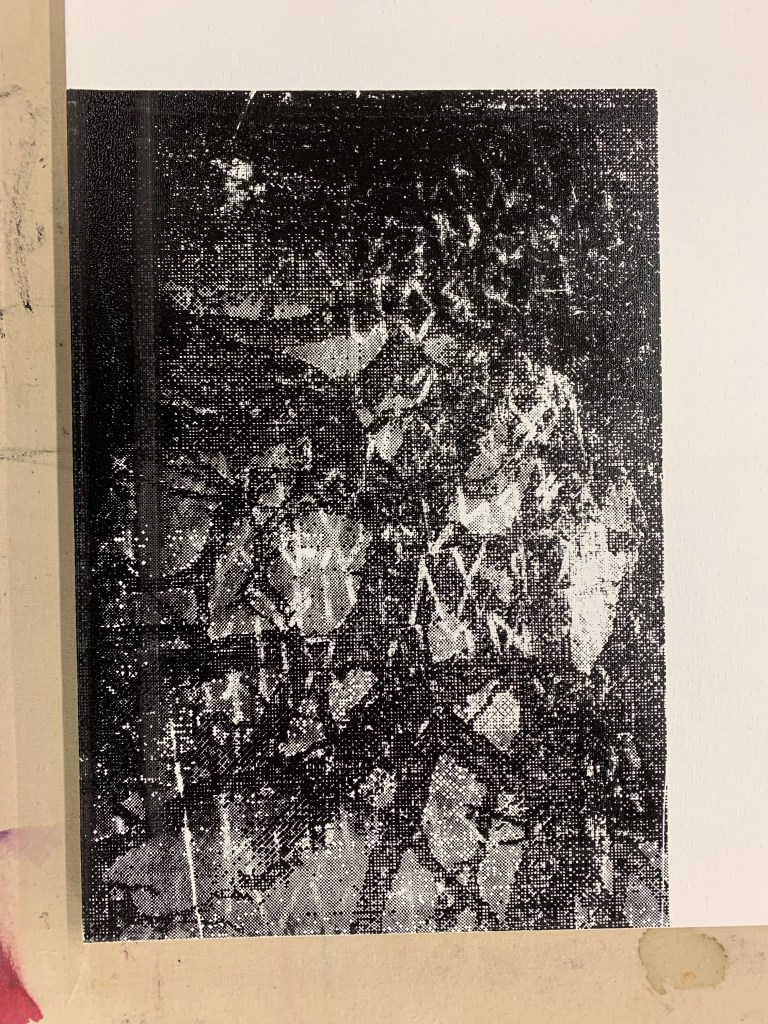
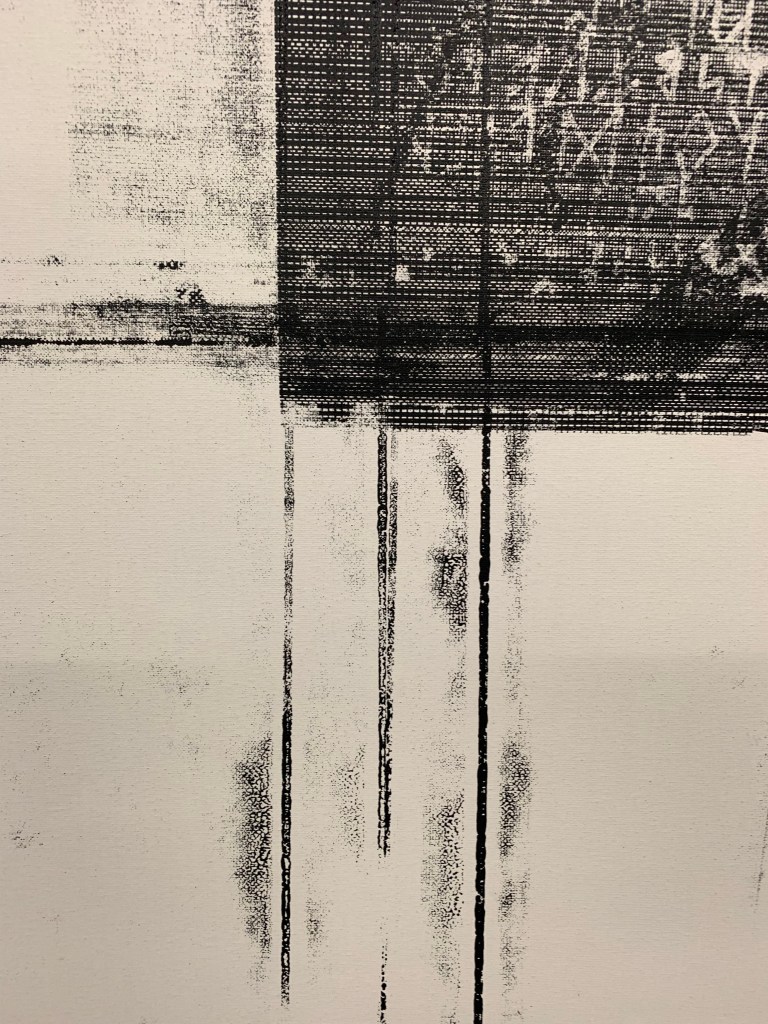
I positioned the screen over the four canvases and with the assistance of the print technician made a series of relay pulls with the squeegee. This is where one person starts to pull the print and hands over the squeegee to the other in order to be able to cover the length of the screen and apply enough pressure. The preparation of the screen is also different, where the mesh is not flooded first but pulled with the squeegee from the outset. Four to five successive pulls are made to ensure enough ink penetrates the canvas. The surface of the canvas acts very differently to that of paper as the material flexes on the wooden support where paper is able to lie flat on the table. I like the effect that is achieved, where ink does not make contact with all the surface and creates more atmosphere and texture. The unevenness is more interesting and will be different from print to print. What I liked most with the print was the blemish on the upper left canvas and the appearance of what looked to be a type of language from the previous image that was exposed on the canvas. This was an exciting moment in the making as made me think to replication and how the screen has been used multiple times previously by university students. The screen has had a past life and the previous image is not always cleaned away fully. This for me is what the making process signifies, those unexpected events that take place that are now preserved in the present. I exploited this floor and used the jet washer in-between inking to remove more of the screen detail and all the matrix from the past to merge through.
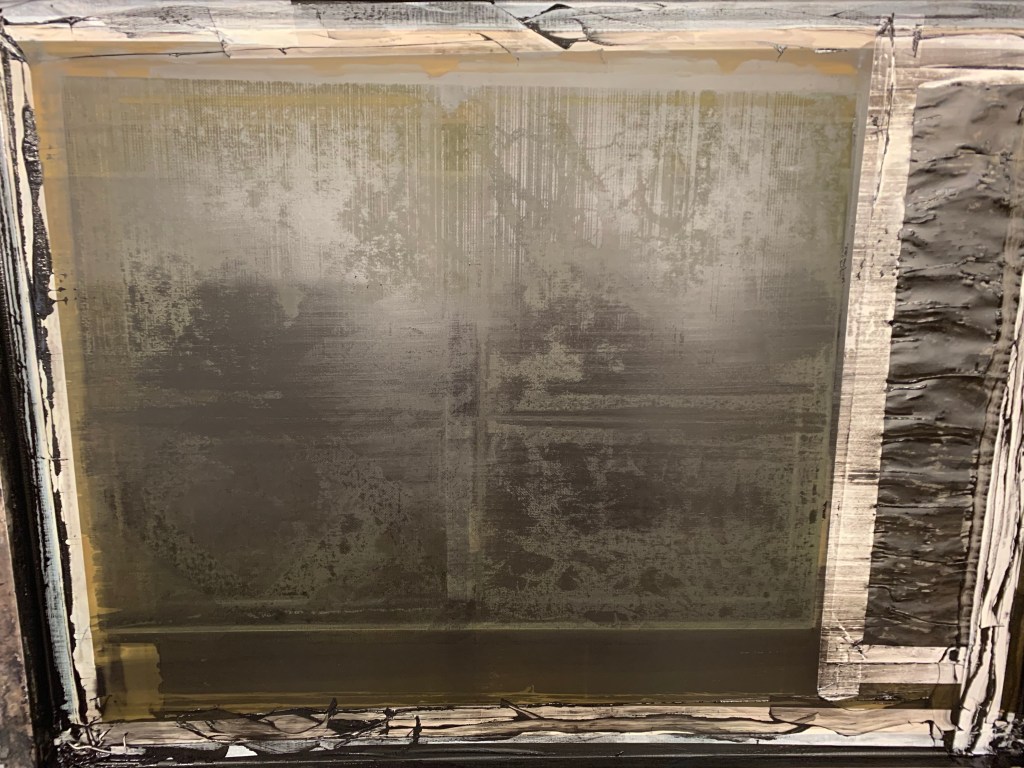
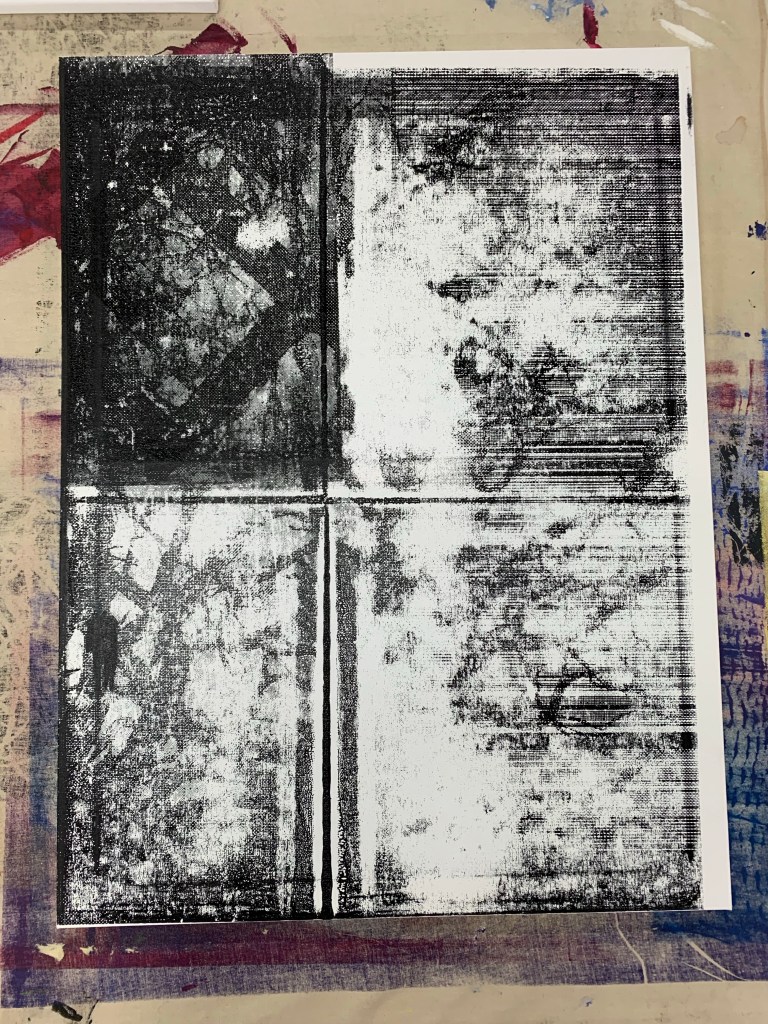
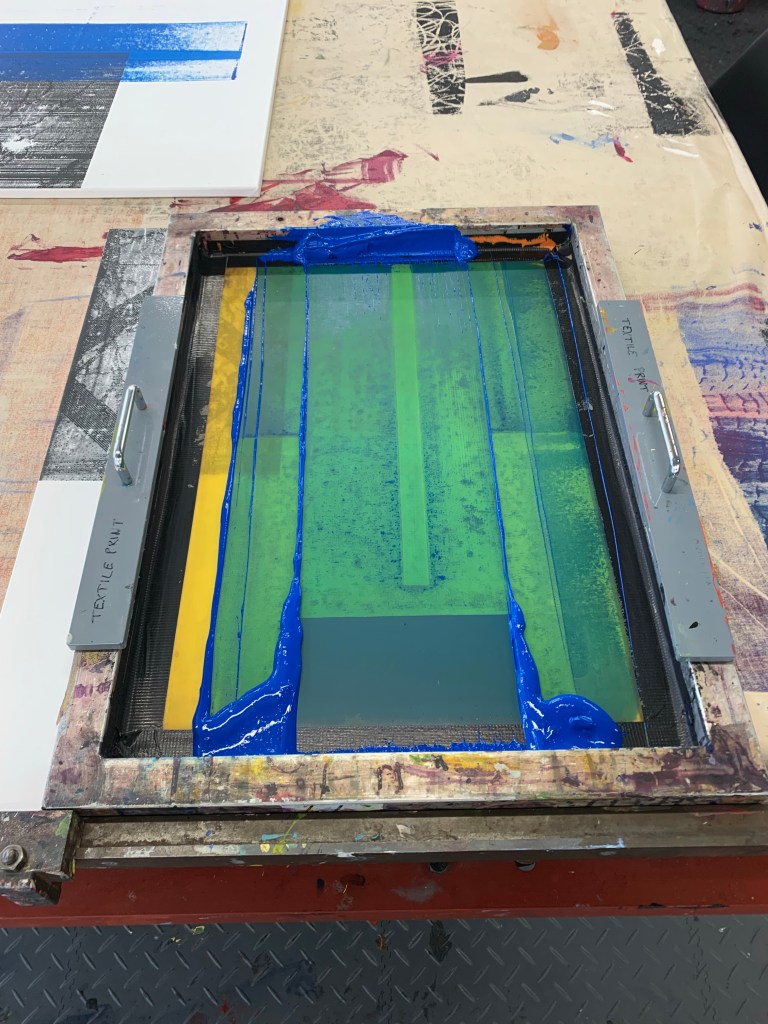
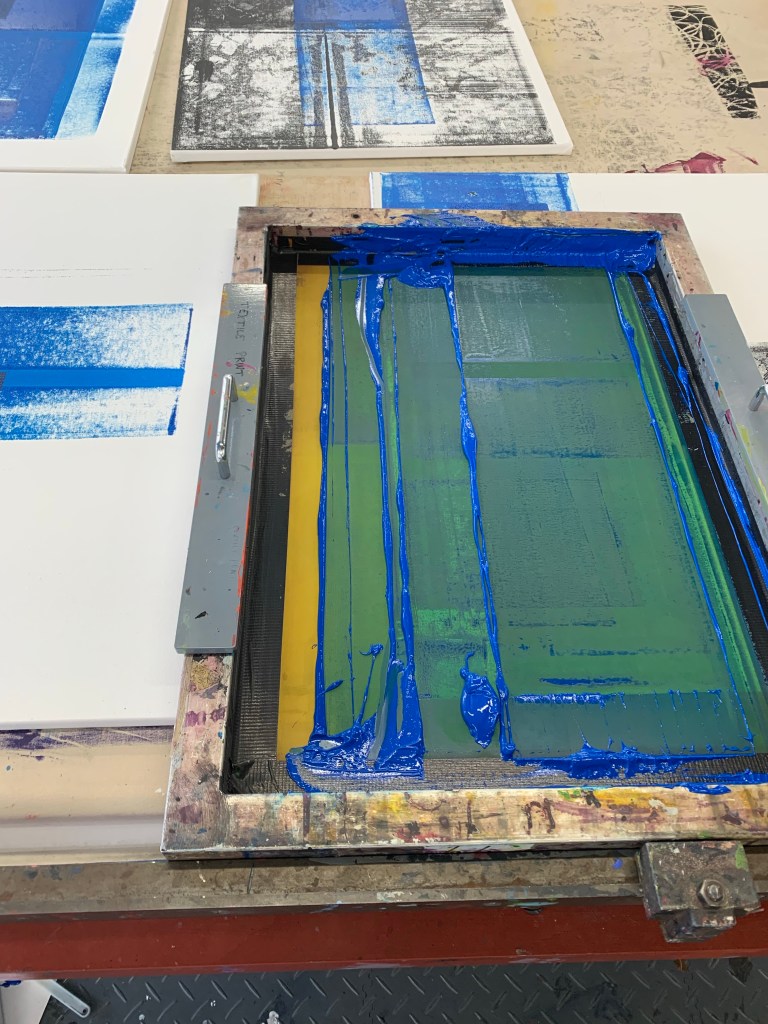
Screen after inking and running print across canvases
After this print was pulled, I quickly printed again over one canvas in order to layer the imagery and see what happened. I could see from the screen where leftover ink remained as a result of the gaps between the positioned four canvases. The window like form when printed transferred to the underlying canvas. The ink had already started to dry which leaves a patchy textured surface, retained the history of the screen. I like the unevenness of the print which had the appearance of printer running out of toner.
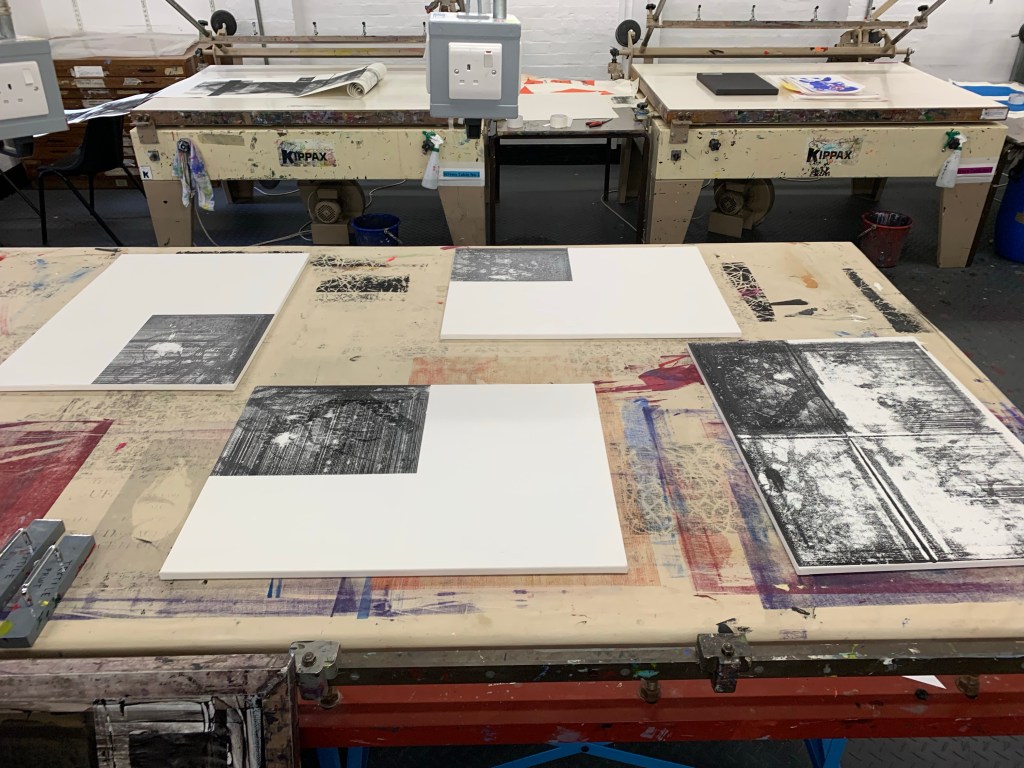
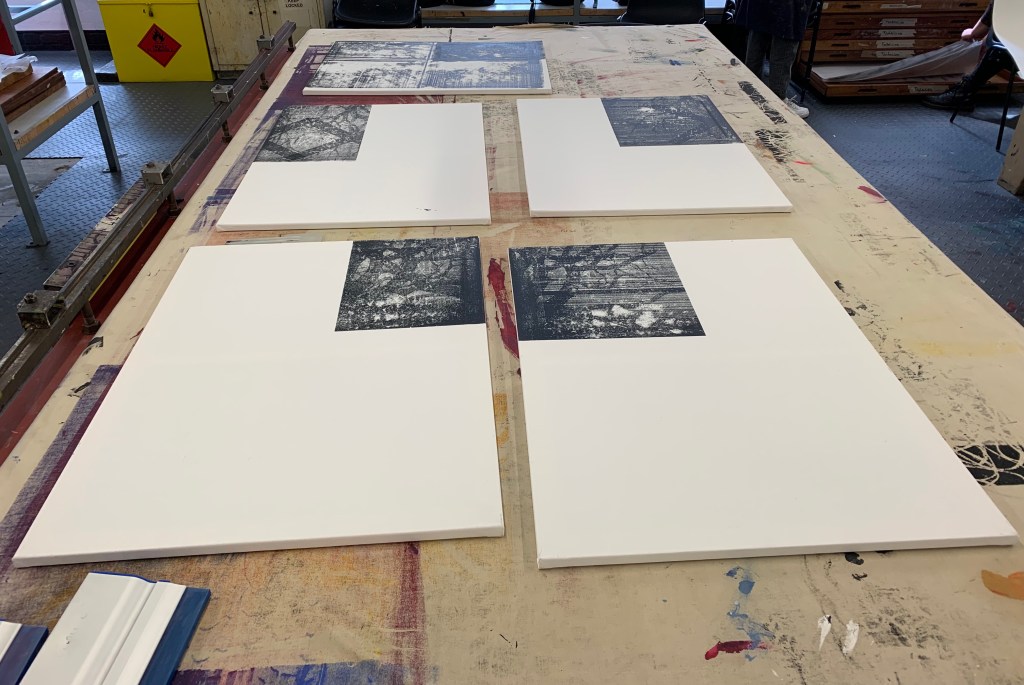
Looking at the canvases arranged over the printing table helped to inform how I may install these prints. I started to arrange the canvases over the table to observe different iterations of how they could be laid out on the floor. They reminded me of Carl Andre's installations where the geometric slabs of material are laid together on the floor.
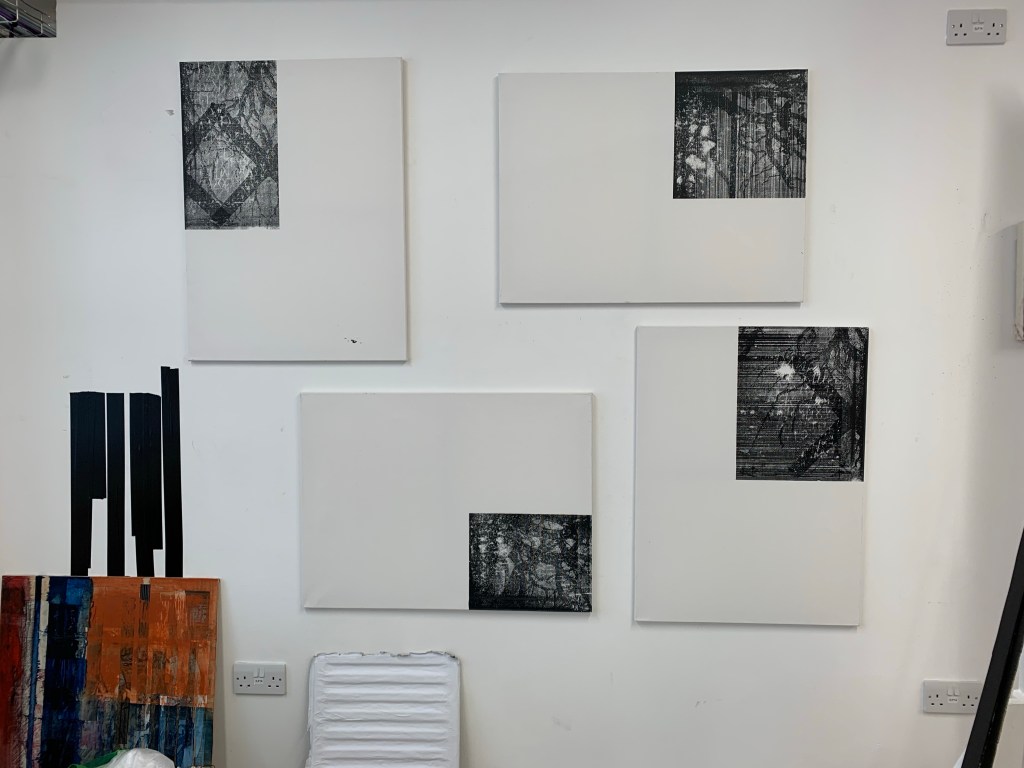
I brought the canvases back to the studio to hang and take the time to look at the work on the floor. I'm always drawn to disrupting the common way to formally display a piece of work. Although, hanging is conventional in itself the arrangement was not. Having the canvas shift and rotate, expanded the spaces between the printed imagery This was becoming more thought provoking and exciting to me than the imagery that was on the canvas. The work becomes more of an object to me and creating the areas of breached space overtakes the aesthetic qualities of the work. I feel working on canvas and the tradition of painting has its own struggles with aesthetics. If these were to be looked at as paintings should the canvas of been meticulously gessoed and prepared? The medium and surface, combined with the imagery I'm using as a gateway into the work can pull at me in this direction. It proves productive to step back, take in the work and remember what I am trying to achieve, which in a sense is nothing! The process of making and how the interactions between my own body, digital devices and mechanical apparatus is what I am exploring. The end result is not ultimately important but must be accepted. Critically, it could be perceived that I am too involved in the process and just accept whatever happens. I can assure you that doing that is no easy position to be in, the medium, materials and the look is constantly applying its force to me.
The final stage to print was to engage my body as the last event in the process. It would be so easy to leave the canvases as they are and allow them to retain their minimalist and attractive exterior. As I stated previously, it is not easy to go ahead and unsettle the surface; that is probably why I printed another set of four canvases in the same fashion. This gives me work but also more material so actually allows me to experiment further. Once I am in the making activity the concept comes to the forefront, takes over and is ready to amalgamate with he material.
        I proceeded to get an open screen that had no predefined image, and no boundaries. The only force that will be exerted on the ink will be the drive of my body. The ink could travel anywhere outside the boundaries of the squeegee. The same screen and ink was used throughout the process, thus as the screen came into contact with each canvas, the memory of the previous print would leave its own remnant. The screen was laid randomly, in conflict with the usual printmaking process of registering. The colour was not chosen for any other purpose but that it had come from the making process. In an earlier past I bring attention to the moments that appear on the device screen; this application of pigment came directly from that moment, where the blue line appears across the image. Therefore, cyan was chosen as relates to the other works and comes from that same theme of colour selection.


 Marco Carofalo ART
Leave a comment