Reading Boris Groys “From Image To Image File-And Back: Art In The Age Of Digitalization” was an important text and helps me to consider my practice contextually and conceptually. As I work more digitally but also traverse the physical with the digital it makes me think that what I am creating is a set of data rather than an object. Reading this work in conjunction with Walter Benjamin's text, where Groys discusses the notion of aura and reproduction. What I find fascinating is the fact that it is not the image or file that is different each time it is produced but the impact of the device that interprets the image. This is what makes the image or data file different; the image can be produced without loss of data but the stage of change is when it is displayed on a device. Therfore, is the altering display always an original and has its own aura? If the digital image only exists as a set of commands, and each technological device the image is displayed on will display it slightly differently, in essence, creating a new work each time and also deleting a level of authorial control from the artist. Therefore, does the viewer get an original and personal experience?
        Groys also explains how digital files can decay over time as technology changes and ceases to be able to run the file, this is an interesting angle as certain files need a particular piece of software to run, they become almost like an organic material, degrading overtime. When I am photocopying my work, what am I extracting? Am I processing an image or just producing information, like DNA? This really makes me think of what is happening behind the scenes, rather than the image itself……what is the device doing?
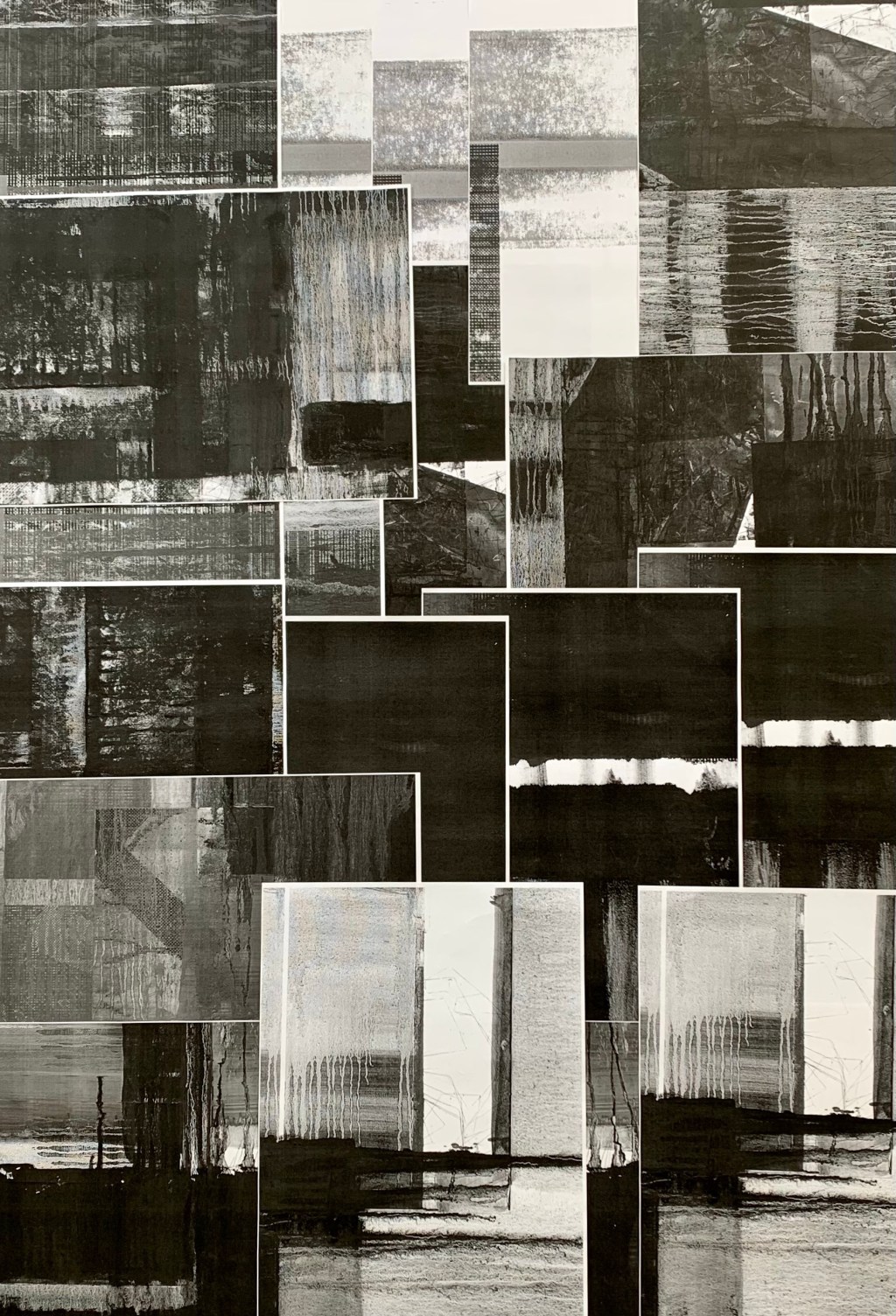
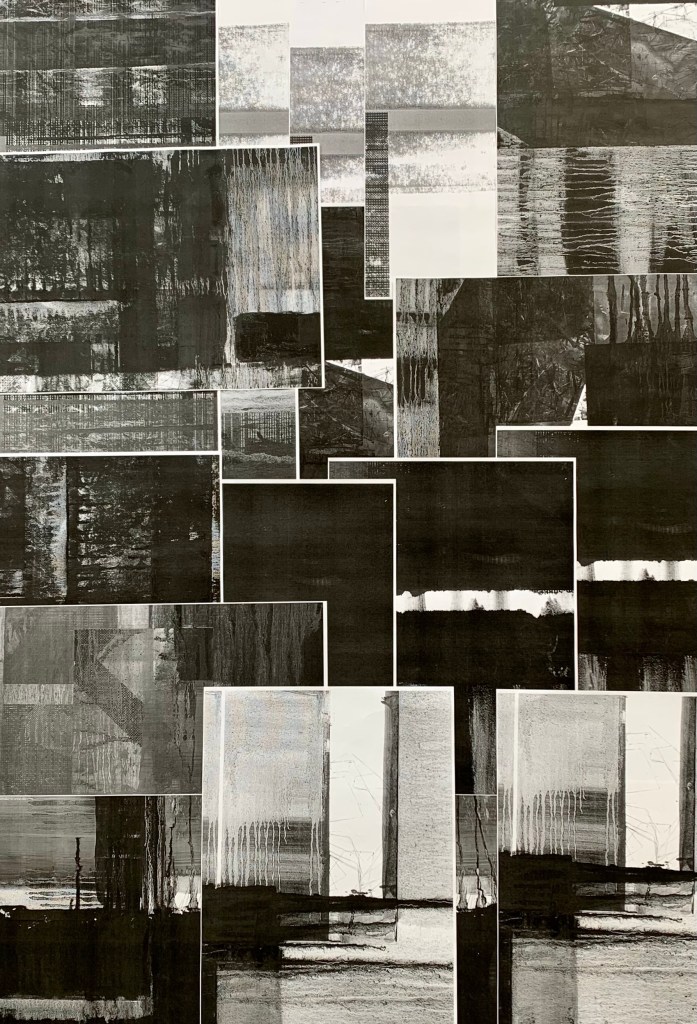
        Groys makes reference to “The Work of Art in the Age of Mechanical Reproduction” where Walter Benjamin assumes the possibility of a technology that can produce a perfect identical  reproduction that no longer allows a material distinction between original and copy. We can see that Benjamin was wrong to assume that an advanced technology could guarantee material identity between original and copy. Groys points out that technology went the other way, in the way of diversification. This is what I find thought provoking and relevant to my work, where I am using apparatus to replicate my prints to observe the differences that tale place. I harness these interpretations or defects to further develop the imagery, creating new works.
        Questions now arise of hardware, servers, software  etc.....the hardware is the material side, each presentation of a digitised image becomes a recreation; the monitor, projection or surface lighting will shift how the image is displayed/perceived. Fundamentally,  what Groys is saying, is that there is no such thing as a copy. In the world of digitisation, we are dealing only with originals.

 Marco Carofalo ART
Leave a comment