There is something fascinating happening in my practice, which is yielding productive results. As I explore digital making methods, they become an integral part of my work. The results spur on my next move, where I work between the digital and physical. What is apparent, is that they are more closely linked than one might of thought. For example, the common printer, that resides on every floor of the university building. Photocopying is an interesting way for me to further develop my work, by observing the way the mechanisms interpret and reproduce my images.
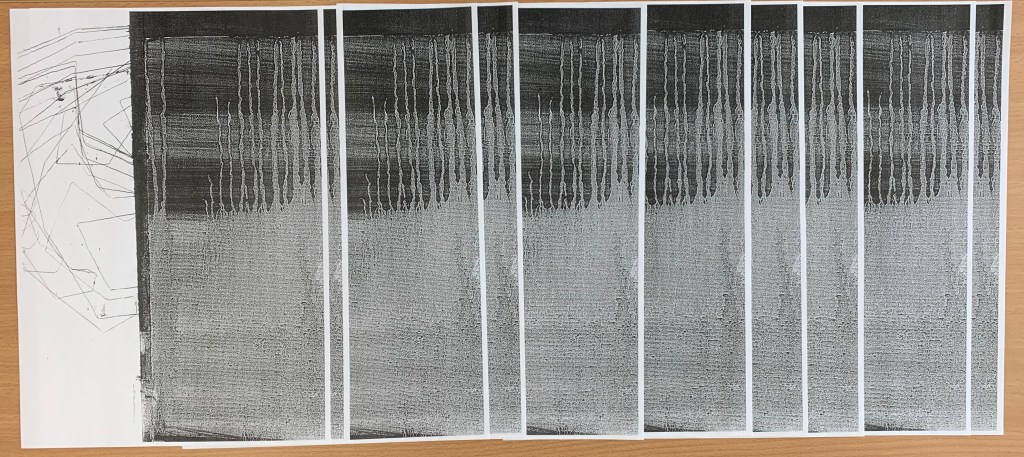
The above image of a photocopied section of one of my paintings demonstrates this perfectly. I'm able to focus in on a section and isolate the composition. It changes the work completely and provides me with options for reconfiguring the work. New works are created from taking the physical painting through the process of photocopying.
Hybrid print the used to make photocopies
There is also a play on the role of editioning in printmaking, I look to this area of the practice and interpret through digital reproduction processes, such as the photocopier being able to produce a continuous stream of editions. I treat printmaking like painting and seek to create one-off works, where I explore the qualities of surface. Therefore, it has not been surprising that I have also responded to the works with painting. Incorporating the painting elements into my work, I am able to interact with my work rapidly, whilst still trying to recreate the effects that are created when looking through the monitor screen or the streaks left from the photocopying process. This is replicated in the way I apply the paint and dilute to produce the same grid-like effects when I have been working in photoshop and other applications.
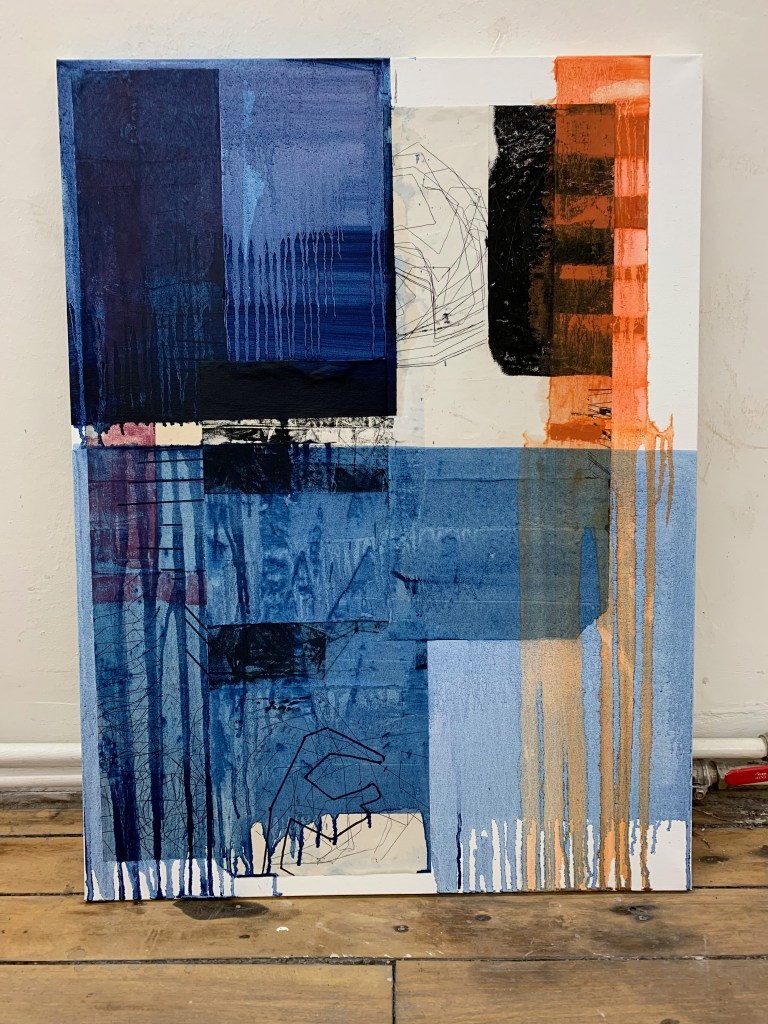
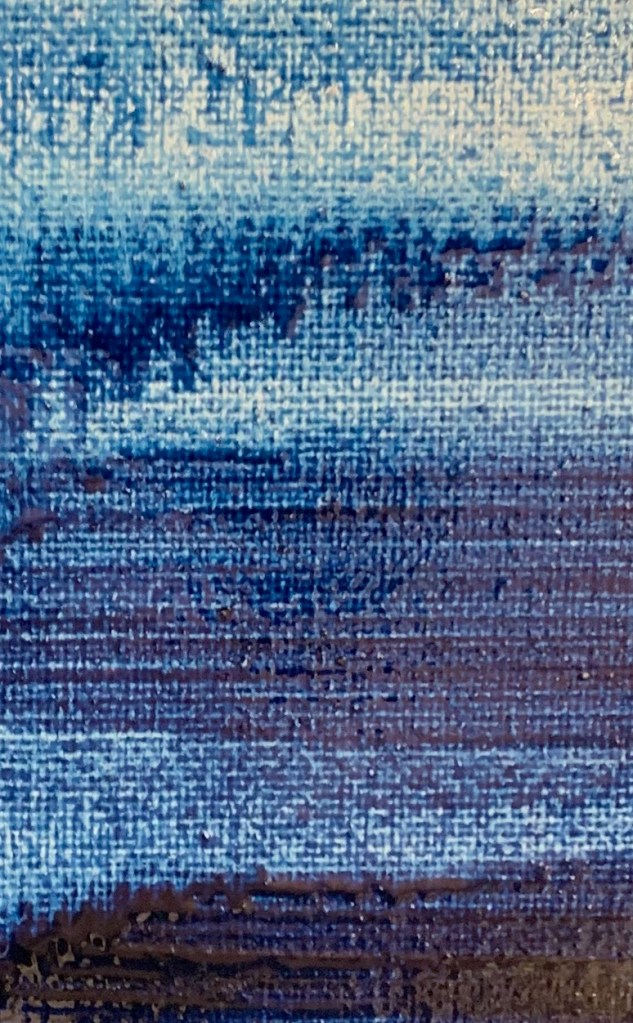
The above section of the painting shows the application of paint and the medium working with the texture of the canvas. By applying the diluted paint using long horizontal strokes, the vertical journey of the paint mimics the grid. The painting in fact, is not a painting as such, but a hybrid print, where previous prints have been adhered to the canvas and painted over. I am always considering printmaking when painting - the collaged elements are like a collagraph print, the diluted paint working through the thinker sections of medium act like an etching, where the white spirit is biting into the surface. The tonal values are very important, where I am working between light and dark tones, much like a print.
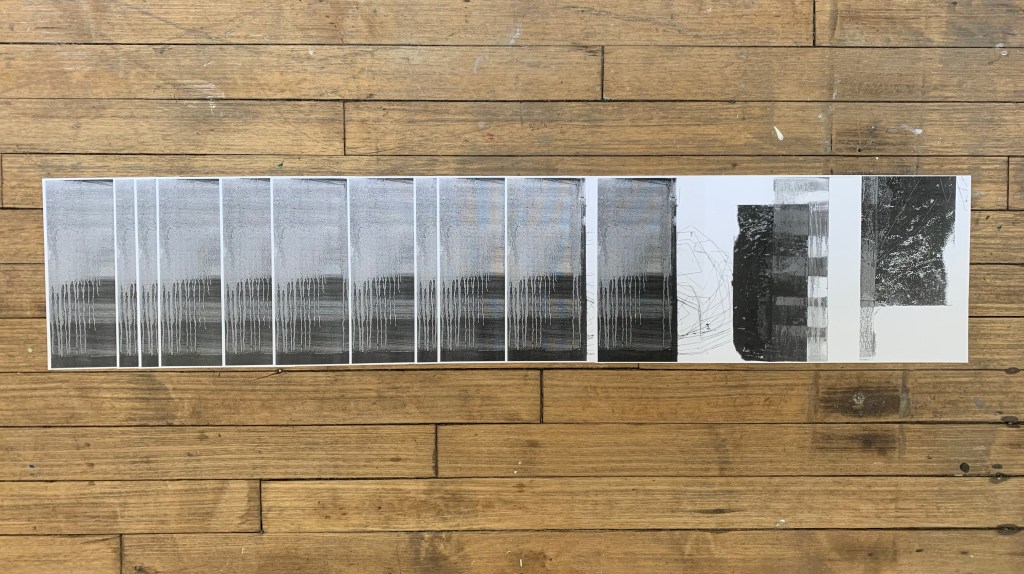
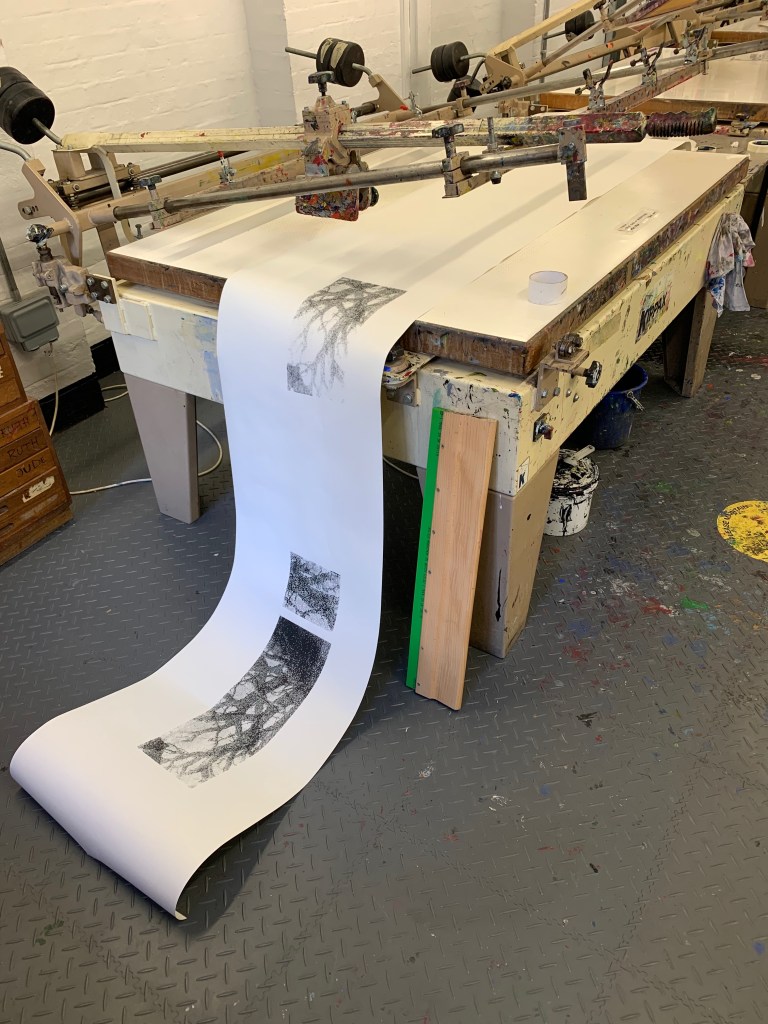
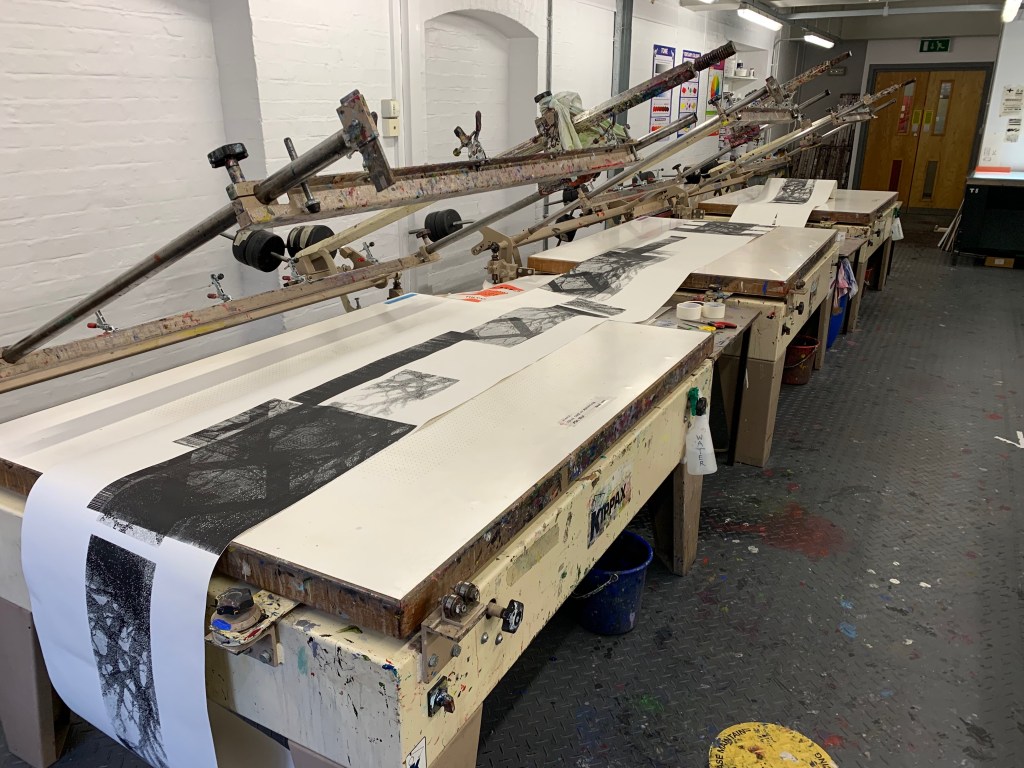
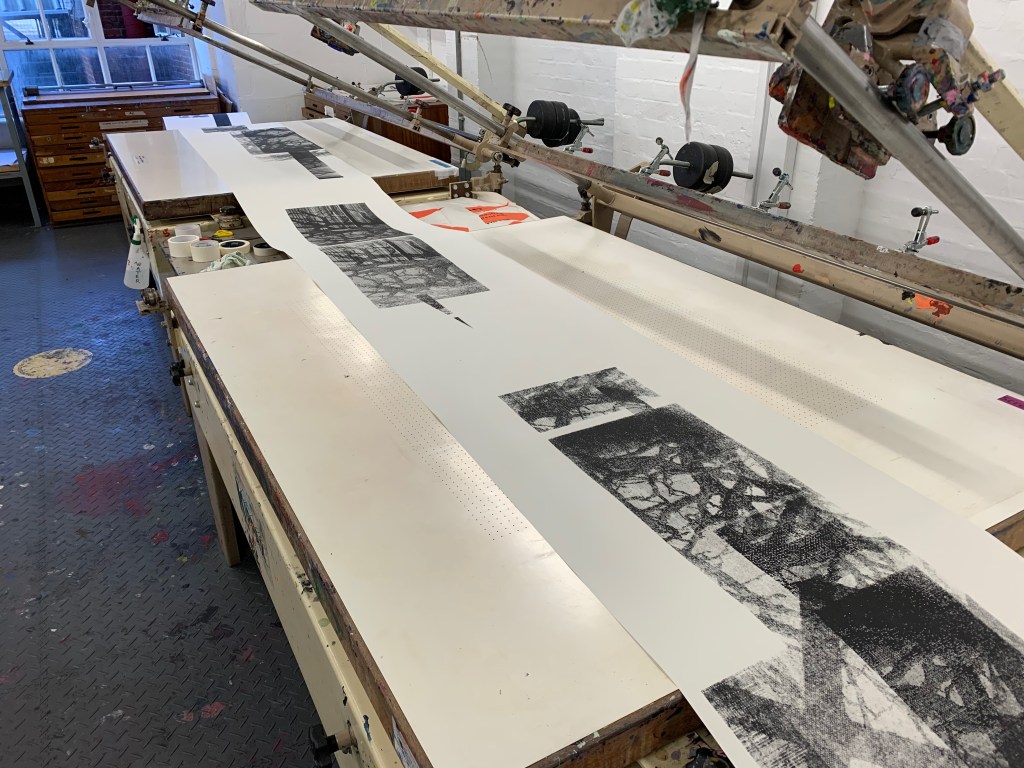
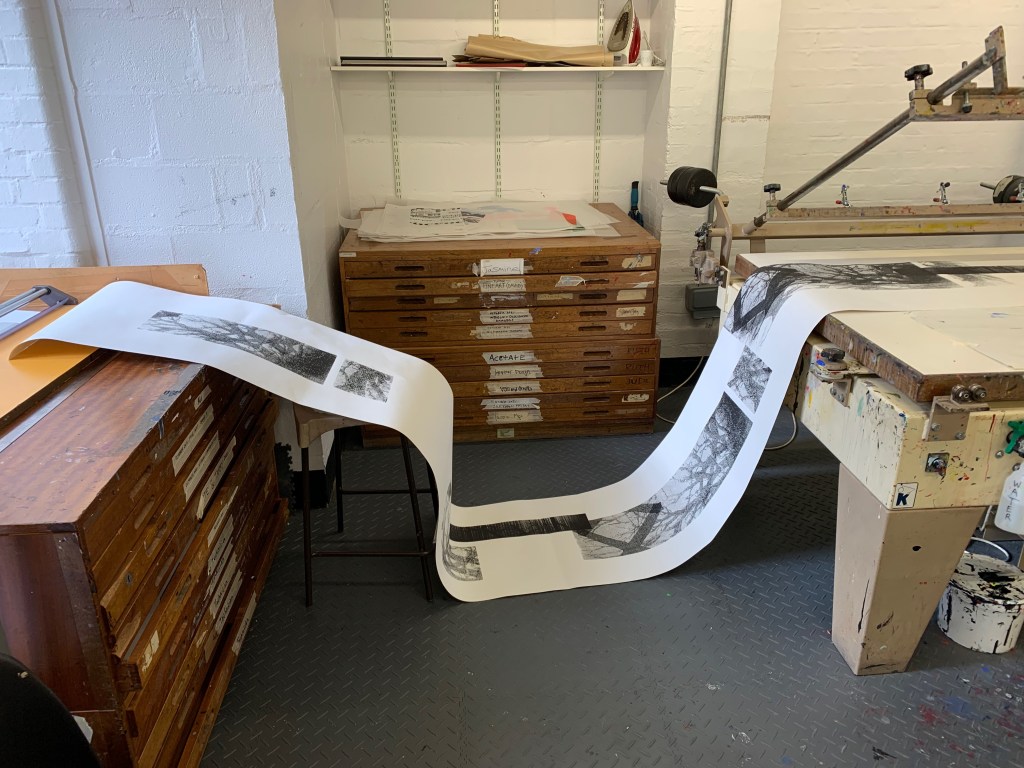
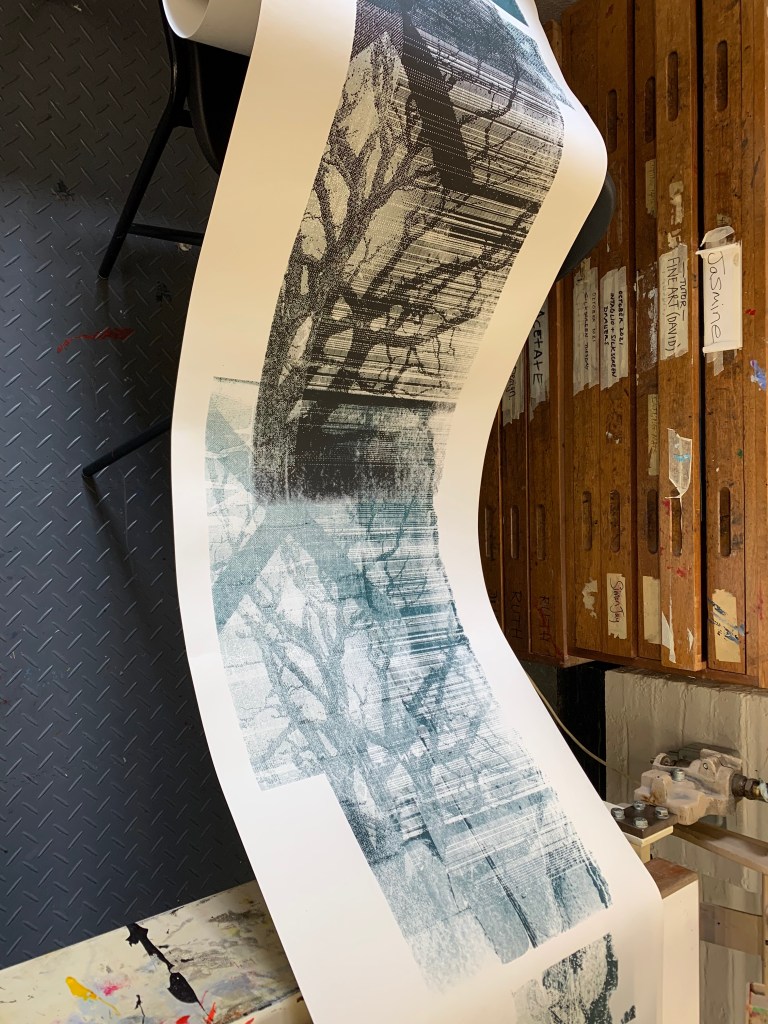
Taking the photocopier as my inspiration, I am approaching these prints as one constant copy. I am exploring how one image can be replicated using the one device (the screen printing table) to mimic the photocopier. I am pushing myself and working the screen printing mechanism, working on a 10m roll of lining paper. I was initially going to make one roll, however, I am now making three. This allows me to fully explore the results and have a number of works to choose from. I am always ambitious and push the medium as far as I can, i'm continually having to clean the screen in-between prints due the nature of how I am making the prints. The work is very intuitive, where I mask areas on the screen and on the bed over the lining paper using newsprint. This provides me with further material to work with, where the newsprint is retained with the fragments of prints which can then be used to collage onto my hybrid canvas works. Seeing the paper across the beds is great and gives me ideas of how I will install the prints. This is very much informed of how I have been working throughout the course and how I have displayed my work in grits and my test exhibition. Most of the work is positioned on the floor or leaning against walls, rather than being conventionaly mounted to a wall. I enjoy disrupting this convention and responding to the space the work finds itself in.
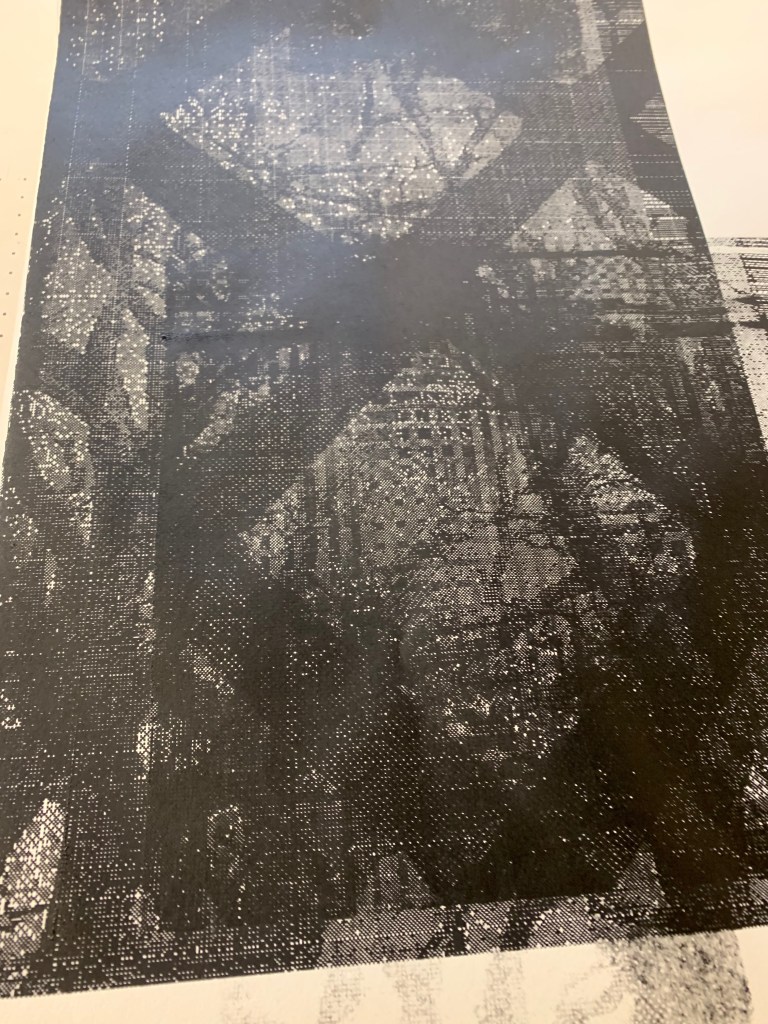
The above image highlights a particular section of the print which I have been trying to achieve as I work across the paper. By layering successive prints I am able to create the distortions I observe when viewing my work through the digital monitor and the streaks and imperfections made when photocopying. This is know as the Moiré effect, which is a visual perception that occurs when viewing dots or lines that are the same and overlapped at different angles.
The use of colour in my work is also informed by the process of making the work, a colour is not chosen for aesthetic purposes but has been considered directly by the relationship of the making. The printer again is the inspiration here, and the use of black / coloured ink in printers. Black printer ink is made up of black dye, which is know as the key and then incorporated with cyan, magenta and yellow to make up the CMYK colour model. I therefore mixed my black ink using cyan, magenta and yellow to give the above ink tone. This gives the print the photocopy feel, especially when certain tones being to deplete and the above can be seen in prints. What is becoming apparent in my practice is that the image is becoming less important and the process is becoming dominant. My tree images now become nothing more than a stock photo to use as a starting point in my process led work.

 Marco Carofalo ART
Leave a comment