I went to Sadie Coles HQ to see the REPEATER exhibition that brought together a range of artists to respond to the theme of repetition and difference. This was apt for me as the show examines ideas of sequence, seriality and replication. What I liked was that the work was multi-disciplinary, showcasing modular sculpture, painting in series, or digital reproduction. This for me really highlighted the potential in the act of repeating and that the work did not have to look identical in terms of an edition of prints. This is an area I am particularly interested in, in my own practice in the divergence from the edition.
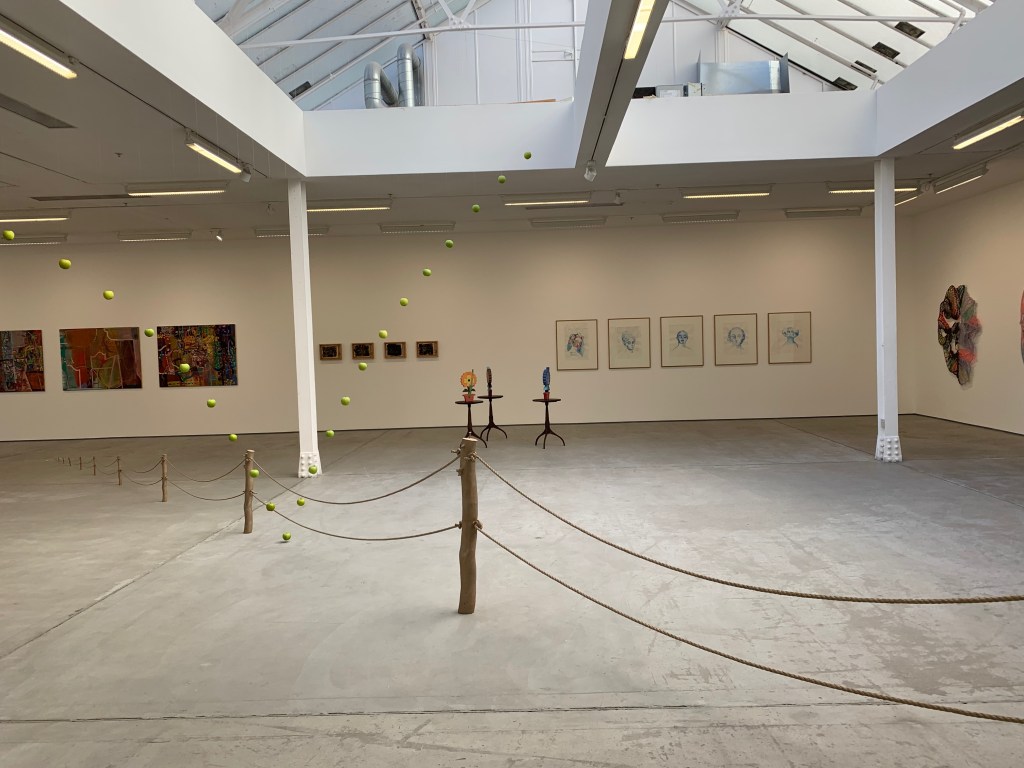
        I feel I am working in a similar way with the unique qualities that appear when I repeat an image, when I photocopy one of my hybrid prints. I'm investigating the differences that appear and focusing on a particular point, therefore experimenting with scale. This for me is important conceptually, as I am bringing attention to the information in my work, for example, the pixel. In a sense I am trying to give the digital code a structure. What I noticed from the exhibition, was that many of the works were displayed traditionally on the wall; was this because of the relation to reproduction and printed matter, and therefore most works will be flat and better accustomed to being placed on the wall? I liked when this was pushed and some works were displayed on the gallery floor or as per the above image, peppered across the display.
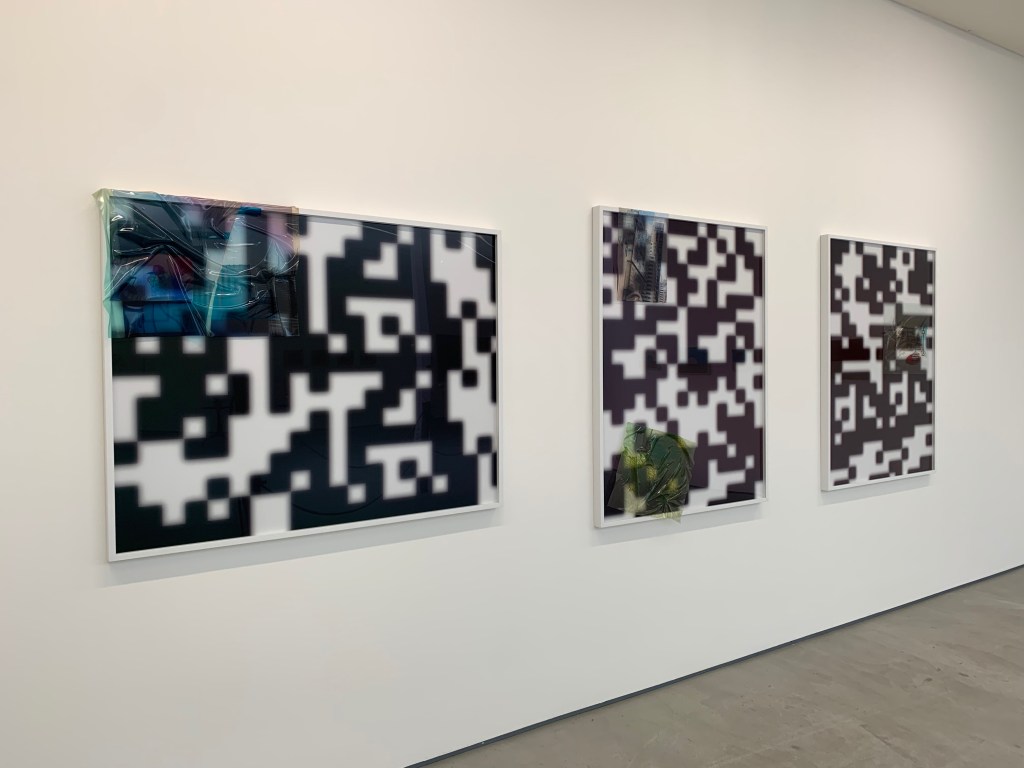
B&W, 2014 Michele Abeles
A particular work I liked was that of Michele Abeles, this was due to my thoughts on how I will display my works that use pixelation. I almost want to get away from the portrayal of representational imagery and focus on the workings of the composition. The process and the schema are what's important in my work so I want this to be on the surface of the display. The work was positioned on the wall which is an element I do not want to mirror but I did like the scraps of imagery that were adhered to the work. This for me started to break up the conventional boundaries of the work and gave a certain texture to the display. The work by Abeles is derived from a realistic image with is then encrypted into a series of tessellations void of colour. The acetate images stuck to the work act as a form of echo, are these the original images or are they just random?
Detail view of B&W
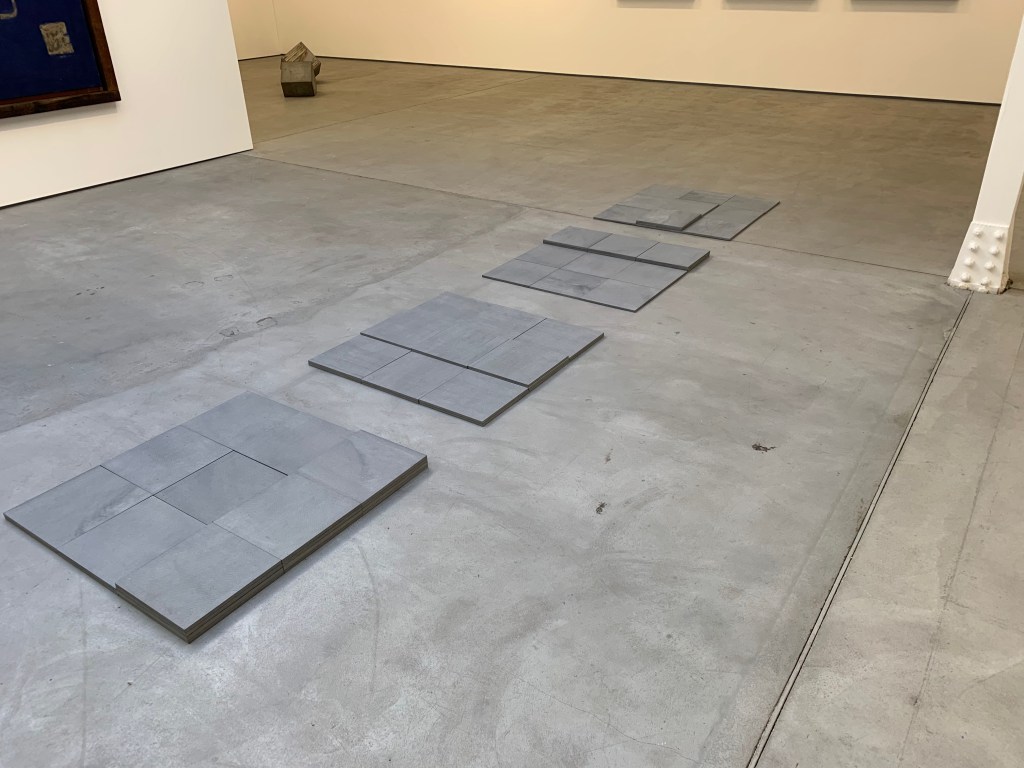
As I navigated the exhibition it was nice to see more works sneak onto the floor. The below image of Carl Andre's ALTBASE 21, Reykjavik, 1996 really grabbed my attention.
Installation view – ALTBASE 21, Reykjavik, 1996
I liked how they communicated in some fashion, resonating with the sculpture in the background. They also picked up on the geometric boundaries of the displayed wall works and appeared to sink into the material of the exhibition floor, the surface of the Icelandic basalt merged and conversed with the similar texture of the concrete floor. There was a form of replication taking place with the work and the exhibition space, this got me contemplating how I may display my works, in particular the large MDF panels I am currently working on. My sections will be much larger than the individual squares and squares combined but placing my work on the floor excites me. There is a clear relation to the space with Andre's work, although they were not originally intended for this space. Nonetheless, they work and create a new meaning for the work. The last important element I noticed from the work was the rule of the grid, the grid is a concept I consider more and more in my work and it was great to see that form emerge in the work here.


 Marco Carofalo ART
Leave a comment