
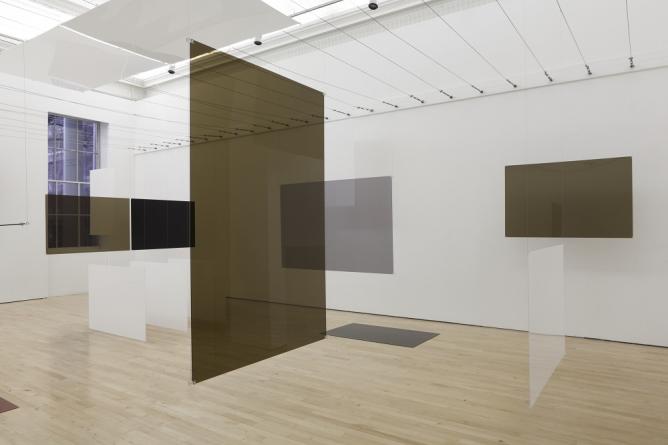
A tutorial with my tutor Nicolas de Oliveira proved to be inspirational, where we exchanged in an informative discussion concerning my work. I had left my work up in my studio space as I had it displayed for my silent critique the previous week. I had installed a piece of work on the window and I waited for Nico to arrive, when I moved the sliding window panel to shift my work into the space we were occupying . Nico replied "see what you did there...a Richard Hamilton".

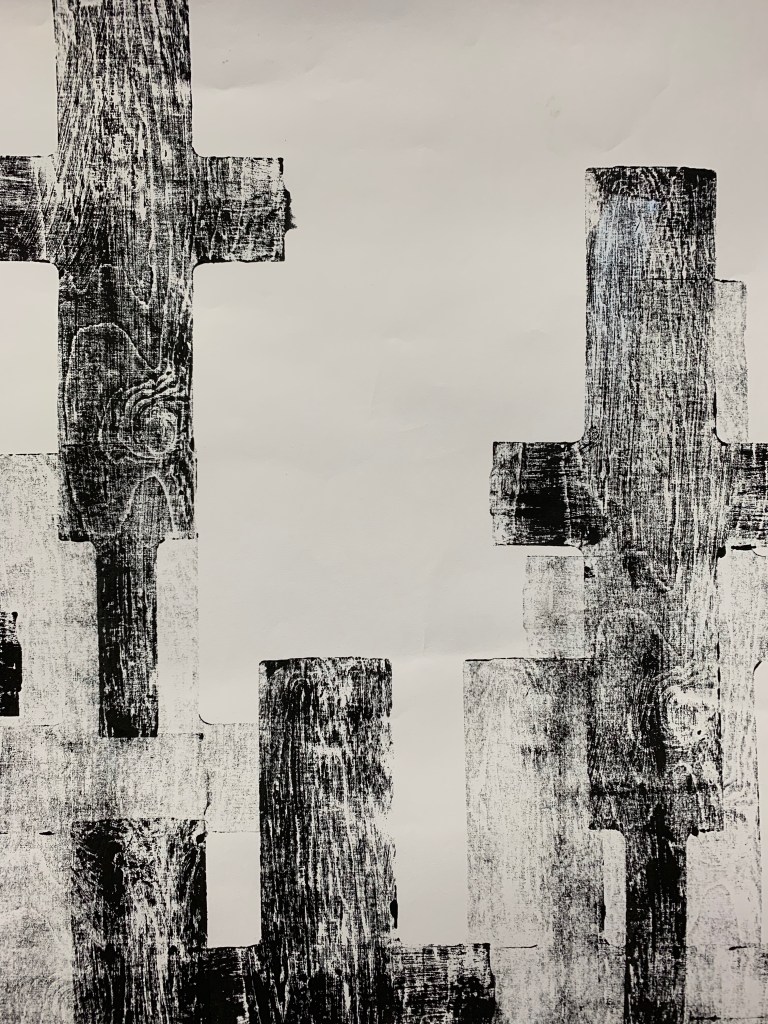
The movement I made reminded him of the exhibition by Richard Hamilton titled an Exhibit, which was first displayed in 1957. The exhibition was made up of hanging acetate sheets that filled the gallery space. This was a physical experience where viewers had encounters with these hanging structures that were not about anything but at the same time created something. I think this was initially what Nico was attempting to impart on me, that my work was shifting into the installation sphere and my work did not have to be about what it looked like but the process I employ. Therefore, priority goes to how I position my work and how that display responds to the space I am in.
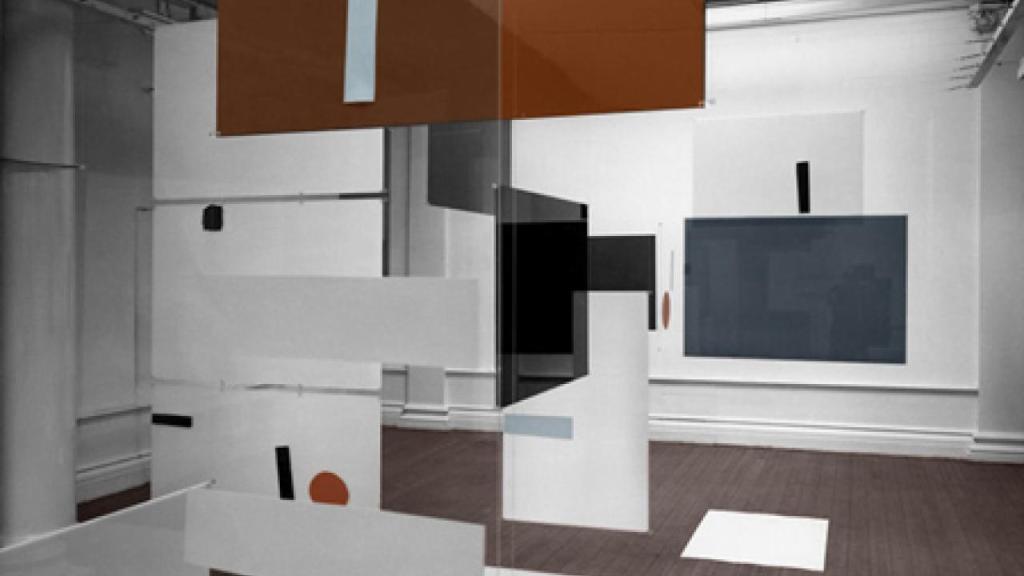
We then talked about Portuguese artist Nuno Sousa Vieira who works in a huge factory, responds to the space, and moves stuff about. The work is not kinetic but something else, it has a sculptural interventionist quality. I was keen to look at Vieira'a work which would hopefully provide ideas of how to display my work.
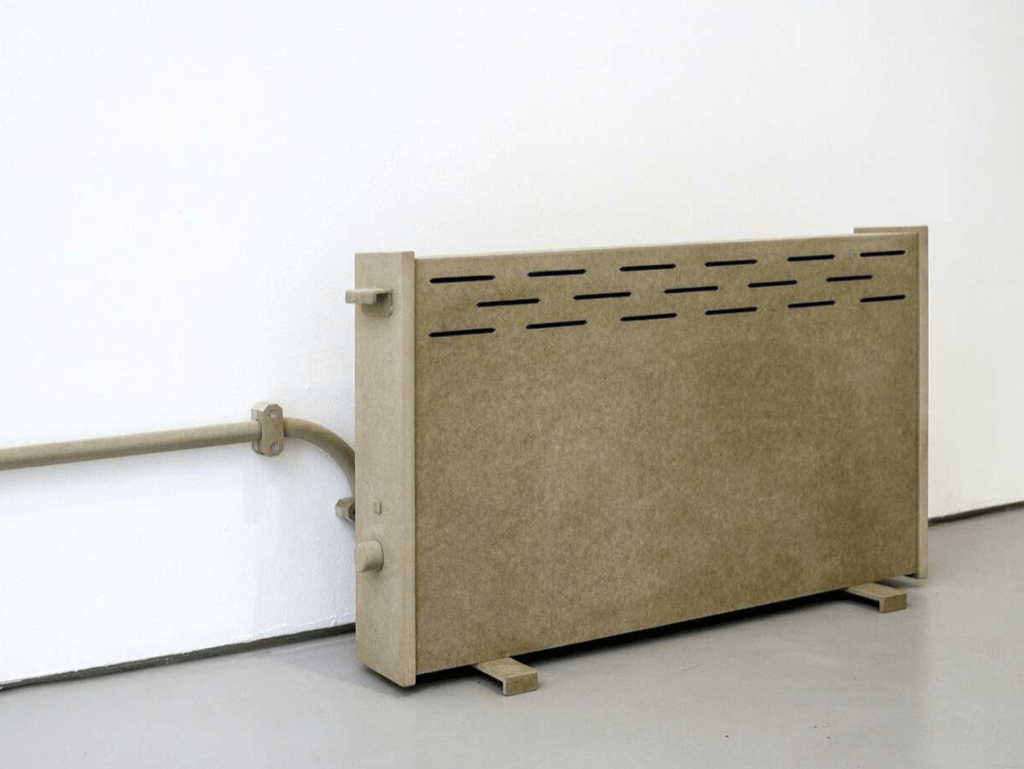
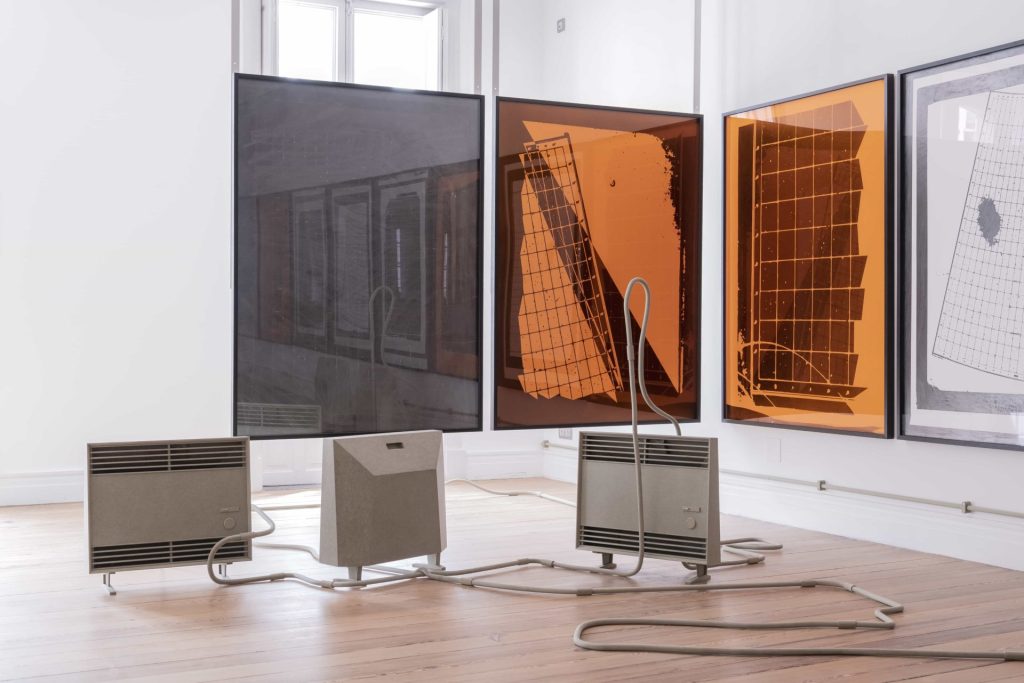
        Vieira's sculptures are constructed of an abundance of discarded factory materials and old office furniture. He looks to remake these, creating a conversation between the hand-made and the mass-produced. Where the artist mimics such items as a studio heater; he will break apart and extend the life of domestic furniture into something new but will display in its original space, like a type of metamorphosis. This makes me consider my work and how I endeavour to prolong the value of my newsprint mono prints and the imagery that is on them. The act of folding or taking an element from that work fees into this, much like where I have cut out shapes from wood that have been taken form isolated pixels in the works I have made. It delves into this notion of attempting to give the digital works are form of mass. This enables us to walk around and touch them!
“The media daily bombs us with images of ruin and large scale human and urban devastation. The idea of ruin interests me but not its aestheticization or displacement into a sheltered context, be it the exhibition or the comfortable screening in front of our sofas. What interests and concerns me is to recuperate and understand how we can use that physical and symbolic material without causing more waste, re-edifying it, raising it from its ashes. In this context, I choose objects developed for human use like tables, chairs, typewriters, or architecture and construction materials – doors, windows or floor pavement. I consider them raw materials for my sculptures. Although these objects are capable of being used, they were abandoned when the factory shut down. What I want is to get them reintroduced at a visible level. In my practice I replicate industrial procedures because, in my studio as in the factory, the process starts by thinking and experimenting the context – the work space.”
“The objects I have been developing have an address, Plásticos SIMALA, S.A., Estrada dos Pousos, Pousos, 2410 Leiria, Portugal, and that is the place where they can fully reach their meaningfulness. The elements intervened come from an industrial structure which is now my studio and this is where, along with their fellow objects, that they find their measure and fitting. That space is doomed to disappearance because urban developed so predicted but there is, on my part, an attempt to save and inscribe that place on the map of my artistic practice. On the other hand, this place allows me to achieve an awareness of issues and situations paralleled in our daily lives, such as ruin and abandon. What interests me is not an “aesthetisation” of each one of them but their relocation and reintegration into a platform of discussion and visibility within the art sphere.”
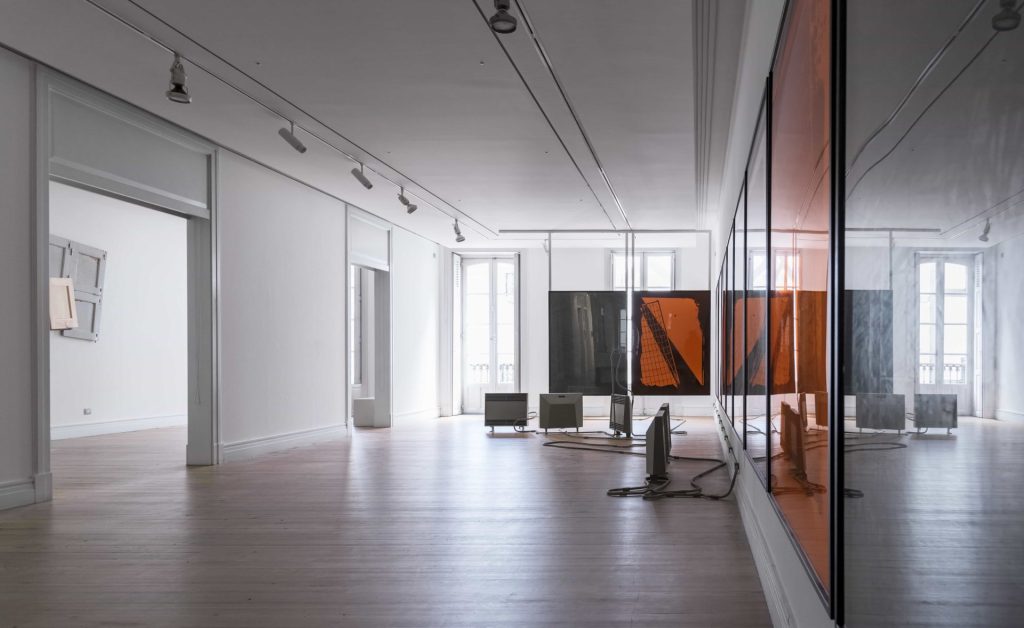
When I went to investigate the work of  Vieira I came across an exhibition that was held last year at Vilaseco gallery, Spain. The exhibition has a central nucleus of 14 graphite drawings on large-format paper belonging to the Linha Funda series, which were created by using cartographic cliches from the second half of the 19th century. The work is investigating the relationship between humans and the vastness of the night sky, and therefore the space in between. What I find most interesting is how the artist has brought together two bodies of work in the gallery space, using an L-shape model for arranging the work. The cast radiators are in close proximity to the elevated works on paper and echo the same L-shape formation. This creates a cohesive display where the works venture off from wall and into the galley space.
        Looking back to my silent critique display, this approach can provide me with solutions as to how I can progress my work, and improve the overall feel of the presentation. I feel the folded prints had potential and worked the best when I reflect on the overall effectiveness of how I envisage my work to be displayed going forward. The works were starting to come away from the wall and in heinsight this could have been developed further. It was difficult to achieve this in the critique formate as space was at a minimum, and had to allow for the whole group to observe and discuss the work. I feel what is strong in my approach, is that I relish the opportunity to rearrange the space, treating the experience like a mini exhibition. It's an opportunity to gain as much feedback as possible, allowing me the space to observe and test the work. Placing work on the window was effective and considering this in tandem with the above referenced exhibition by Richard Hamilton could lead to me to explore using structures to place the work on and use them to inhabit the floor space. The majority of my work was placed on the wall quite traditionally and I think I was displaying too much. This is another point that I can take forward, by being more considered about what I present and reduce the number of works that are displayed. It's that fear of wanting to show everything at one point, and looking at the below images of Vieira's work, the whole space does not have to be filled with objects. There is much of the space that is not used but allows the installation to take advantage of the L-shape, that duplicates the corner of the room, leading out across the gallery wall.
 Marco Carofalo ART
Leave a comment