For this week we had two gallery visits organised, the first was at Goldsmiths CCA called Testament. This exhibition was featuring 47 artists who were asked to consider what it means to think about monuments today. I was excited to view the show as was keen to see how multiple artists would position their work together in a gallery space. The theme was also important as would help to firm up my monument proposal. It was productive to see how this diverse group of artists responded to the topic. It was clear that the notion of a traditional statue was discarded. There were a number of works that featured text, covid was a common theme with its repercussions still being felt and understood today; some focused their response to other social events that took place, like the response by Roger Hiorns.  He exhibited protest boards criticising the UK government's handling of the 1990's CJD crisis. What I found interesting was that Hiorns proposal was not the work displayed but a continuation, a new proposal reflecting on his Pathways work in 2007. This was a memorial to 177 young people who died from the brain disease. The artist is still in contact with one of the mother's who's son contracted the disease. Hiorns is still invested to the people who passed and those who still live with the ongoing impact of the crisis. The monument he proposes now is a modest sheet of silver that reacts to those who come in contact with the material; stains are created by the reaction of those who visit. The work will retain the marks and act as a non-monumental intervention point where the memory of the lost will be retained. I like the idea of a monument not being static but reacting to those that visit, therefore, becoming something that evolves and does not loose its meaning. This makes me further reflect on my monument proposal and how I can allow the work to further resonate with the area and people who come in proximity to the work. Could text be incorporated into the work, highlighting comments from people who are against the culling of animals and link the work to other local matters in the area surrounding the university?
        This exhibition was particularly prudent as I have a test exhibition in the next few weeks with a group of peers. All the work was very different, from installation, video and works situated on the wall. The key point I take away here is the concept or title for the exhibition that binds all the work together, even though they are all very different. This will be important to combining all the works for the test exhibition; a simple theme of having all the works displayed on the floor could provide a way to relate all the work together and create a cohesive display.
The above work stood out to me in terms of how the work was adhered to the wall using the mechanism from a ring-binder folder. This really made me think of how I could display prints or exhibition material.
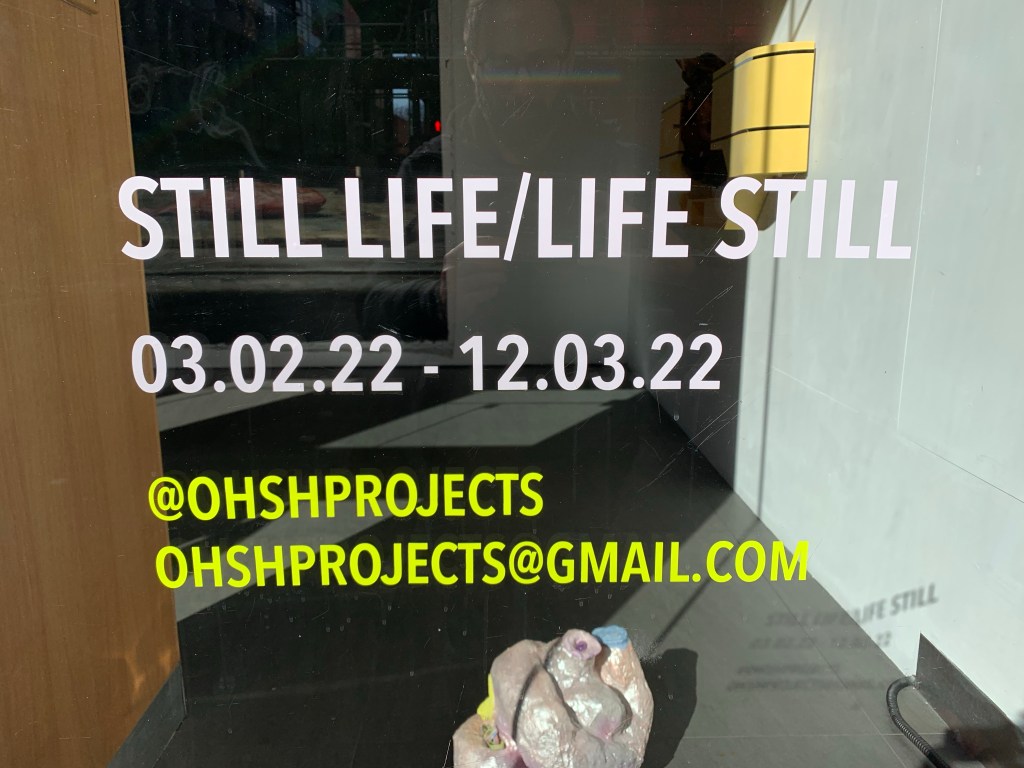
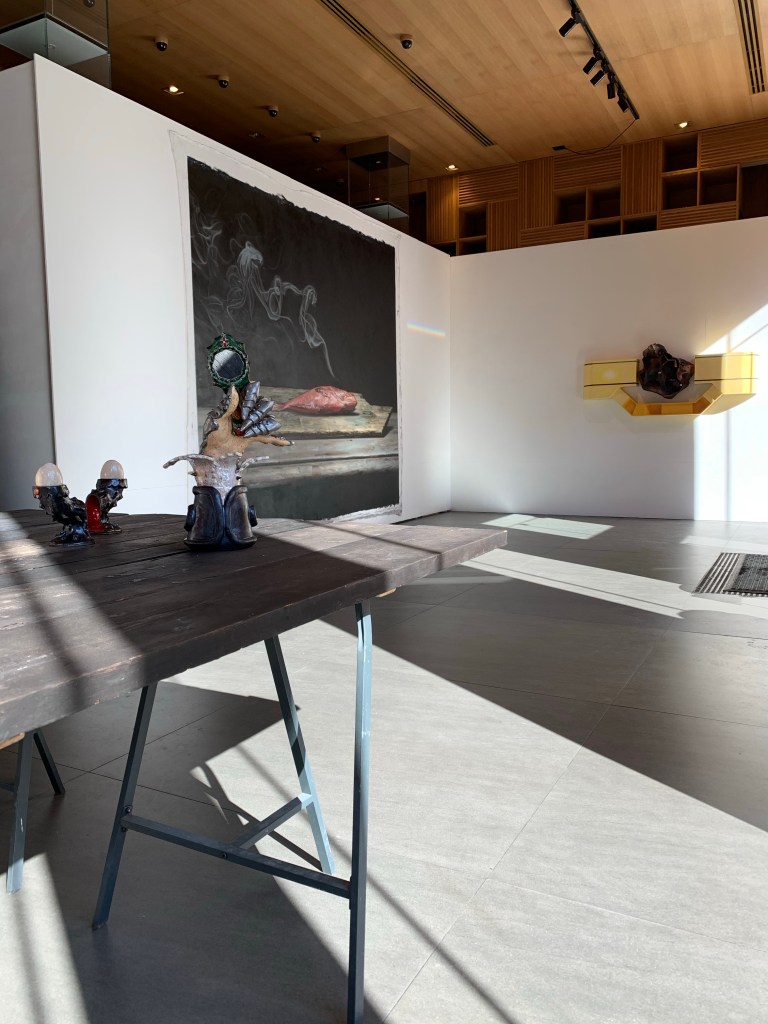
The second exhibition I found extremely useful and effective in terms of the curatorial process. The exhibition was held at OHSH Projects and featured the work of our tutor. It was great to see the work and gain valuable insights into the exhibition process.
The curators took the time to provide us with valuable information with how they organise and curate work. The central table played a key anchor to the exhibition and allowed all the work to feed off each other. It demonstrated how different works can be curated together by leveraging a particular object, colour or theme. Here the table was referenced in the background large painting which referenced the large central dinning table, works were then situated on and around the table. The works on the table were also linked to the paintings on the wall with the pastel palette which further integrated the pieces together. Everything was carefully considered and demonstrated the time needed and considerations to works in order to curate a successful exhibition.
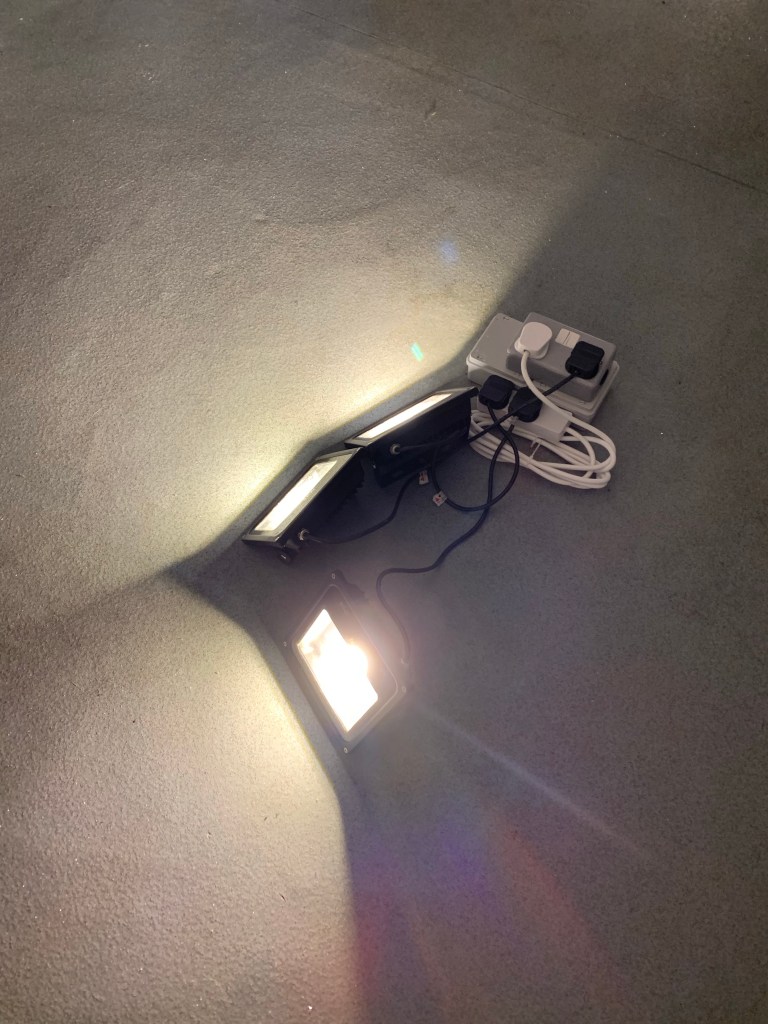
The other half of the exhibition was situated on the lower floor which had work displayed in separate cubicals, that were all connected by the central lit-up space. For my test exhibition I want to experiment with lighting and projection and this part of the display gave me much food for thought. The floor lighting they used looked like it would work perfectly for lighting up my prints that have been printed black on black. At first they are difficult to perceive but once the light interacts with the surface of the print, the image is revealed. I feel this approach would work particularly well with the dark basement space.



 Marco Carofalo ART
Leave a comment