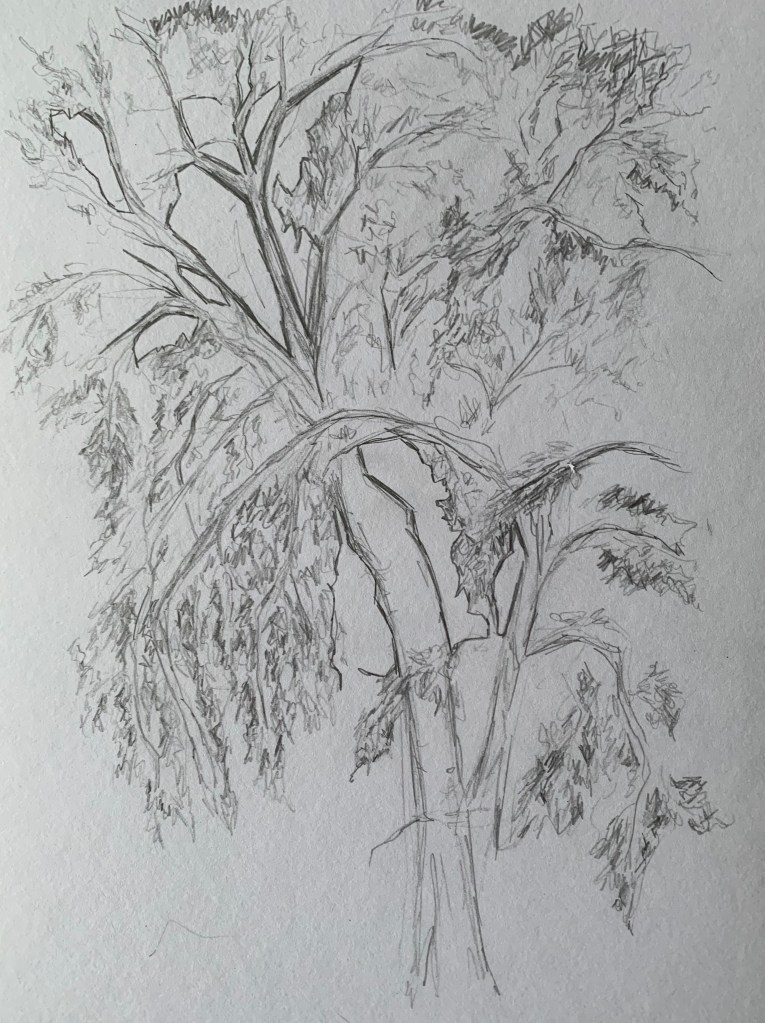
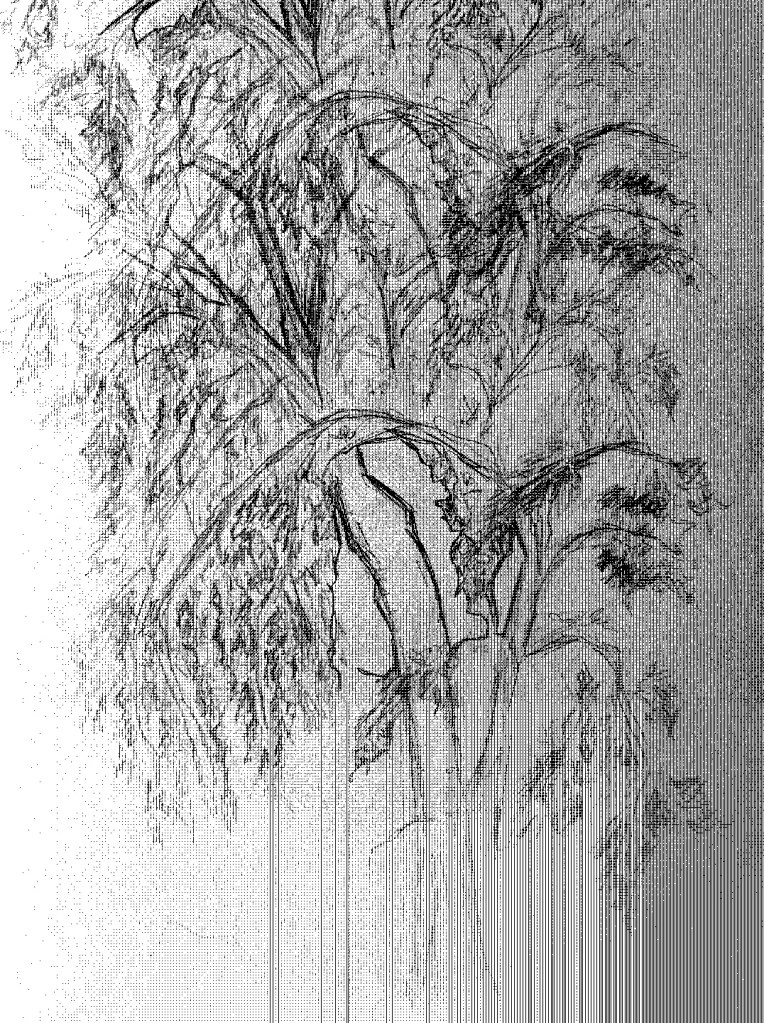
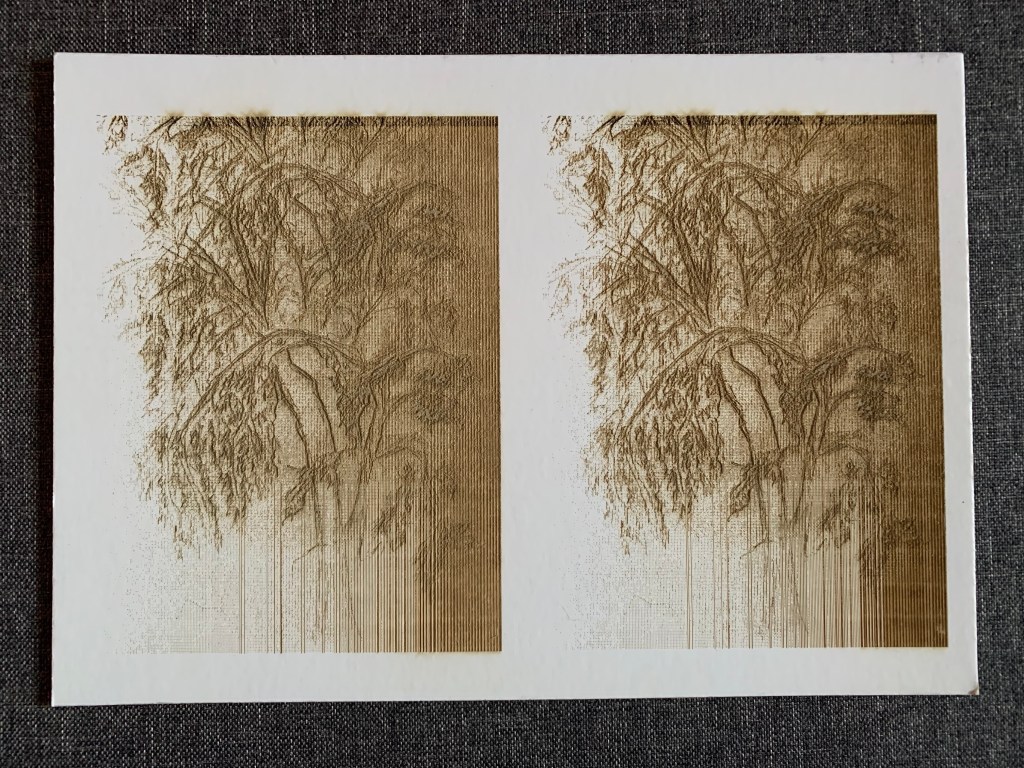
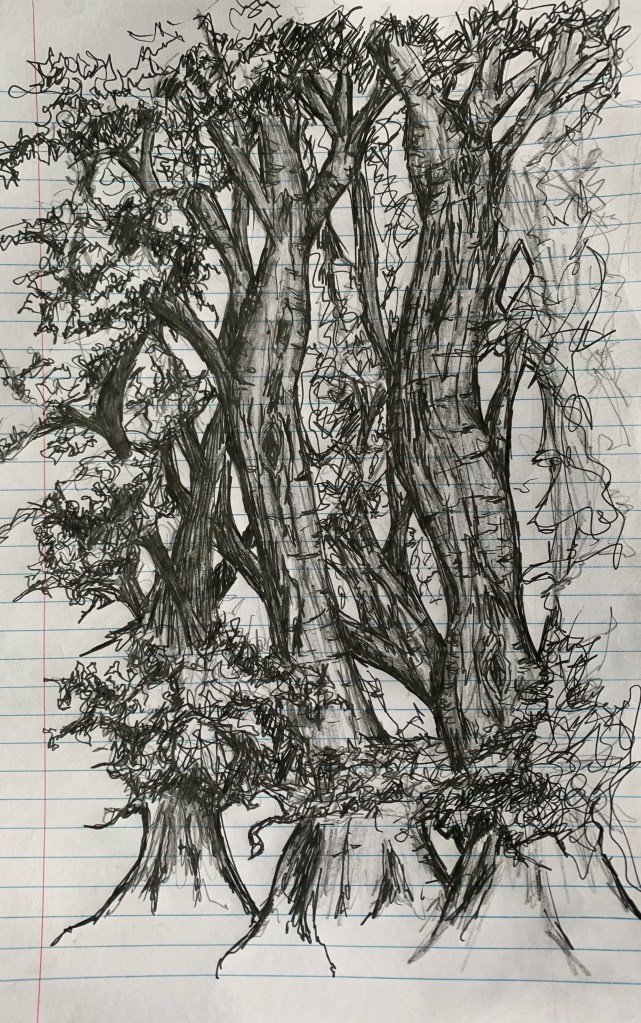
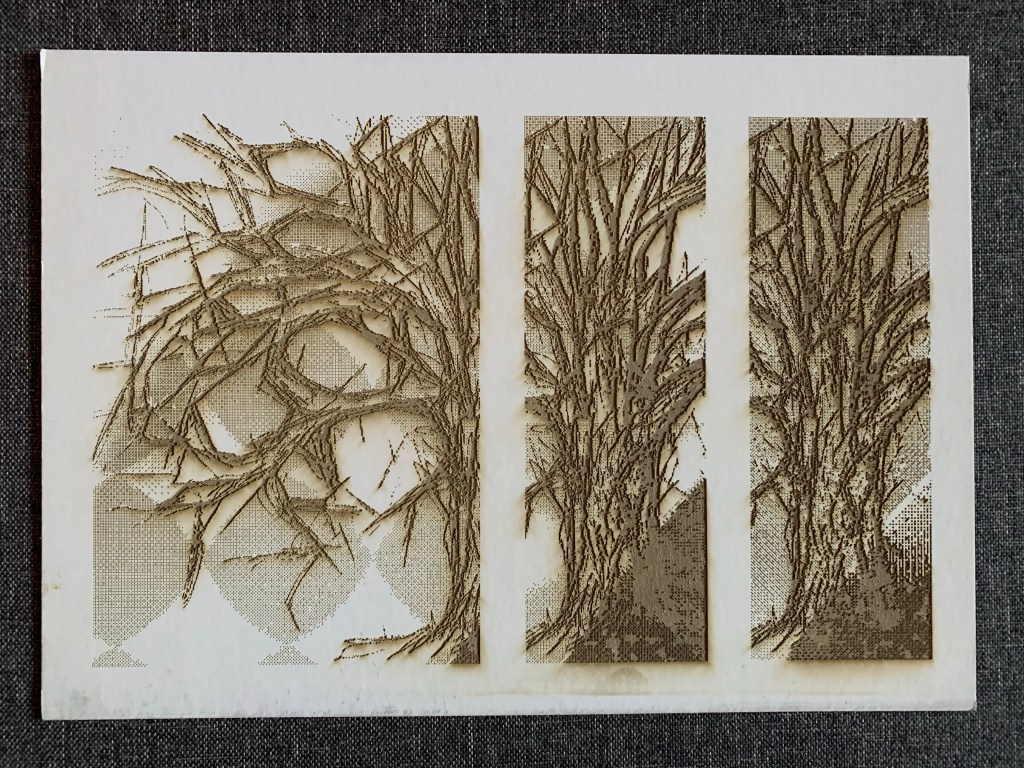
Tree SketchSketch digitally manipulated Laser-cut mount board plate Image detail
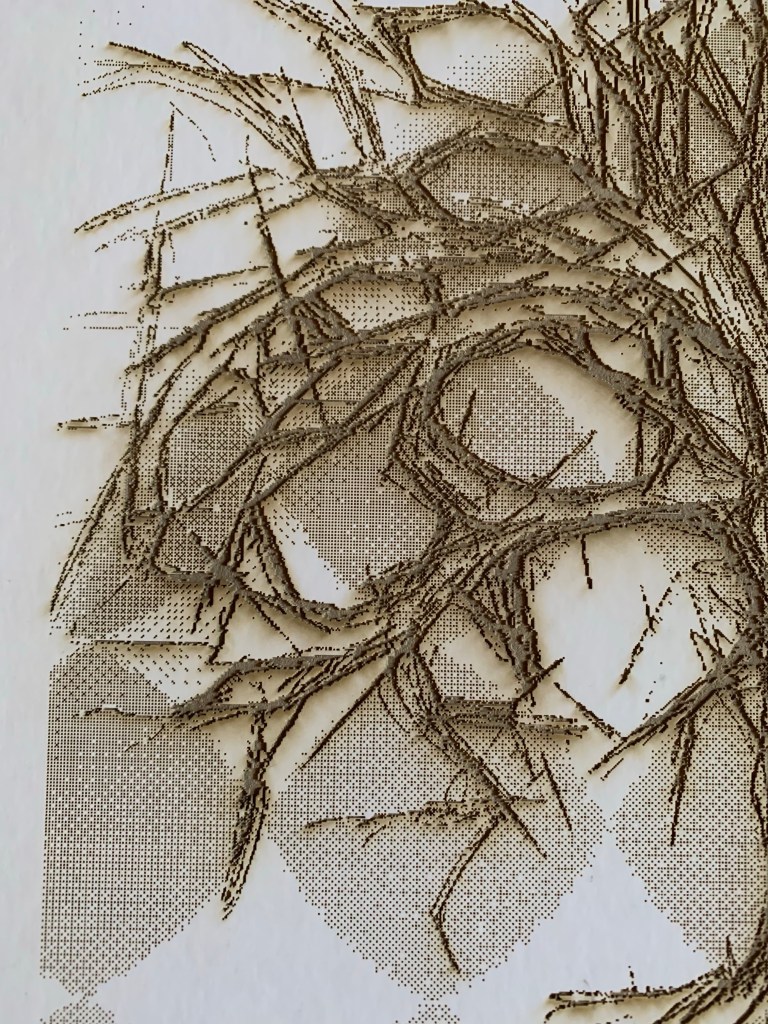
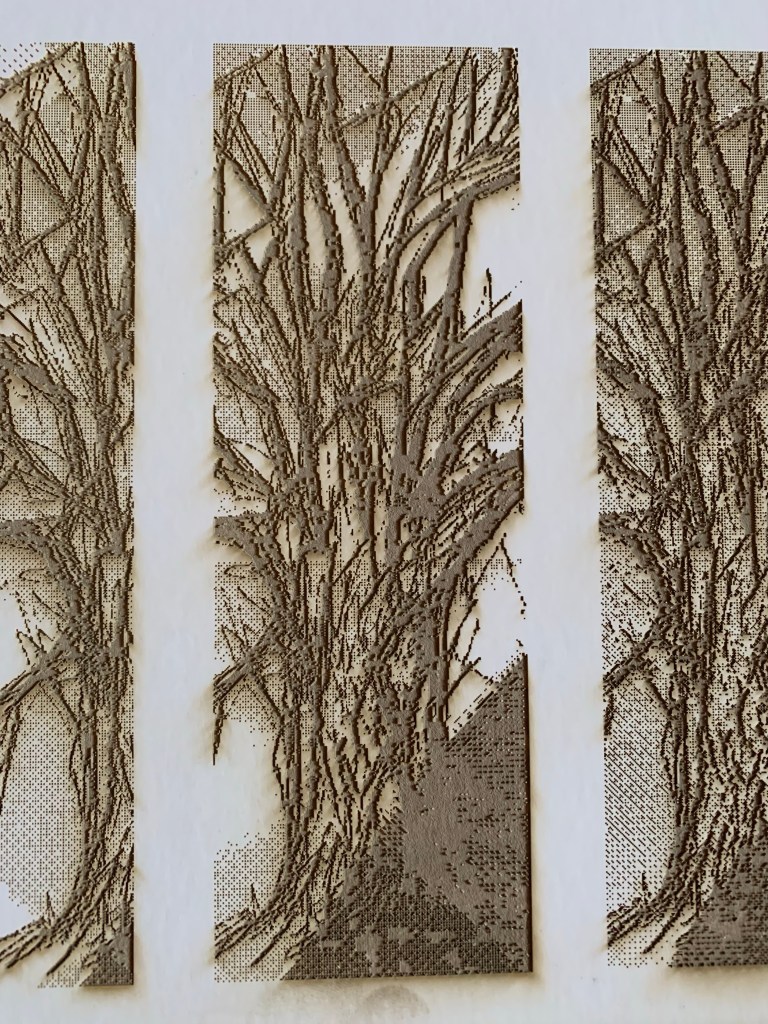
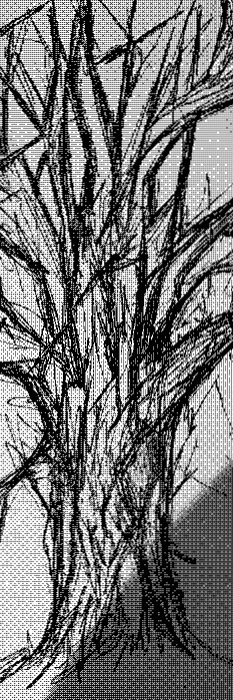
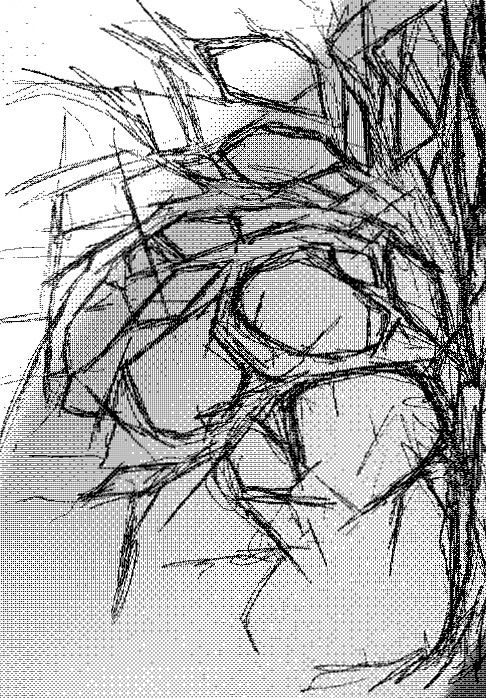
The above images show one of my sketches that has gone through my process of digital manipulation. The work goes through a number of software packages where the number of pixels are continually adjusted until the grid like structures begin to appear. I’m trying to capture that moment I observe on the screen when the screen struggles to display the information and the pixels interact to produce the grid-like tessellations.
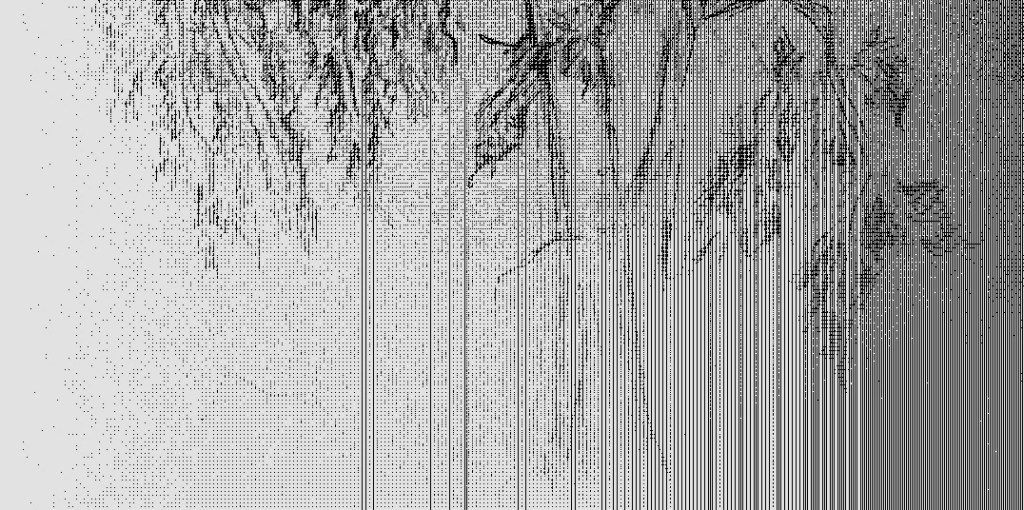
        What has become apparent is that as I interact with this process of manipulation, I’m drawn more into the details of the screen. The overall image of the tree is becoming less important, where my attention is now focusing on the details happening around the image. The scale is changing, where I am developing a closeness to the screen, attempting to pinpoint the individual pixels and glitches in the image. The are the areas I now seek to exploit and develop further.
Laser-cutting test references Laser-cutting tests
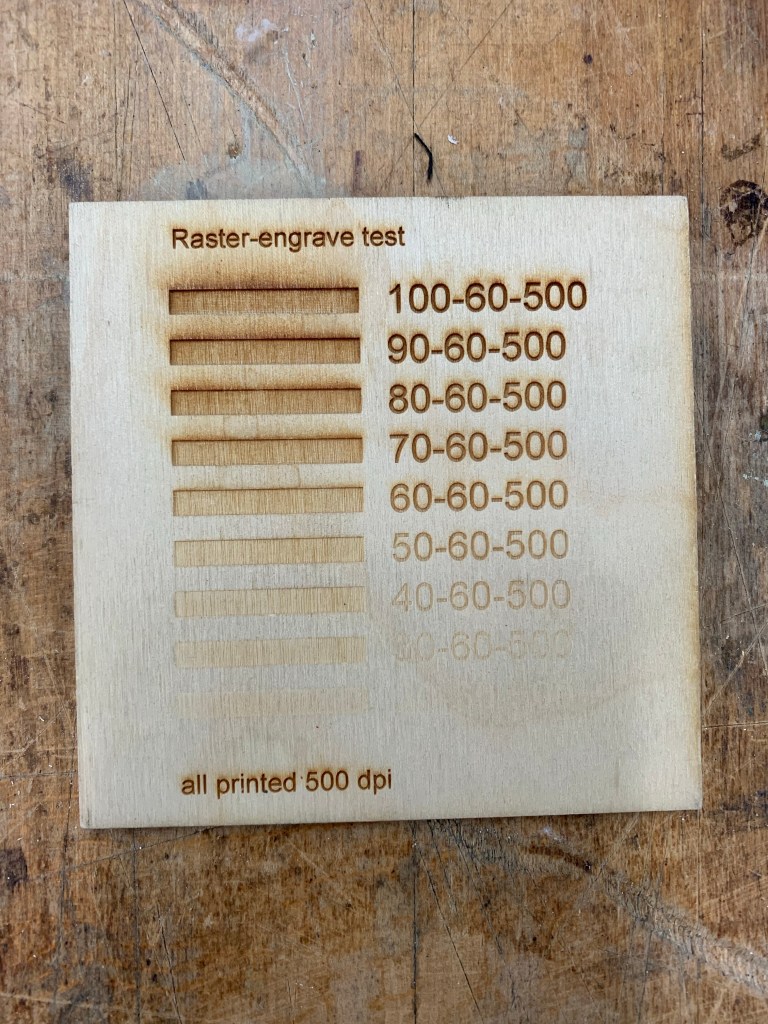
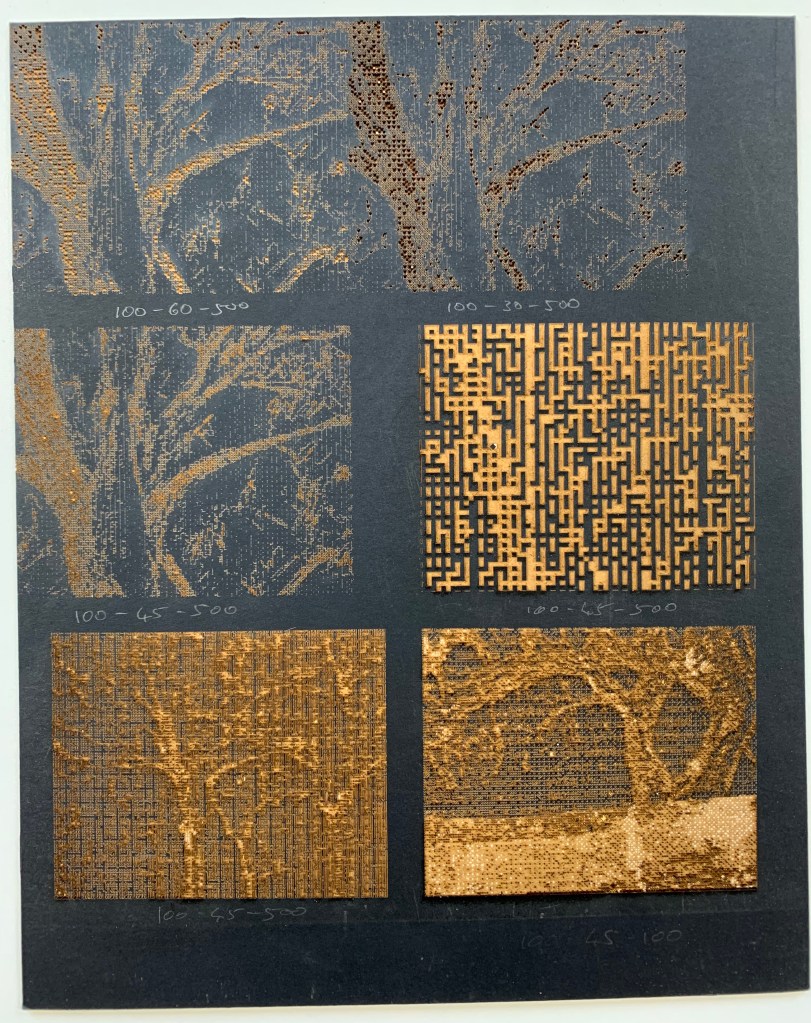
Much testing has taken place using the laser-cutter to develop my images into printmaking plates. The number of pixels, resolution and settings of the laser cutter all have an impact on how the matrix and subsequent print forms. Cutting the plate at 80-60-500 give the best results when using the laser-cutter across all materials. Using Perspex or wood, such as plywood and the found piece of wooden flooring could go higher on the scale and would not break up the plate at all. These were harder materials and would be prefect for printing an edition.
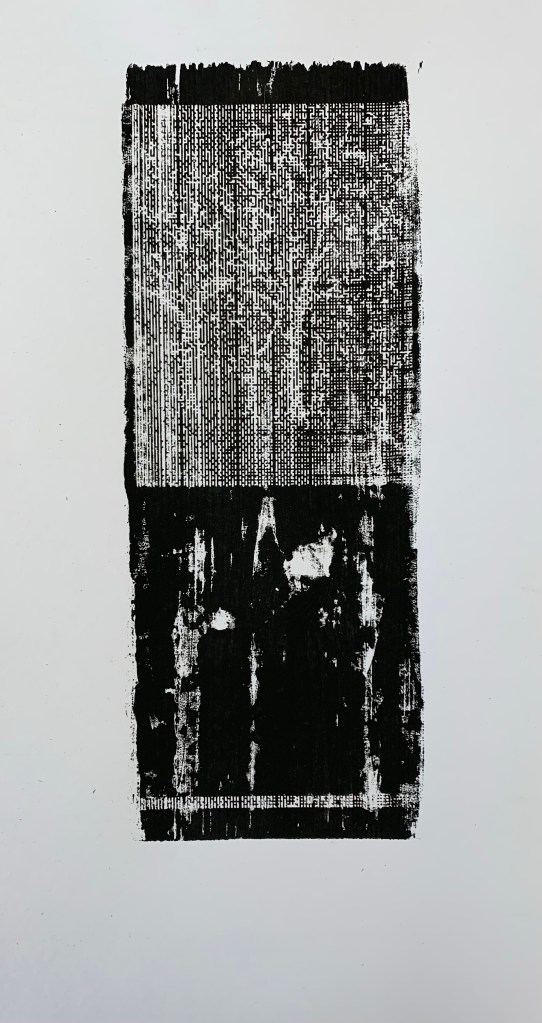
        I have tested many materials to observe the robustness of the plate; due to the fine detail, the plate can break up when going through the printing process. This is especially apparent when using mount board, as the image will deteriorate after the first print. I actually like this fragility in the material and translates with my concept of one-off unique prints. The plates themselves are interesting objects and act as a piece of work in their own right.
Print detail of surface breaking up Print detail of the plate breaking up
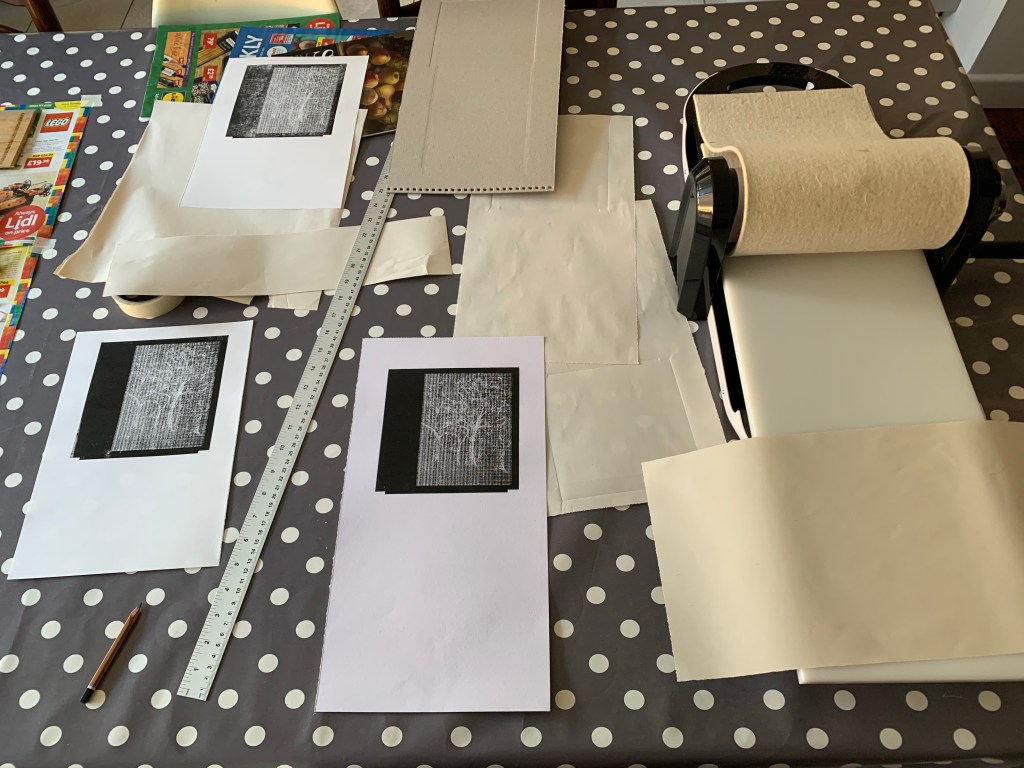
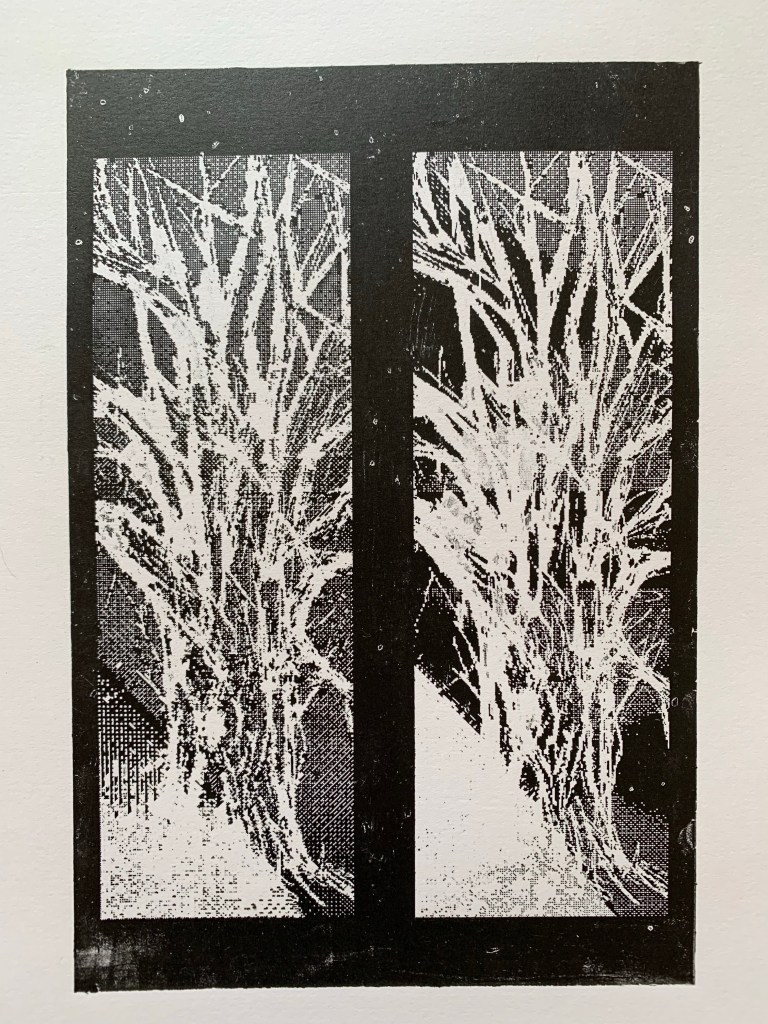
All the prints on the post have been printed at home using my mini-etching press. I find the etching press provides the best pressure for printing these plates when using the relief press at university would not provide an even coverage of ink. Unfortunately, I was unable to use the etching presses due the fact they were set at a specific pressure for other classes. This was disappointing and I would of liked to been able to print at a larger scale; I was restricted to A4 width at home. This still worked for me and was able to produce prints at a smaller scale and still observe the surface of the plates when going through the printing process.
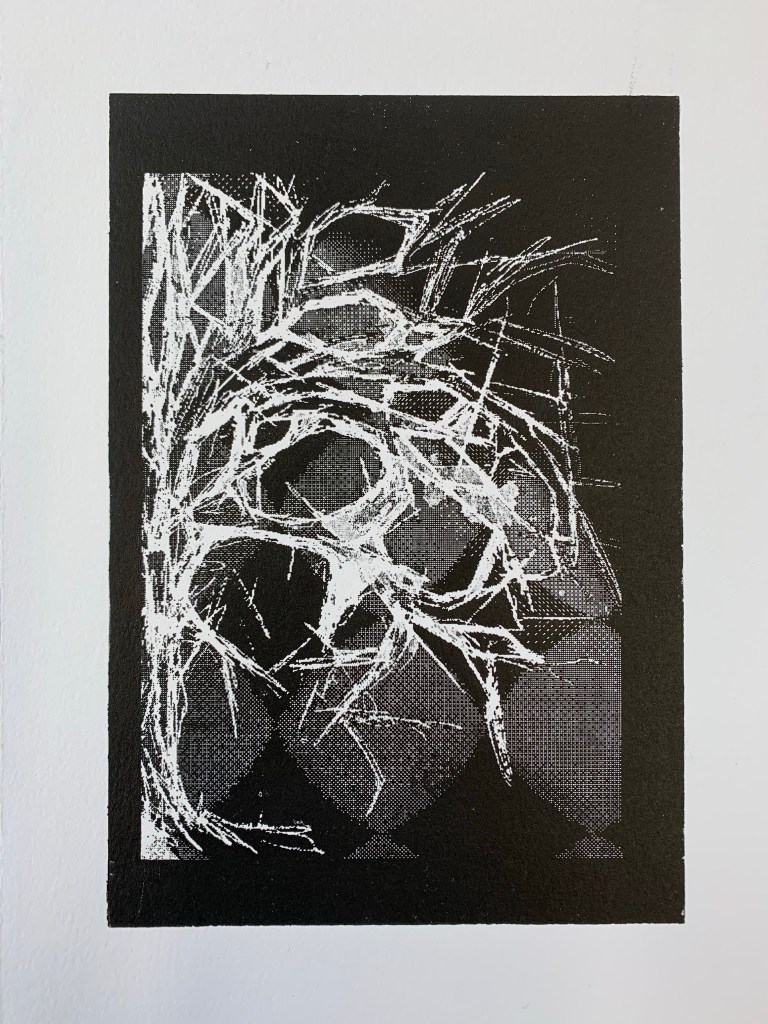
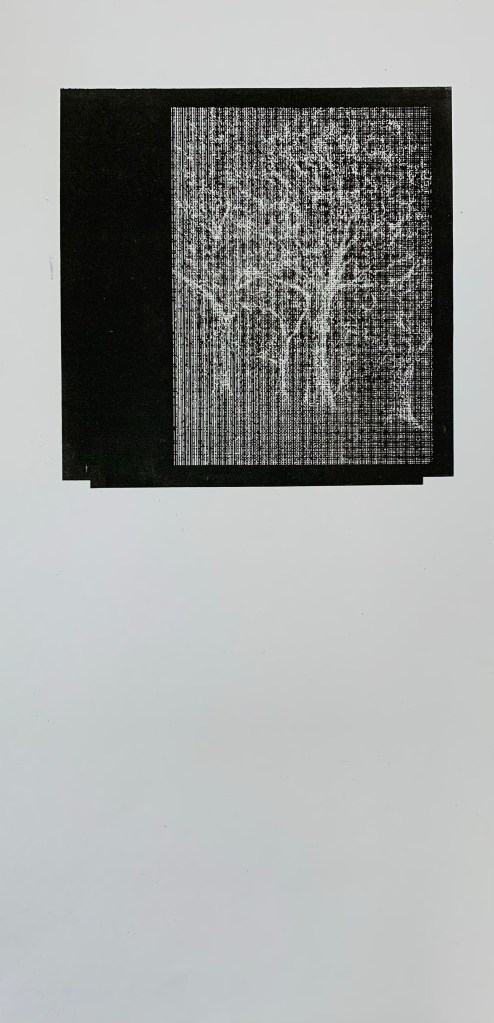
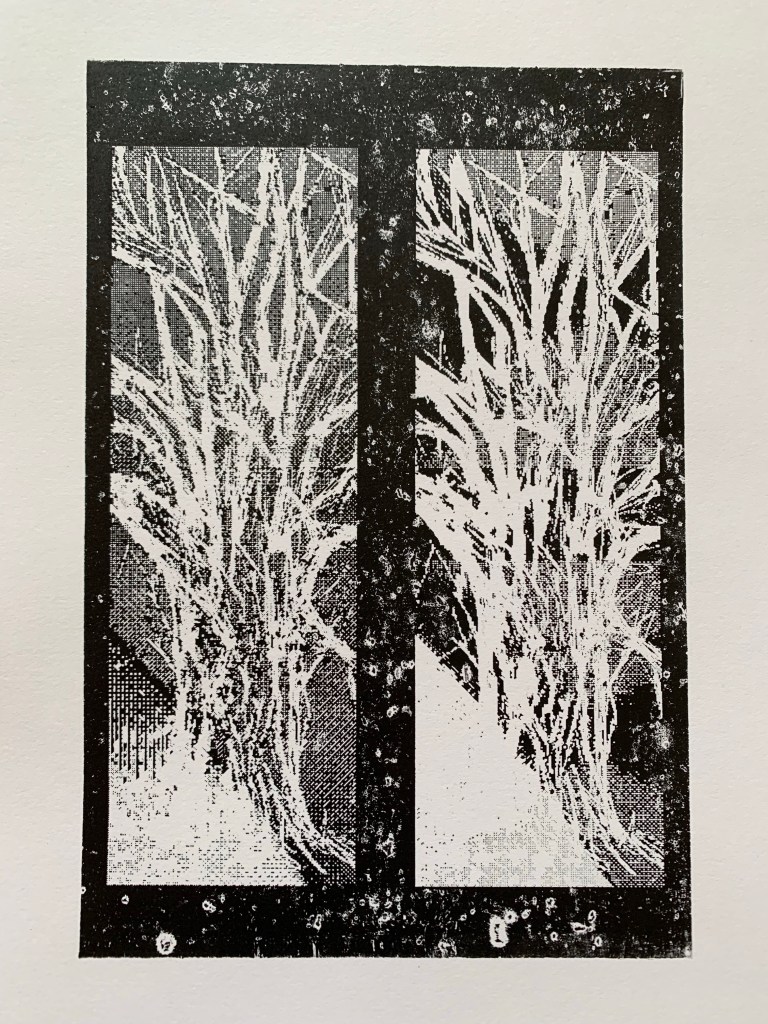
Tree sketch Tree sketch Home etching press Relief print taken from mount board plate, using oil based ink , printed using my home press Relief print taken from Perspex plate, using oil based ink on home press Relief print on found section of wooden flooring, using home press with black oil based ink Second print after cleaning plate First print detailing particles
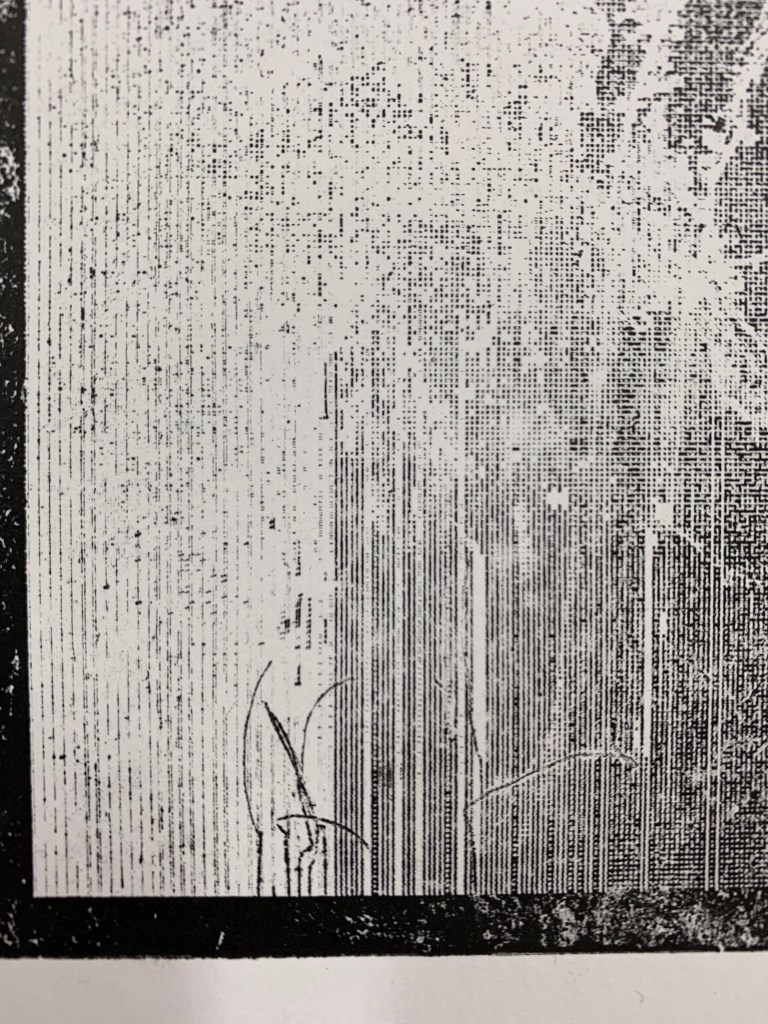
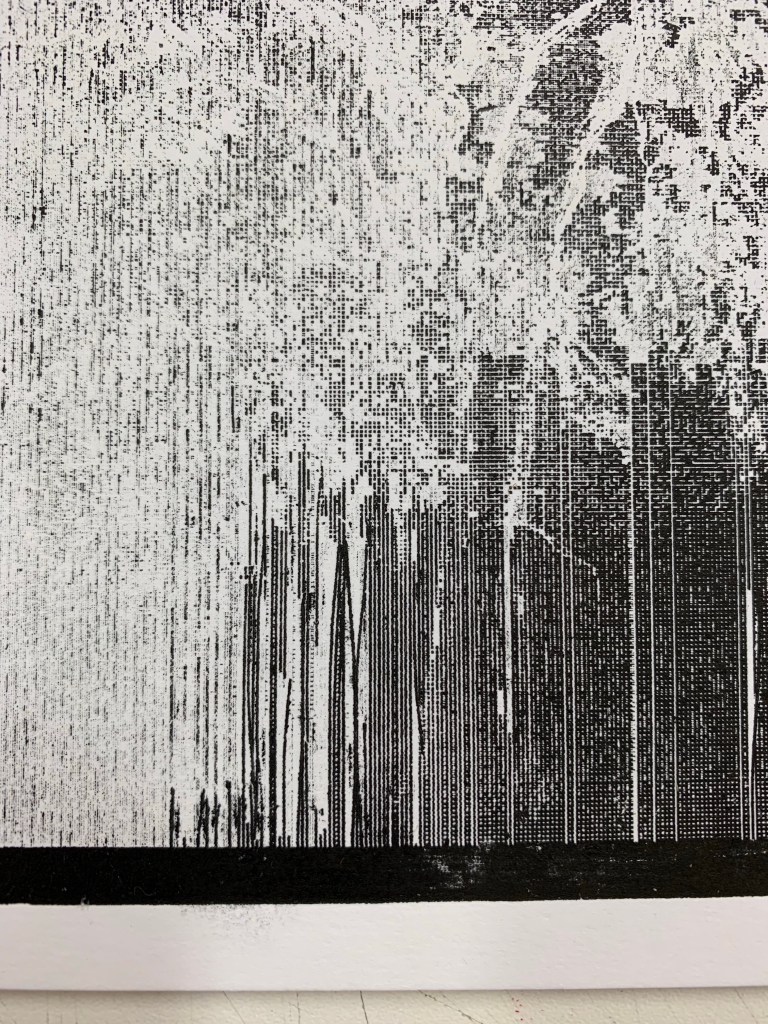
The above images highlight one of the common problems I encountered when printing the finely detailed plates. After the first print there would be an amalgamation of particles left over the print from when sections of the printed pixel came away from the matrix. This created a pitted effect which would then impact the next print. I had to clean the plate in-between prints and remove all the individual particles by wiping the surface, being careful not to break up the plate further. Once this was completed and all the fragments were removed from the roller and the inking plate, I could go ahead and run another print.
Detail of laser-cut image Detail of laser-cut image Laser-cut image Image detail Section of digitally manipulated image
I love how my marks are interpreted by the software when I take them though the journey of digital manipulation. It brings out my physical activity, where each mark can be observed. Drawing for me is becoming more of a struggle where I experience pain and fatigue in my arms and hands, with my ability to hold a pen or pencil being diminished. I tend to draw less and less now so being able to work in this way allows me to develop the marks I can make and extend them to make more works. This is an exciting prospect for me where working digitally extends my hands in a way, there is a necessity for me to work like this.


 Marco Carofalo ART
Leave a comment