
Something I have been developing further in my practice is the disruption of the surface of my prints. Printing across a number of arranged sheets of paper at the same time yielded great results. There was that magic moment when the sheets of paper were removed from each other, creating a distinct gap and fragmentation of the imagery.
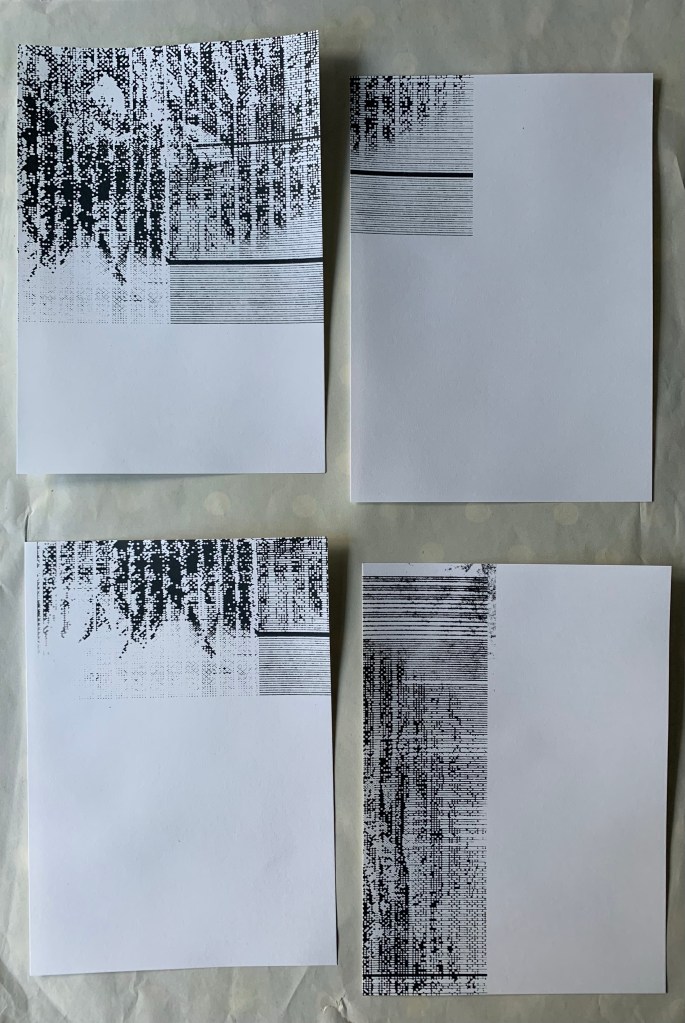
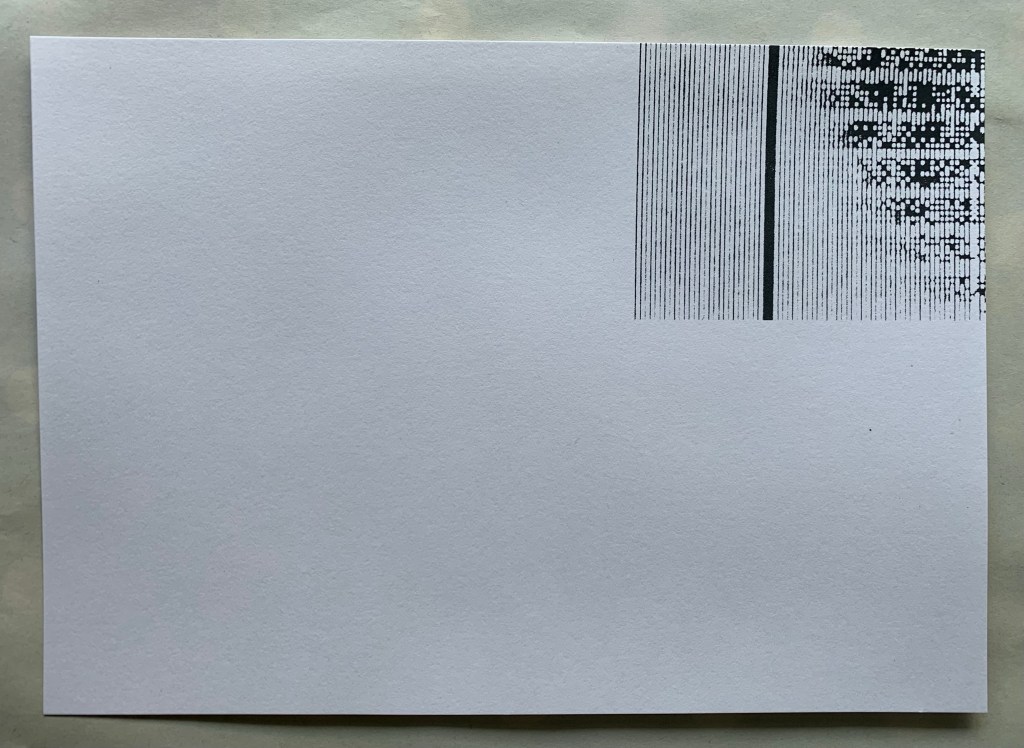
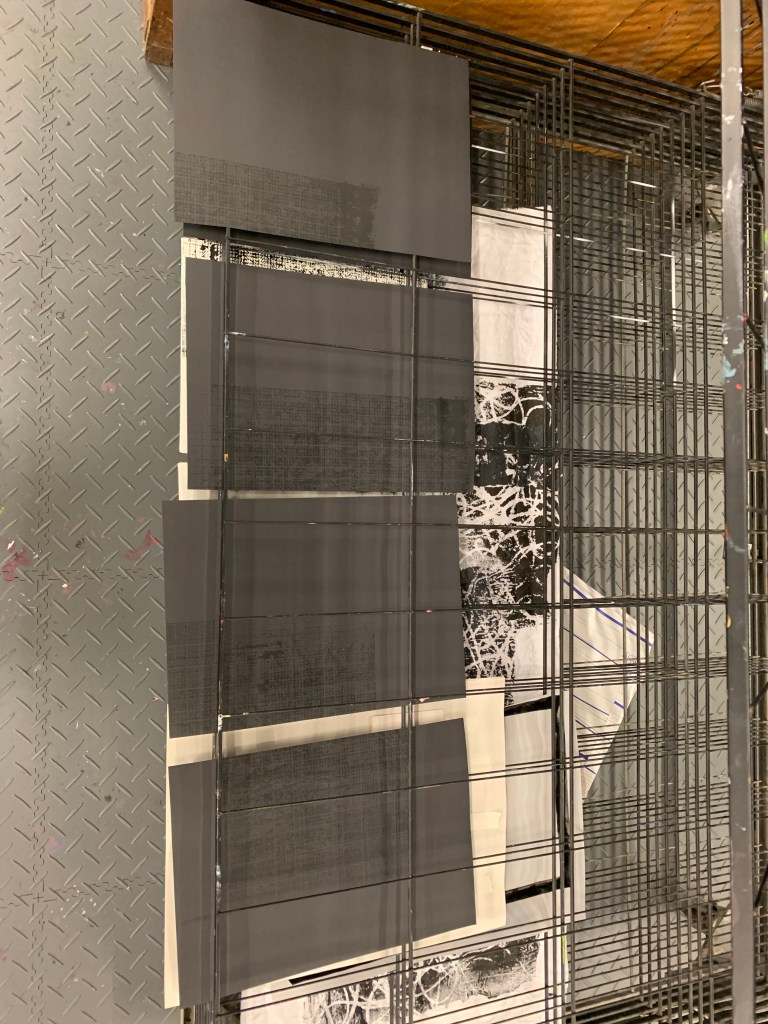
This approach activated the negative space surrounding the fragment of printed ink, the individual sheets formed unique prints in their own right. Continuing to pursue this mode of breaching, I proceeded to test various sheets of black paper and printed using black ink. I wanted to observe how the ink would appear on the surface of the paper and if this would be visible. The distinct qualities in materials and depth, although small would allow the print to be seen and would capture the light. I also mixed black ink to create a richer tone and tested metallic ink also. They all had very similar results but what got my thinking was how they all captured the light. It would pick up the raised surface of the ink, it was certainly not flat, and this is what led me on to use artificial lighting to active the surface of the print.
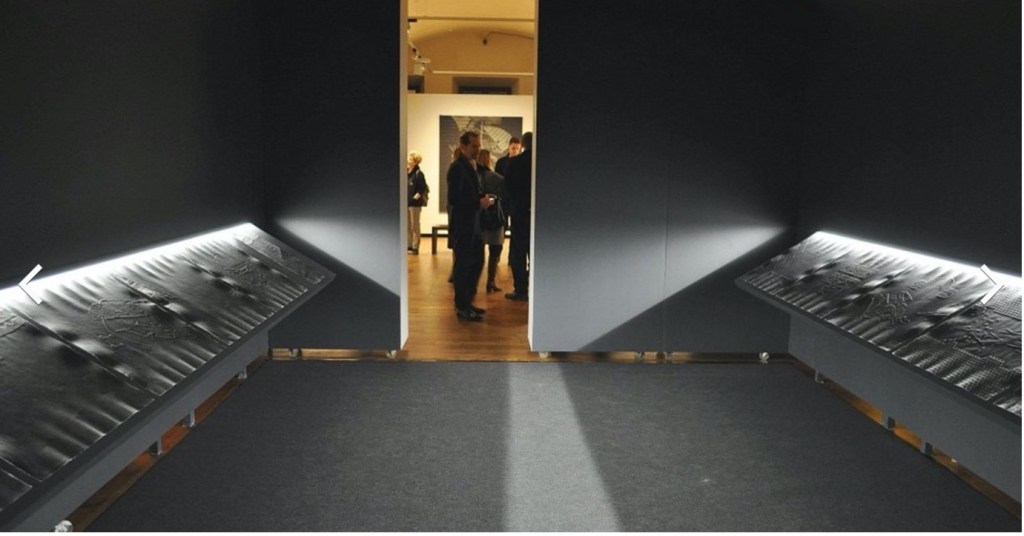
Here is a prolific printmaker I came across, Romas Viesulas for a particular piece of work, whilst I was considering ways to display my prints, working with black ink on black paper. I was instantly taken by the configuration; the prints took up a whole room and were positioned diagonally.
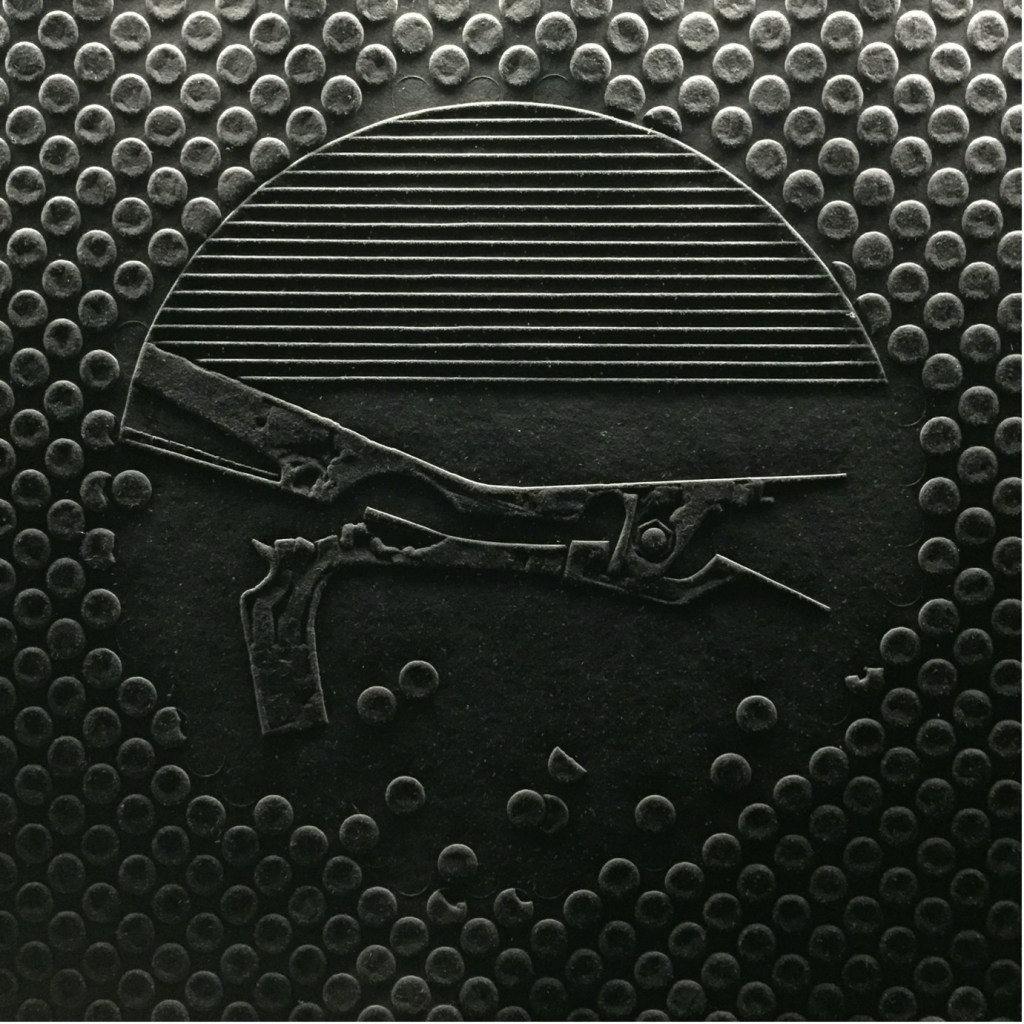
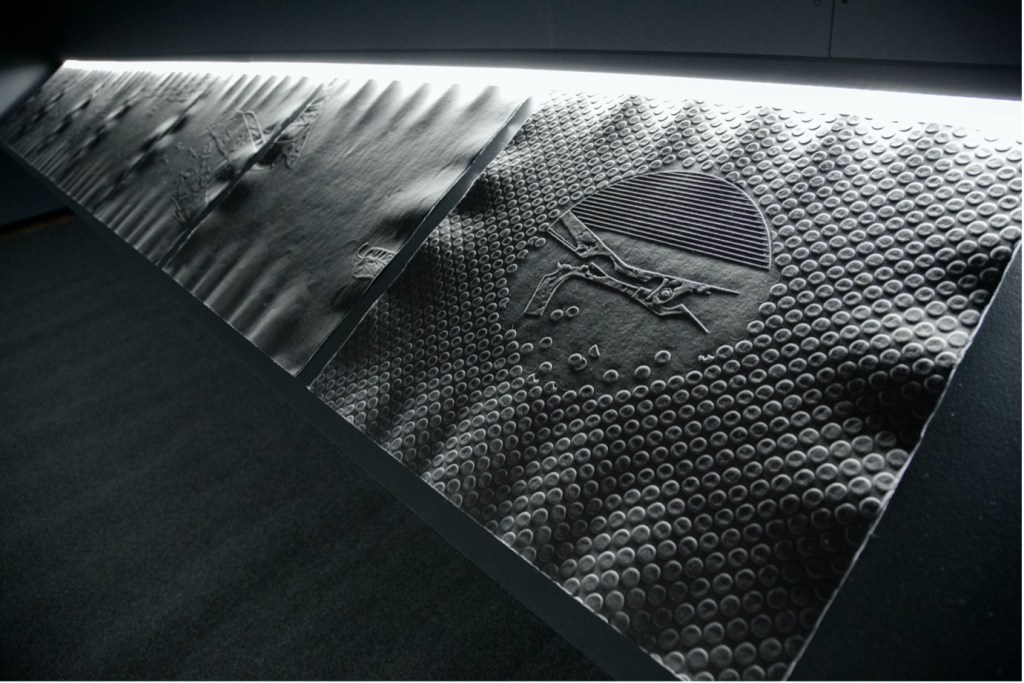
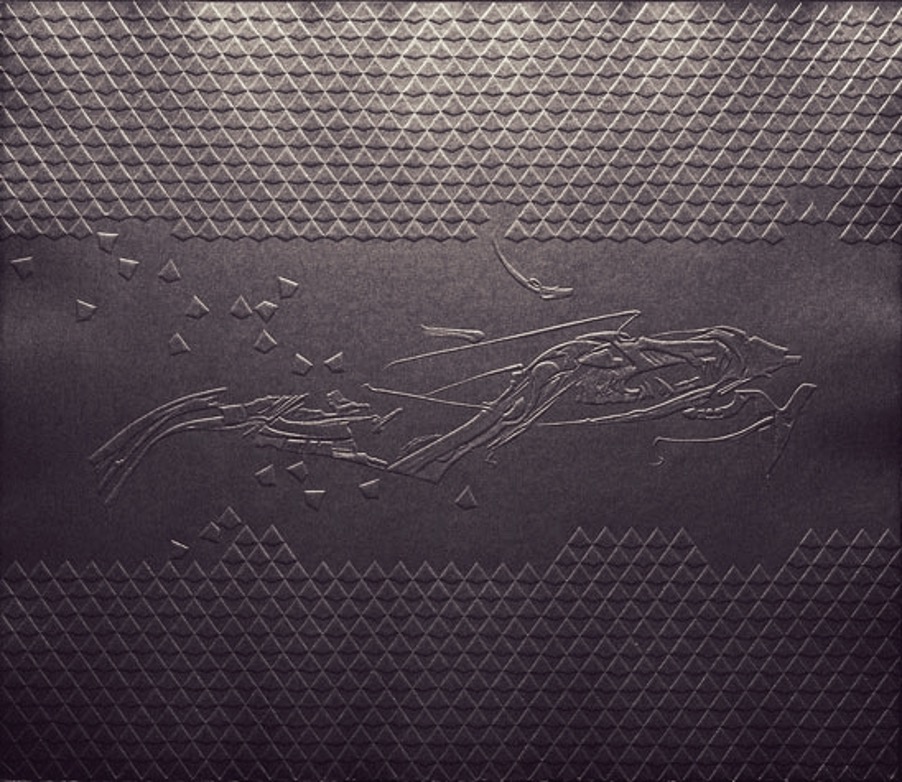
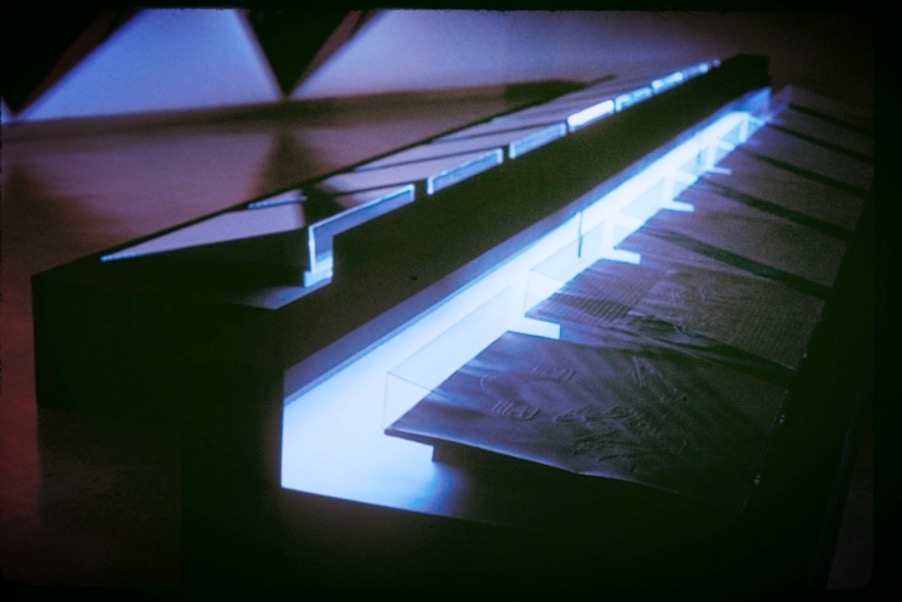
The work was installed in the purpose-built chapel-like space at the Rothko Centre. What I admired was that they were a series of inkless intaglio prints on hand-dyed black paper – could I make my own paper or paint a surface to print directly on? These were described as a series rather than an edition with each print being different, therefore, playing out like a story. The installation and lighting is an integral part of the work and does not just act as scaffolding, the work would not be able to exist without it. This provides me with ideas of how can make a black-on balck print and use light to trigger the work. The print would appear to the viewer once light lands on the surface. Raudos is Lithuanian and refers to songs that women would traditionally sing at someones burial. The display does have the feeling of a type of vessel in a place of contemplation, thus relating contextually to the work of Rothko where the work was installed.

The below is a description by the artist’s son describing how the balck paper was made.
Individual sheets were dipped by hand into vats of black ink, until the ink completely saturated the paper, but then would need to be dried very carefully to maintain an evenness of tone and a consistently smooth surface, so that it wouldn’t buckle or warp as it dried. Our neighbors growing up would have laundry lines hanging with pyjamas, socks and underwear. In our yard, we had long lines of black paper hanging in the breeze, like some sort of gothic parade, maybe like the Adams Family or something. It’s striking that even now, almost fifty years later, and after being exhibited a number of times, the tone is true black, with no fading or gradation. This was a hard-earned effect!
I love how the light can be seen across the material and appears bright, picking up the embossed print. I want to be able to fill a space with my prints and importantly, not have them displayed on the wall. I want to activate the space between the work and the viewer, where they can walk around and interact with the display.
        Thinking how this could be progressed further, the printing matrix has always been important to me - this can be seen in a previous post of my first silent critique, where I was displaying the plate. This is often a device that is absent when prints are displayed. Could the object of the plate not be used to print on paper but leveraged as a reflective surface? Once an image is made on the plate, such as my laser-etched images, could the material be treated with a metallic paint which would then reflect the image when light was aimed at the surface?
 Marco Carofalo ART
Leave a comment