A key material used in my work is plywood, this relates directly to the starting point of trees and the journey it takes in manufacture process, situating itself into the inside environment. Each work is influenced by its predecessor or surrounding environment. These have developed from my earlier folded monoprints.
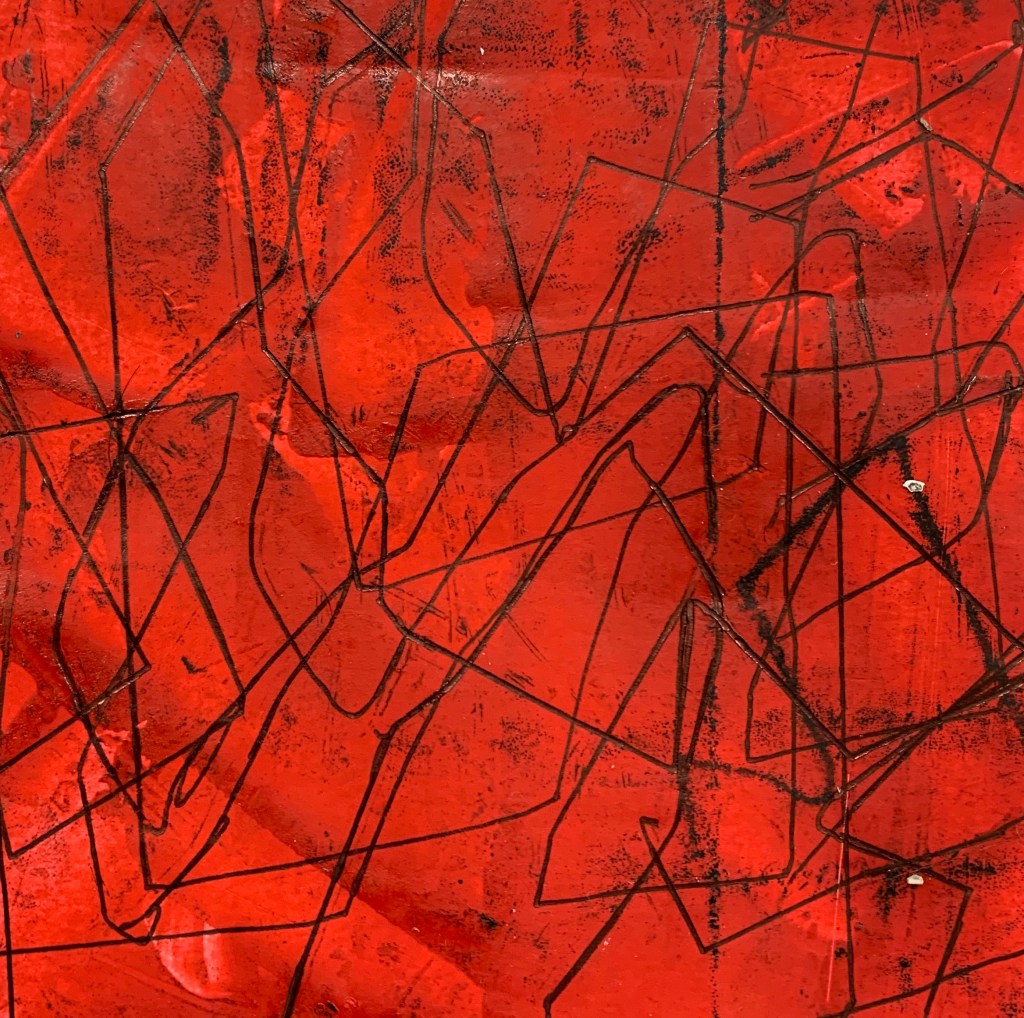
Print detail
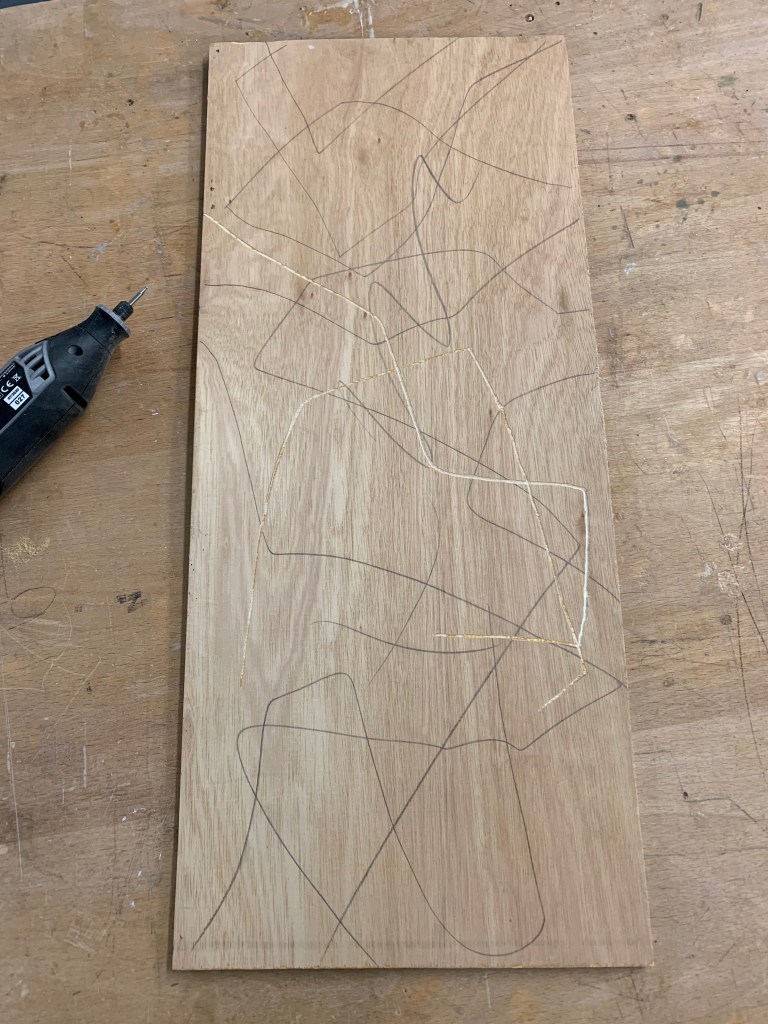
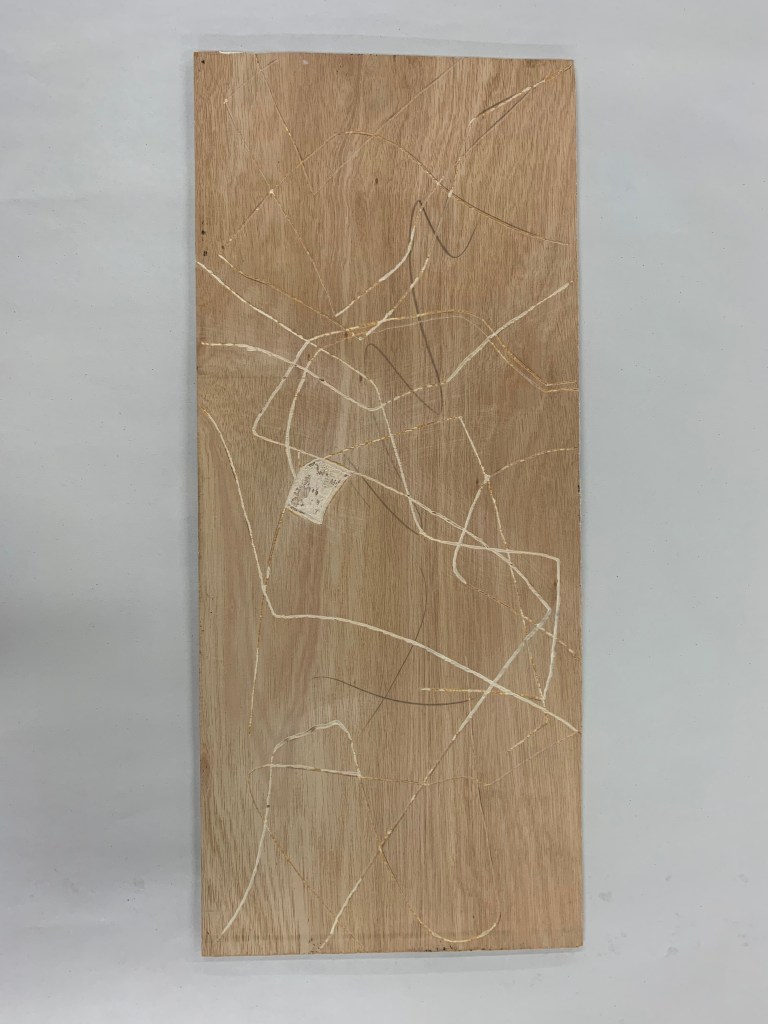
I want to exploit and further develop the overlapping and repeated lines that appear in the prints. I feel creating these marks in a section of plywood, would lend themselves well to forming a plate that can be used to create folded prints. I used a Dremel tool to mark the surface of plywood, creating random marks and scores taken from the previous prints.
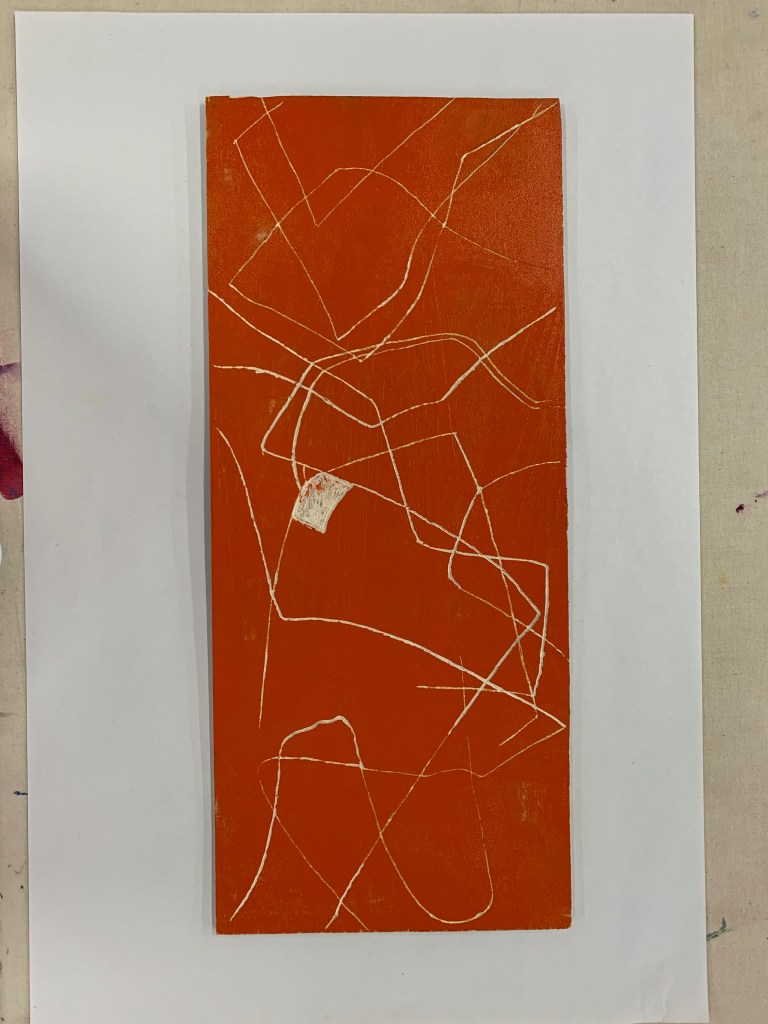
Marked plywoodMarked plywoodInked plywood plate
Observing the plate when it was inked with oil-based ink gave the piece a totally different feeling and looked effective as an object in itself. I am always fascinated by the radiance of the physical plate and often think that the matrix can operate as the work, rather than used to birth prints. I consider that this consideration is down to the fact that I am very process driven and seek to display all the elements of my making process.
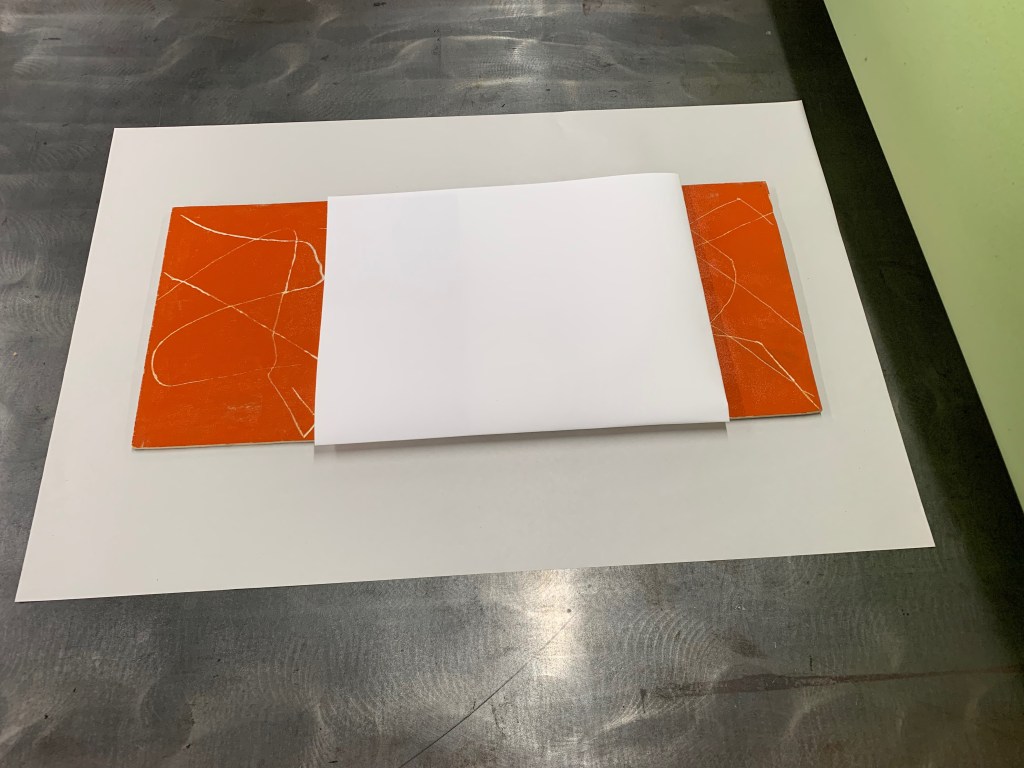
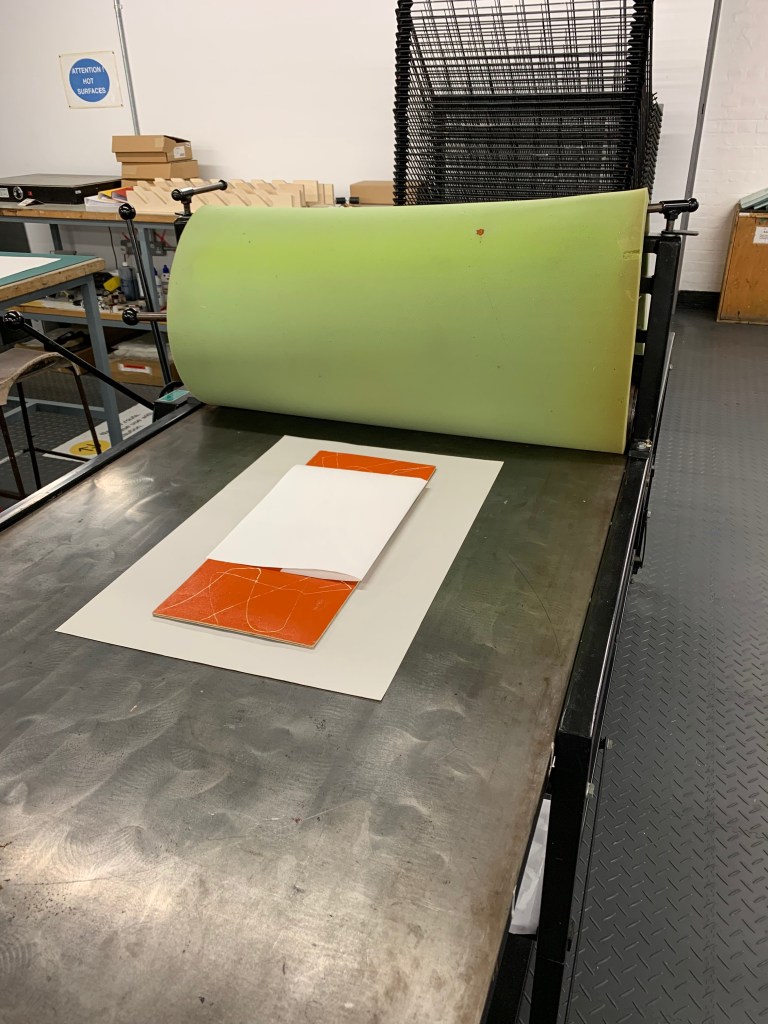
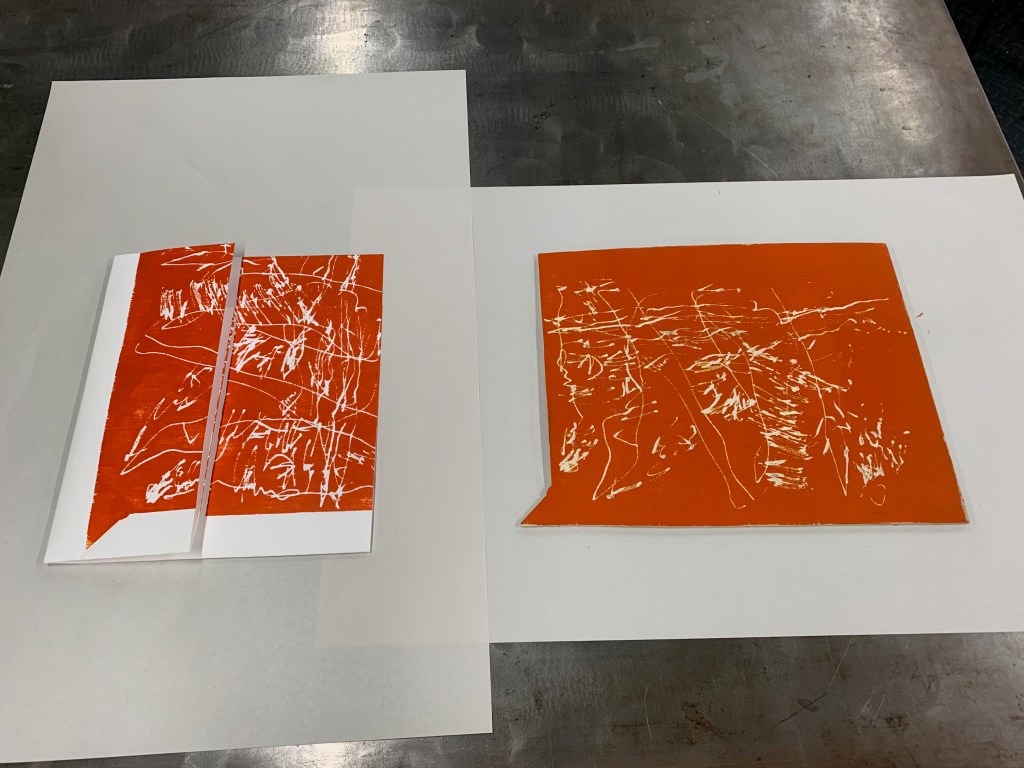
Cartridge paper folded over inked plywoodFolded paper going through the etching pressFolded print and plate
Once the plate was inked, I proceeded to fold cartridge paper and position on the surface of the prepared plywood. I folded and ran the paper / plate through the press multiple times, in order to observe the variation in marks and tone of ink. The contrast between the fresh ink and ghost surface, which allowed the gran to push through worked well. What I liked most about the prints were the spaces between the overlapped printed surface. This gave room to the composition and allowed the work to breath, the imagery translated to the window spaces in the studio, that continue to influence the work. The blank sections to the prints can be observed as negative space, partitions or the work itself; they become more important than the inked sections.
        When discussing these tests in my tutorial, I was recommended to investigate the work of DJ Simpson. I always find it fascinating when you come across an artist that works in a similar way, it affirms what you are practising and provides further ideas for how I intend to make and display my work. I am now gravitating to using more digital and mechanical methods to further engage with my work; I feel it progresses the conversation I am having with the digital and physical realms.
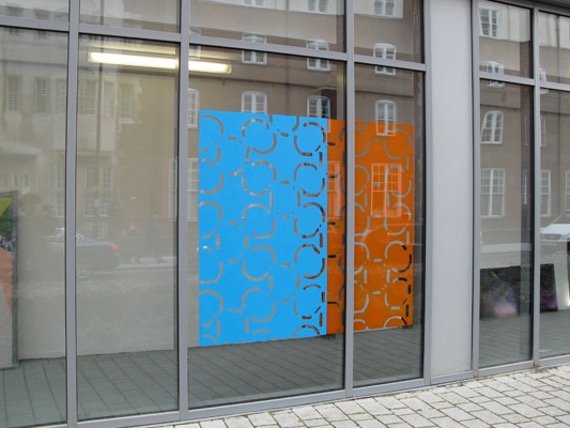
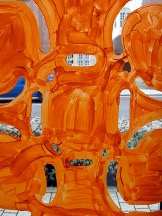
Image of Left Hand Reverse, acrylic paint on glass, installed at Deptford X Gallery, London September 2015
As I consider how I may install my work for the end of year show, and how I will experiment working in different locations. The above work by DJ Simpson makes me contemplate how working on different surfaces could work. The windows at London Met have been a huge inspiration and the possibility of working on them gets me excited.
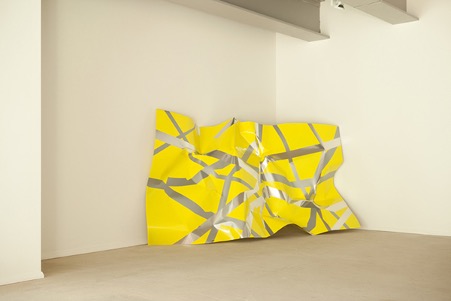
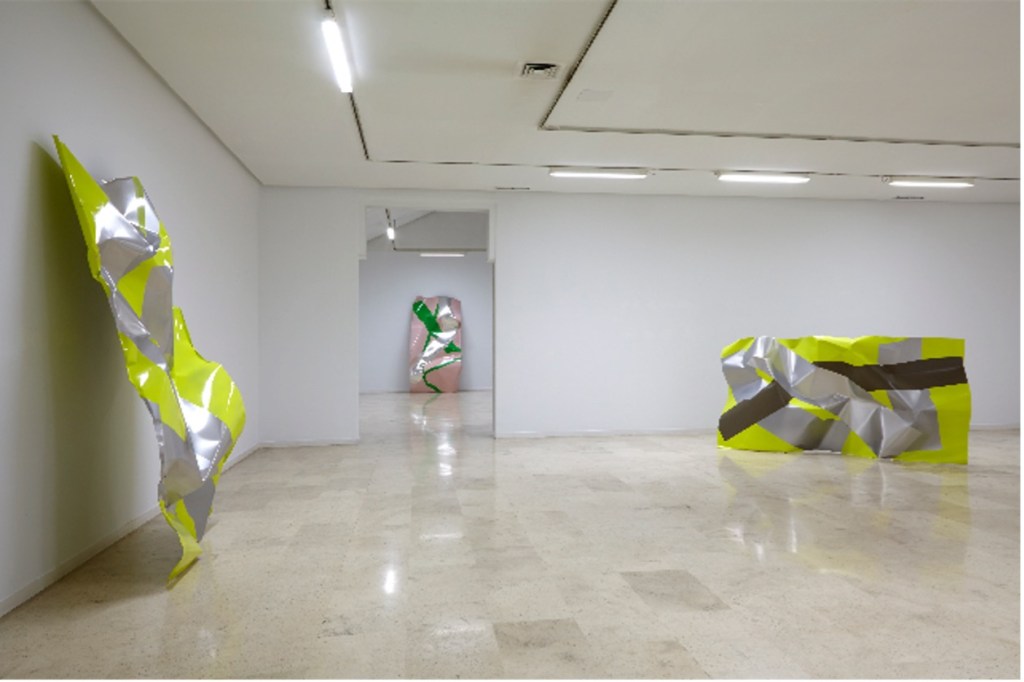
I love the above work by Simpson, the engagement of a different material and how the works are installed are thought provoking. I have been working with folds and positioning prints like sculptures and the above works give me clues as to how I could achieve this. They all appear to be self-supporting and, creased, like a crumbled and then unfolded piece of foil. The channels on the works that overlap make me consider my folded prints and the marks made in plywood when I'm using the Dremel tool. What these really make me consider, is that the material\plates can act as a vital component to the work, not just the device that is leveraged to craft prints.

 Marco Carofalo ART
Leave a comment