It's been an exciting first month at London Met, this post will summarise my journey so far. I am very much influenced by the space that I inhabit, and this first period has seen me explore my surroundings. A great way to start is to get out into the outside, explore and see what is about. Trees have always been a starting point in my work and act as an anchor to exploring the themes of the outside / inside.
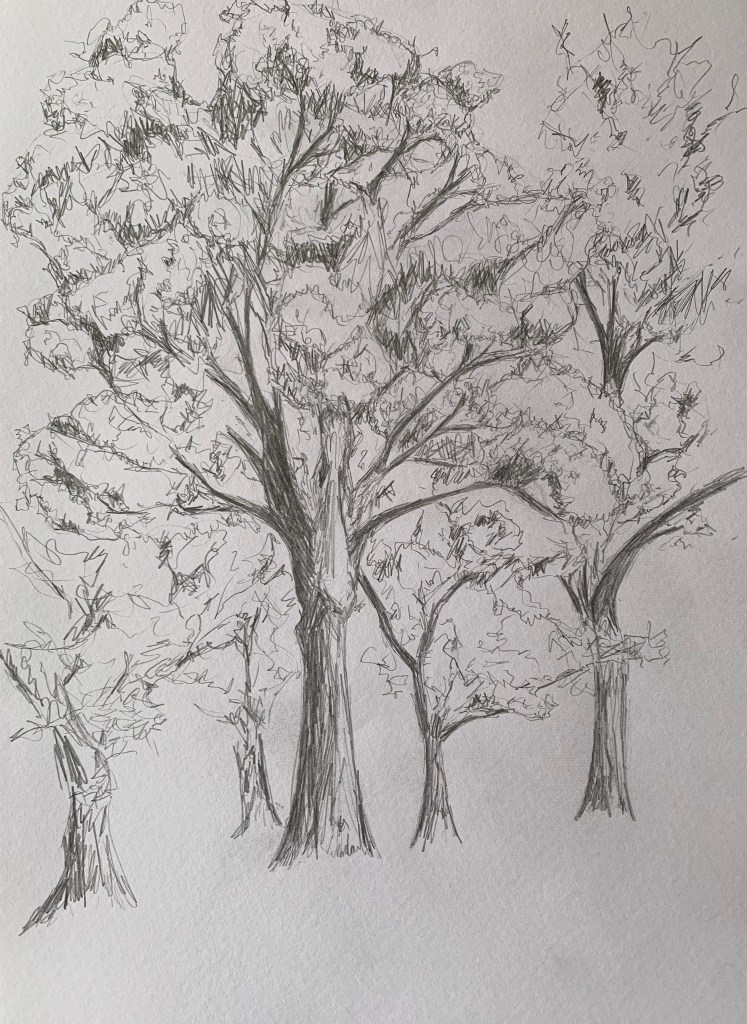
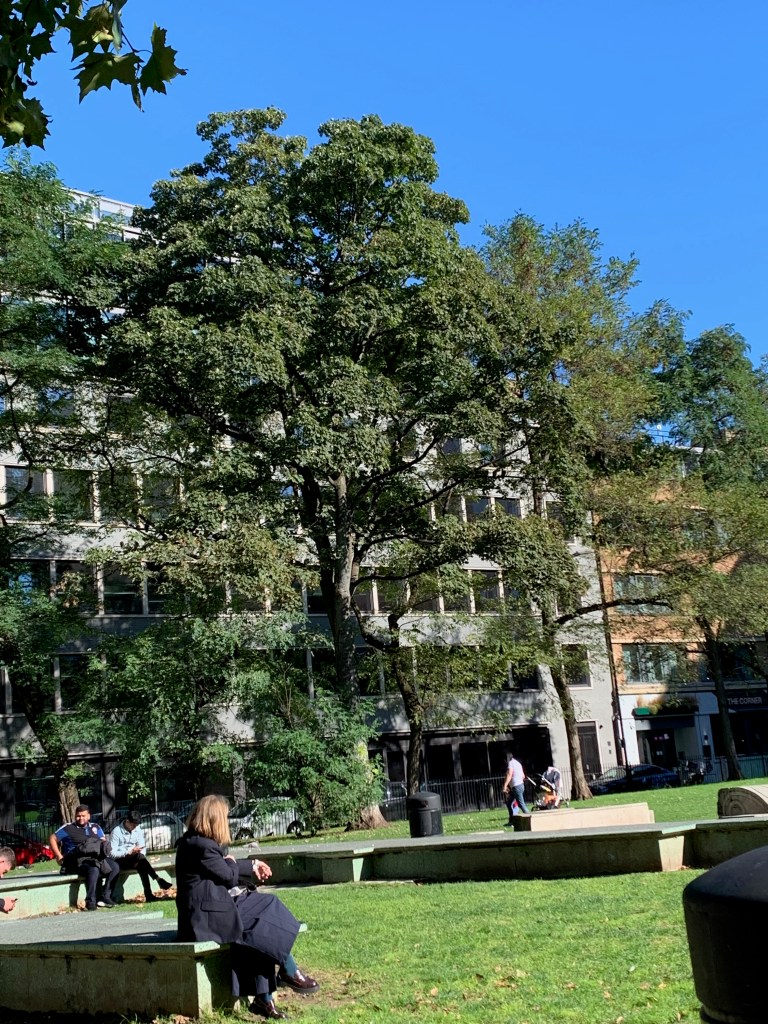
Tree sketchAltab Ali Park
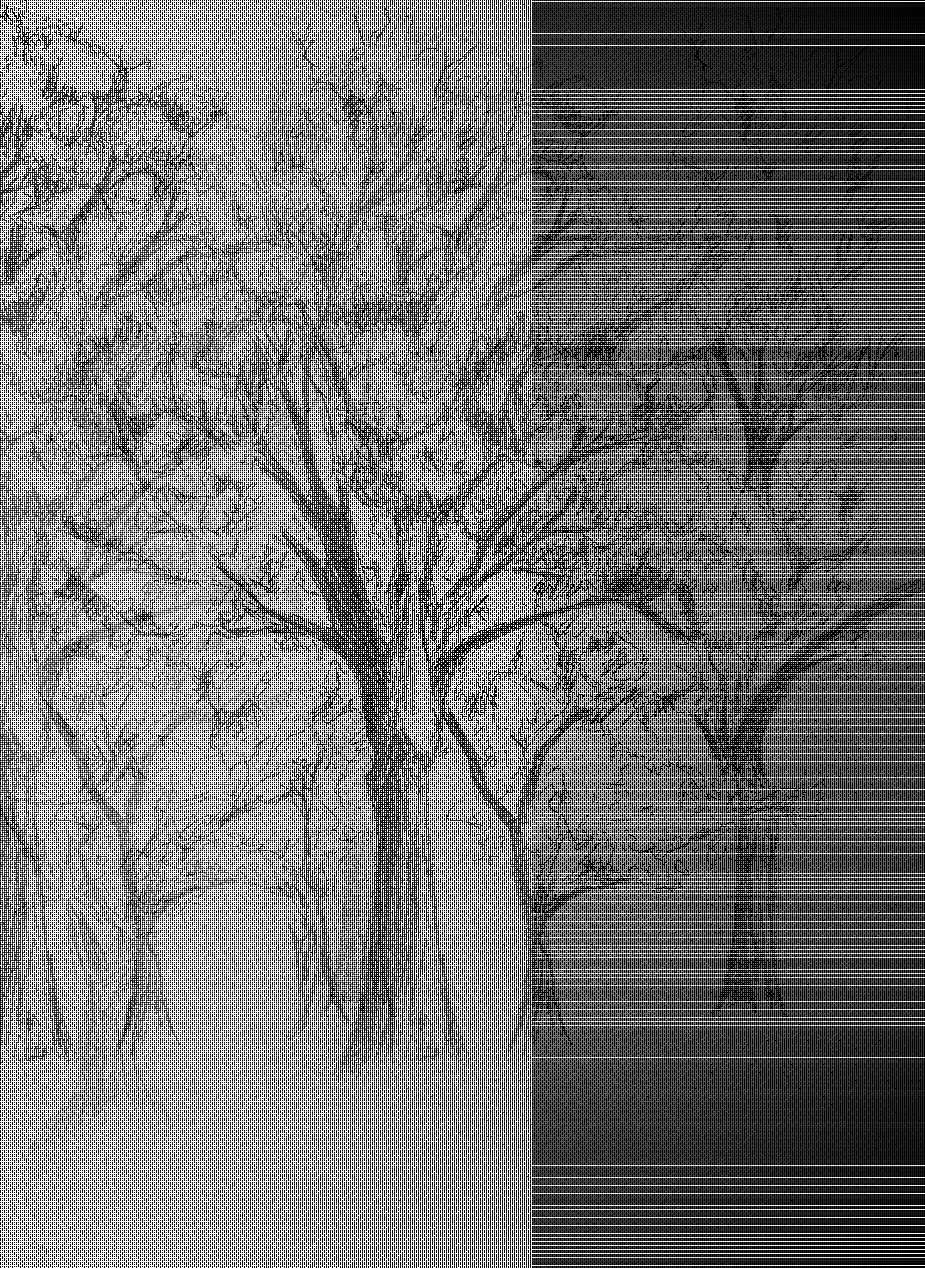
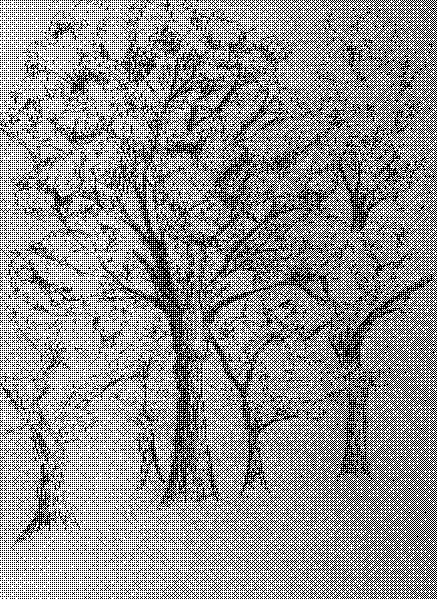
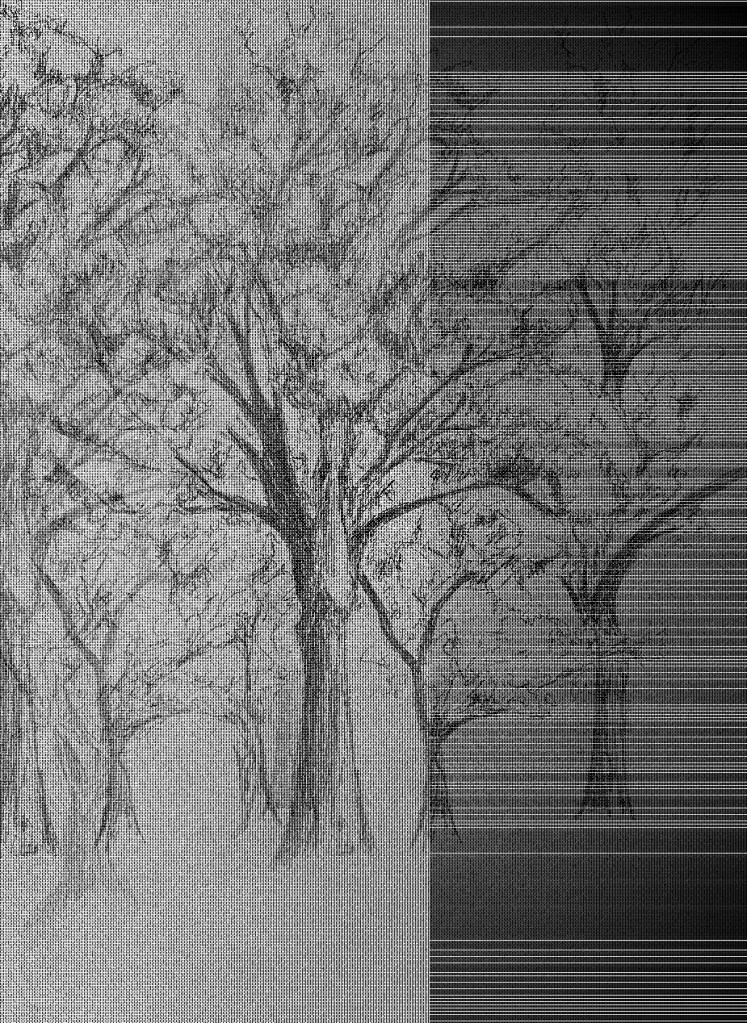
The above photo and sketch were taken / drawn at Altab Ali Park next to the university. This acts as a catalyst to start my exploration of the surrounding environment and bring this back into the studio. I then proceed to digitally manipulate the drawing in Photoshop, developing another process to the work. This starts to reference my relationship between the digital and natural and the themes of pixilation and erosion.
I'm fascinated with the imagery that starts to appear, in particular, the pixels and how information presents itself in the once blank spaces. My intention for these images is to then work with the laser-cutter to etch printmaking plates.
Inspiration is found everywhere as I navigate the outside, a pile of leftover building materials offer the ideal opportunity for plate materials. This is another aspect to my output that is important, everything is recycled throughout the cycle of the work and experimentation.
Leftover building materials
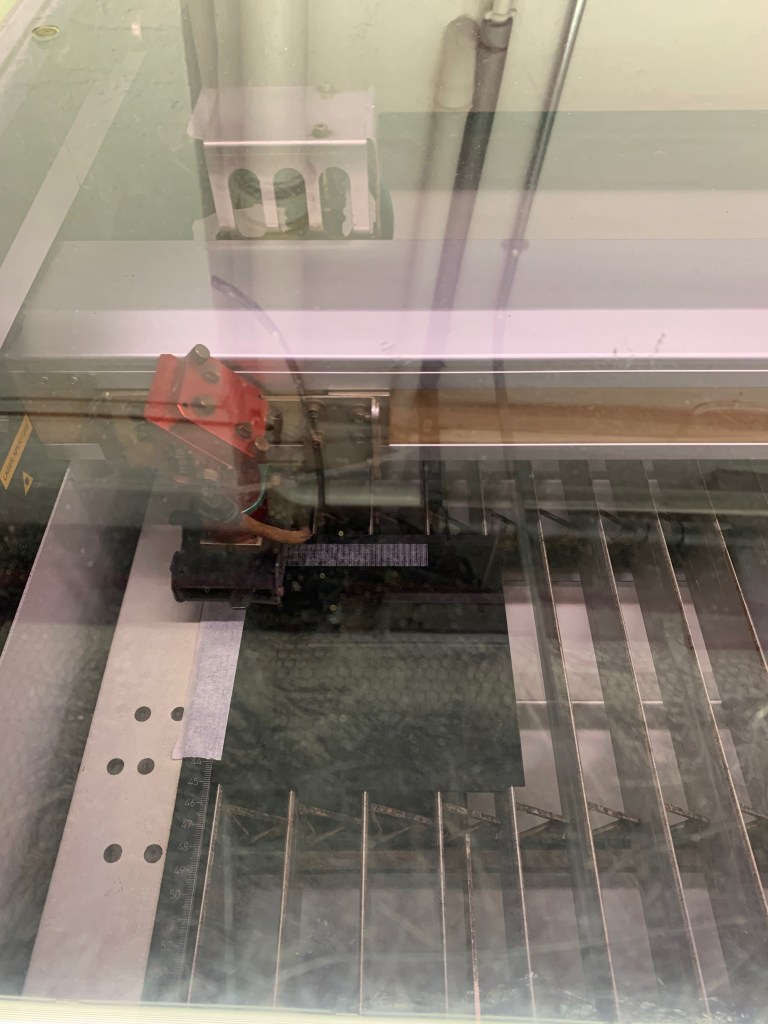
Taking these materials and images I have created, I can then move onto the next stage and test how the drawings will appear using the laser-cutter.
Laser-cutter etching perspex plate
It has been a challenging start to the project, as I have been unable to get access to the printmaking studios at the university, I have therefore had to adapt and consider the scale of my work. At this early stage, it does not pose a problem, as I am experimenting, but i'm mindful of my group critique on the horizon and the lack of access to a printing press to test my plates is concerning. I do not spend time worrying on this and quickly look to the influence of my studio and my concept of folding to craft prints that do not require a press. This highlights a key line of investigation I seek to explore through my work, which is the relationship between printmaking and drawing.
        Folding will also be a mainstay of my practice, which is influenced by reading The Fold: Leibniz and the Baroque, by French Philosopher Gilles Deleuze. This text has been important to me, where I view folds as a form of connection; this is how I view my printmaking and the relationship I explore in relation to the inside and outside spaces.
The below two quotes from the book hold significance importance...
in the protracted fascination we experience in watching waves heave, tumble and atomize when they crack along an unfolding line being traced along the expanse of a shoreline; in following the curls and wisps of colour that move on the surface and in the infinite depths of a tile of marble
(Conley, 1993).
The Baroque differentiates its folds in two ways, by, moving along two infinites, as if infinity were composed of two stages of floors: the pleats of matter, and the folds in the soul.
(Deleuze, 1993).
How I co-ordinate my work refers to a series of events - the number of folds, unfolds, the addition of colour; each event intrinsically connecting and influencing the next through the law of chance. Folds are ultimately a form of connection - they have two key distinctions; material and immaterial. The pleats of matter denote physical understanding as the corporeal making activity and the folds in the soul play out in our minds; we follow, perceive and interact as they take place.
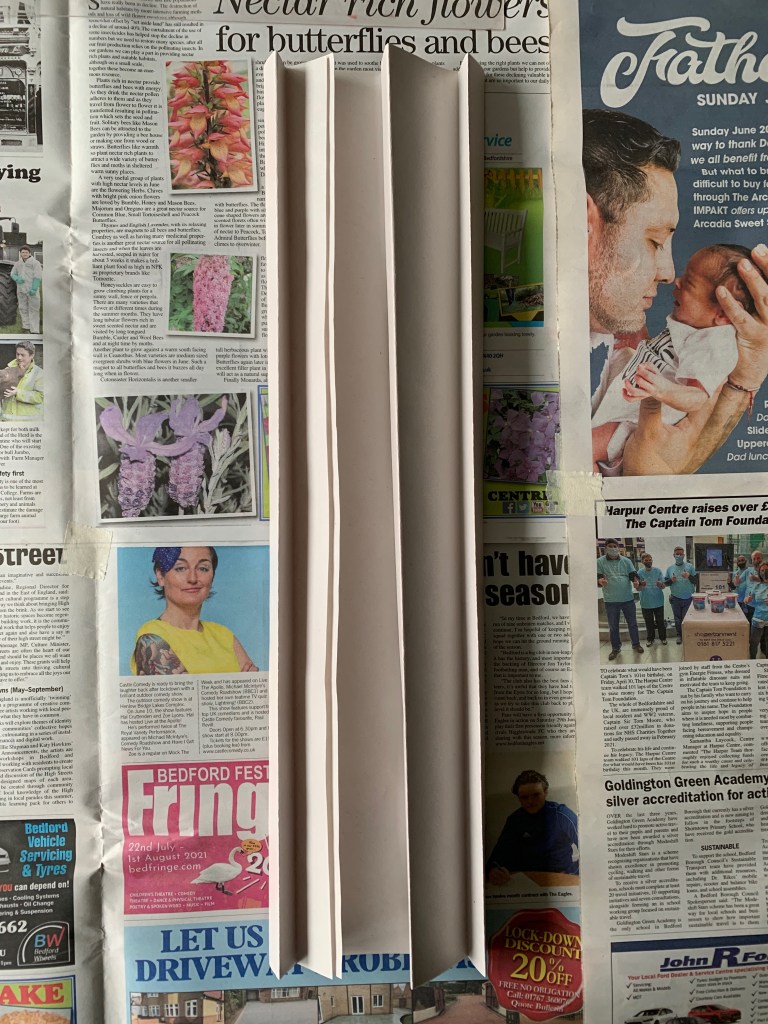
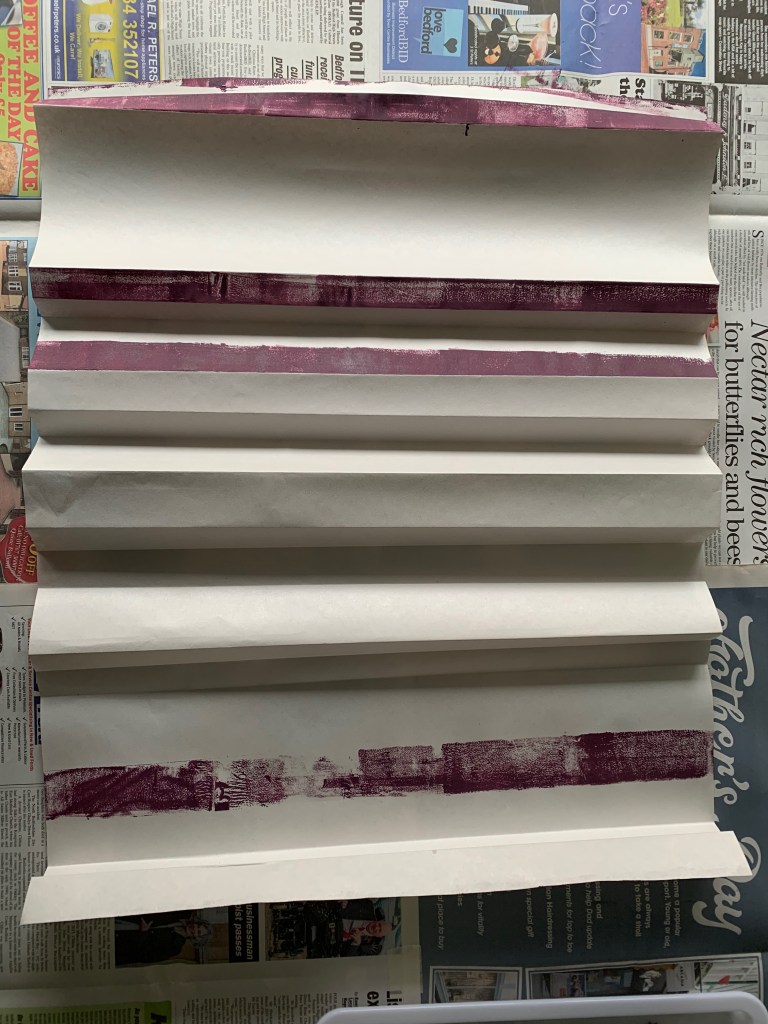
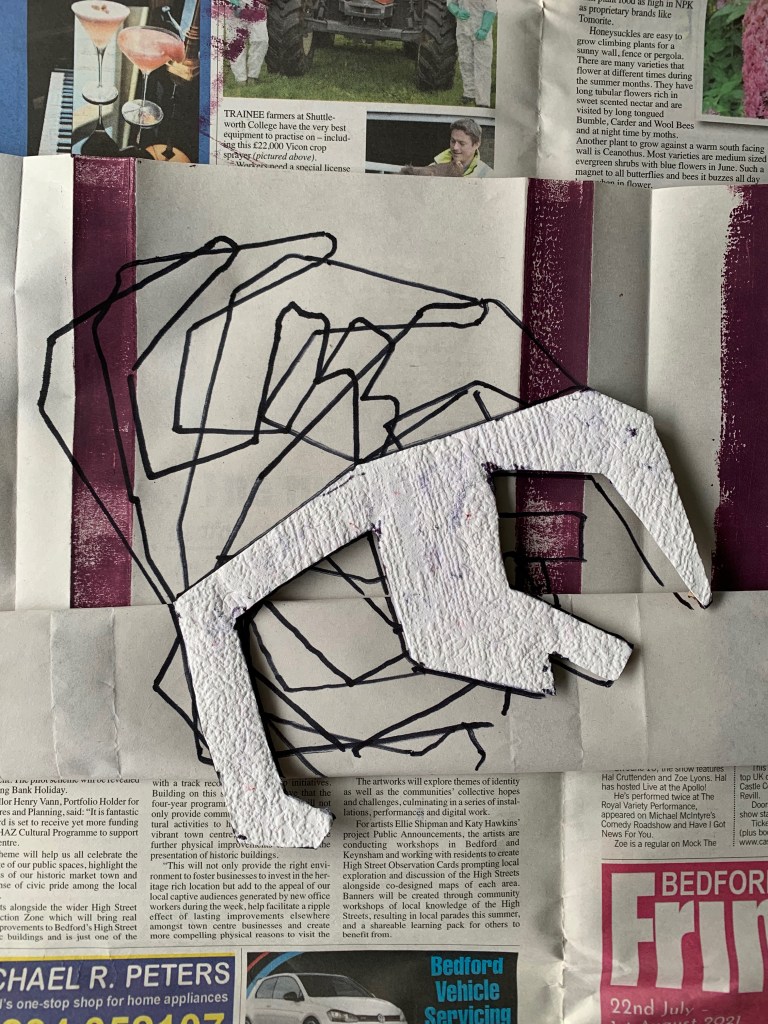
        The above provides a concept and rationale as to how I create and navigate my folded prints using recycled newsprint. These experiments are directly influenced by the studio space I am inhabiting. The bars of the window, the textures of the floors, walls, and ceiling and with the below experiment, the colour and number of purple electrical wires. The below work, titled Seven and is directly influenced by the number and colour of the wires. Each activity is performed seven times - seven folds and seven drawings using the stencil I made which is taken from the negative space from my tree drawings. There is always a relationship running through the work, which gets abstracted as the imagery or concept goes through its experience of process.
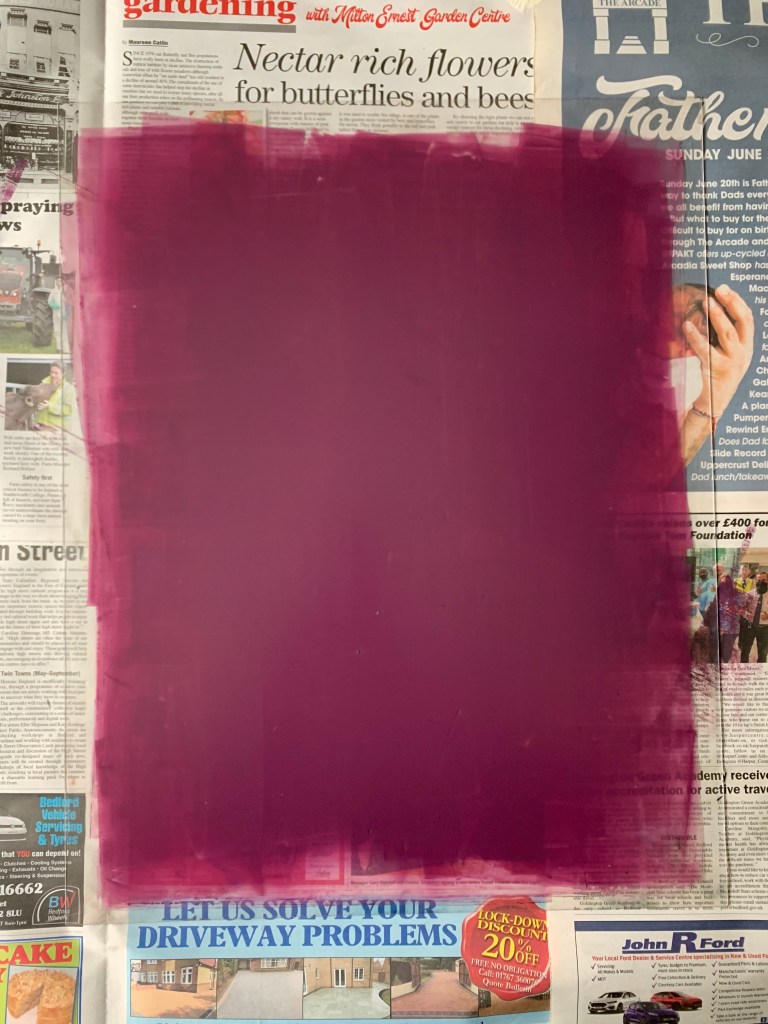
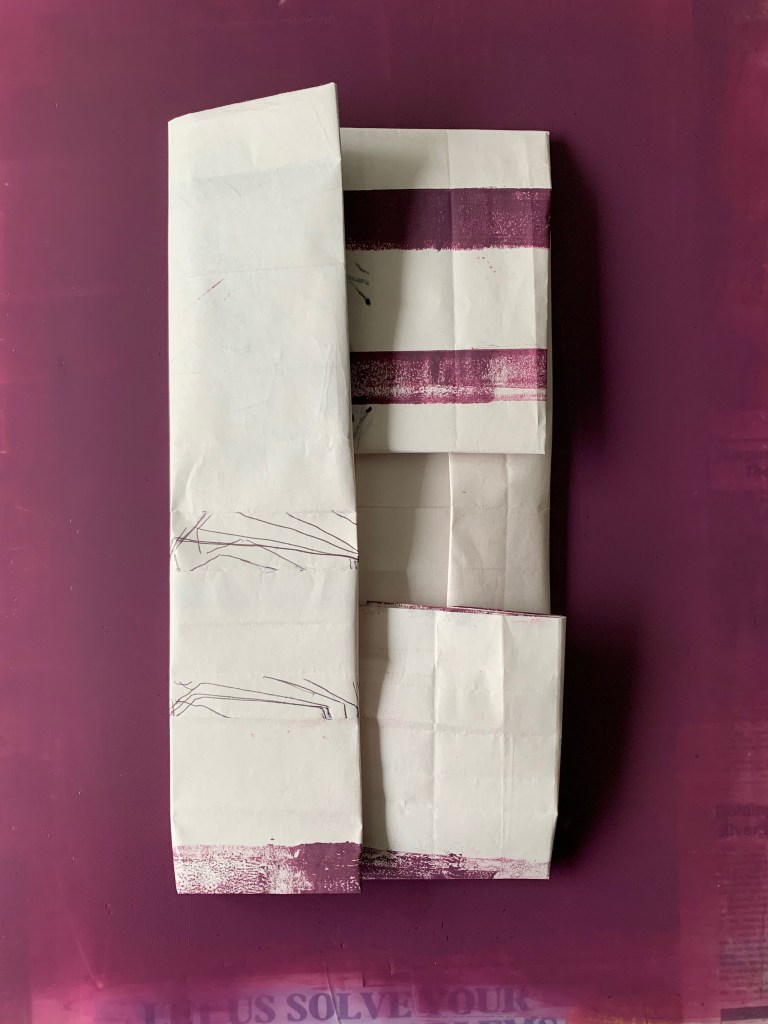
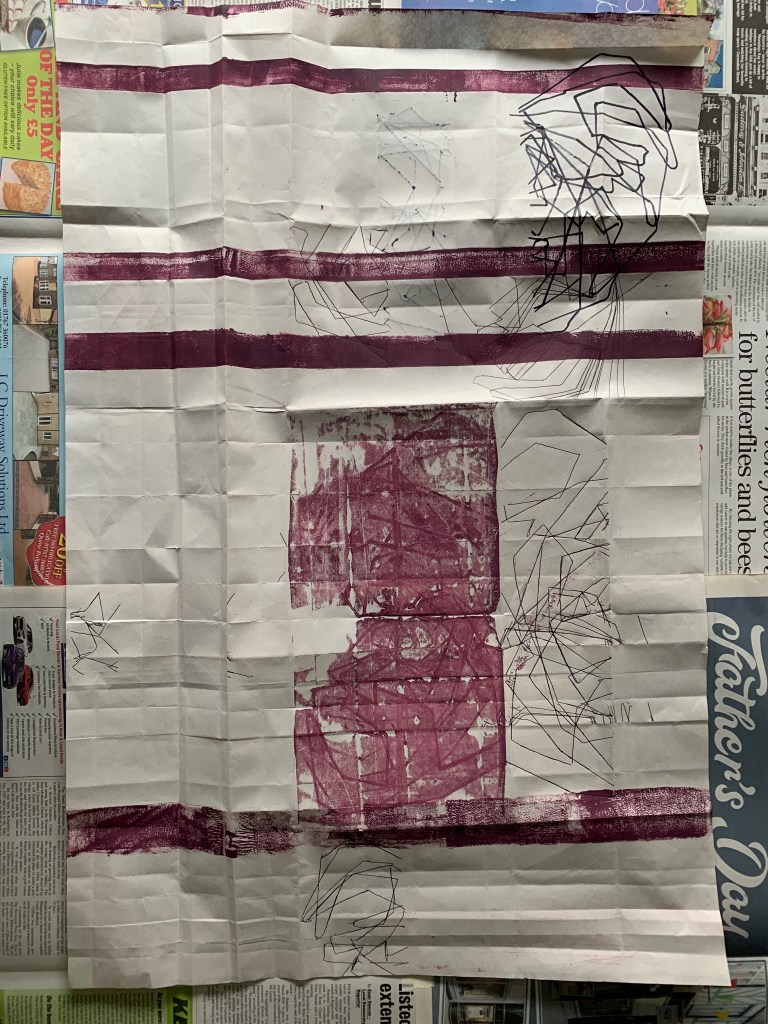
Newsprint folded seven times length ways to mimic the long wiresPurple ink mixed to reference the wires was applied to folded sectionsInk rolled out over a sheet of plastic, where the paper will be folded and drawn on to crate a printUsing a stencil made from the negative space of tress, I use a mixture of marker pen and biro to create images, moving the stencil each timeThe process of folding and drawing continues onto the inked plate. I love the engagement of my body when folding and drawing around the stencil which connects me to the making processFinished print
The above is a finished print, which is unfolded to reveal the final composition. This is a sample of similar test prints I have created, where I have included colour. Initially, I was using a monochrome palette but wanted to explore what will happen when colour is introduced. The process and environment also dictates how the work unfolds, and therefore, to a certain extent, this decision is taken out of my hands. When I observe the prints there is a clear connection to the marks and the ink which can be seen when the paper is unfolded. The folds for me act as a form of drawing and are equally as important than the inked and drawn elements. The blank spaces are no longer barren but are connected with folds, transforming the flat piece of paper into a three-dimensional object. There is an interplay with the folded areas, that create shadow and reference the space they were made. I intend for these to be displayed hung from the ceiling as the works are double sided and lend themselves to being viewed / navigated in their entirety. I particularly like where the marker pen starts to seep through the paper and create an impression on the other side.


 Marco Carofalo ART
Leave a comment